

Why Chefs Don't Technically Own Their Own Recipes
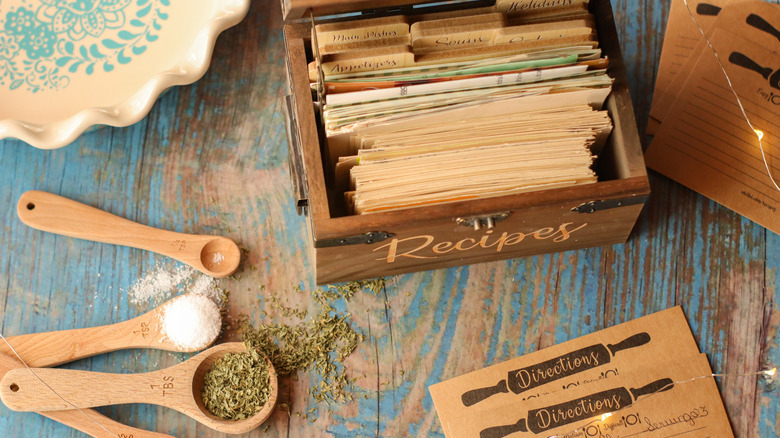
When you create a work of art, writing, or music, it is automatically protected by copyright, whether you specifically register it with the United States Copyright Office or not. But what about recipes? After all, recipe creators from celebrity chefs to bloggers may spend a substantial amount of time determining precise flavors and ratios. If, after all that effort, someone shared their recipe online without any credit, it's easy to imagine how frustrated they might be! Unfortunately, for the most part, recipes don't fall under copyright protection. Ty M. Sheaks, managing partner at McCathern Law in Frisco, Texas, spoke exclusively with Chowhound to explain more.
Sheaks leads McCathern's Restaurant & Hospitality Section, and while his advice is specific to Texas law, and thus may vary from the laws in other states, many of the principles are more widely applicable. "Generally, copyright law excludes copyright protection for procedures and processes, which fundamentally is what a recipe is," Sheaks said. "To be copyrightable, the work must include some extent of creativity from the author."
For chefs employed at a restaurant, this notion of recipe ownership is even further removed. "In a work-for-hire situation, the employer for whom the work was prepared is considered the creator who owns the copyright, unless the parties have expressly agreed otherwise in a signed agreement (which rarely happens)," says Sheaks. In other words, a recipe created for the restaurant belongs to the restaurant — although, again, recipes themselves are difficult to copyright.
Protecting your recipes
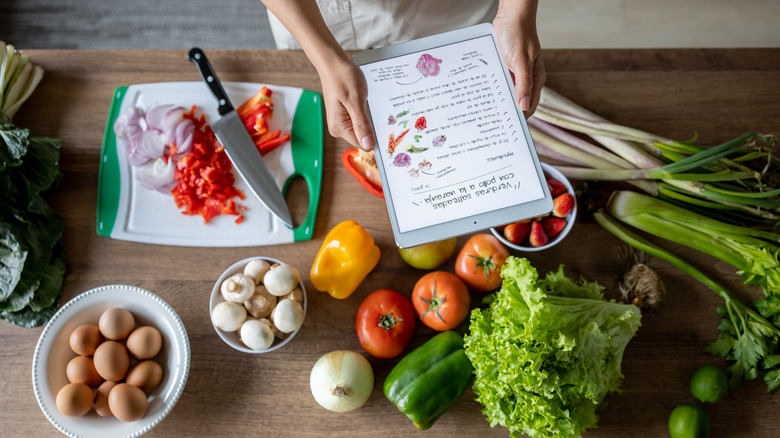
Let's say you've come up with a truly inventive baked salmon recipe, for example. You want to share it with the world, but how do you protect your work? A little extra creativity may go a long way. "When a recipe creatively explains or depicts how or why to perform a particular activity, that may be copyrightable," Ty M. Sheaks says. "In those circumstances, it will be the written descriptions and any accompanying photographs or illustrations that would likely receive copyright protection." While your basic ingredients list and process notations may still not be copyrighted, the rest of your work should be. This is true whether you're writing a blog, social media post, or an award-winning cookbook.
In general, Sheaks recommends injecting personal writing and advice into your work, and securing copyright protection before publishing whenever possible. "In making a cookbook, the blogger should add as much creative expression into their work as possible, such as personal stories, detailed cooking techniques and reasonings to explain why to use certain techniques, or unique presentation methods and attempt to obtain the copyright before publishing," Sheaks said. If someone tries to reproduce these elements of your work — and you have the copyright to prove it's yours — you'll have a stronger case in court.
If someone does reproduce your recipe without attribution, there's not necessarily much you can do about it, unless they are also plagiarizing your personal stories and creative writing. Of course, just because it's legal doesn't mean it's good etiquette!