

Goat Cheese Is Tasty But It's Not Worth The Price If You See This Sign
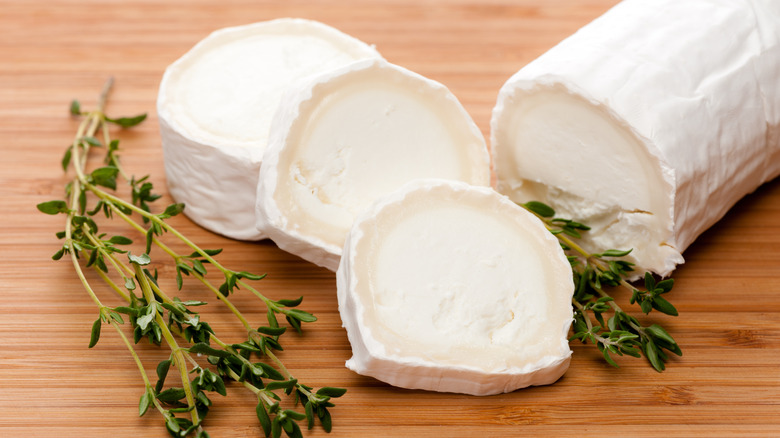
Goat cheese is loved by many — its tangy taste and creamy texture make it perfect for spreading on crackers, crumbling on salads, or finishing off a pizza. In addition to being delicious and versatile, lactose levels in most goat cheese tend to be so low that the lactose-intolerant among us can also indulge. Price tags can vary significantly in the cheese aisle, so Chowhound spoke with Matthew Rose, American Cheese Society Certified Cheese Professional and Sensory Evaluator, to find out when goat cheese is not worth the price. He says that the biggest warning sign is the price itself; specifically, if the price tag on a package of goat cheese seems too good to be true, then it probably is. "I am not saying that more expensive is always better," he clarifies, "but if the piece of cheese is too inexpensive — especially in the goat cheese industry — the way to cut costs is to cut practices that ensure quality."
Rose warns that a cheap goat cheese may be a sign that the milk has been mishandled, resulting in an unpleasant barnyard-like taste. "When the milk is stored and shipped and sometimes frozen in the form of curds, the structure of the milk molecules will be damaged, and instead of aging into something delicious and milky and bright, it releases undesirable enzymes that bring out the less palatable side of goat's milk," he explains.
Other signs a goat cheese is not worth it
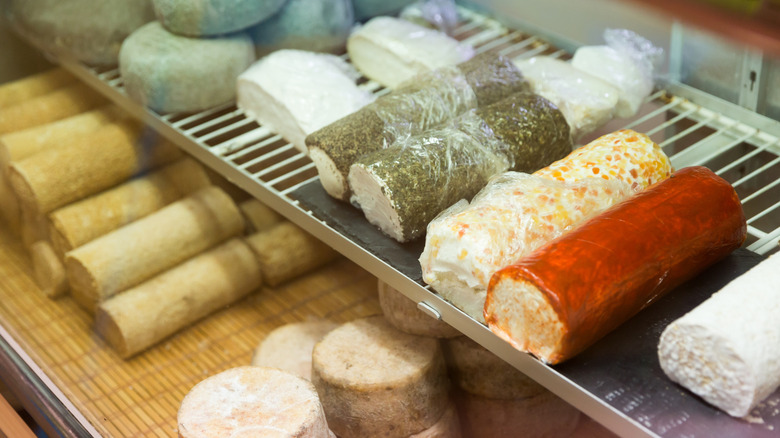
Aside from a rock-bottom price, Matthew Rose says there are ways to tell just by looking at a package of goat cheese if the purchase will be worth it or not. "A cheese that is past its prime will show some warning signs," he says. Some key signs goat cheese has gone bad include discoloration and mushy texture. He advises looking for a clean-looking, bright paste with a consistent color — never browned or mottled — along with a healthy rind that is not too moist or soft. "If a cheese is aged too long or stored too long in plastic, it will not be worth the price," he adds. He recommends getting into the practice of inspecting the piece of cheese you plan to buy, and if it's an option, even ask to try a sample.
Though it's usually preferable to have the freshest product possible, that's not always the case with cheese. Aged cheeses, some goat cheeses included, can form cheese crystals that offer a nice crunch. But for soft goat cheese that's just a little past its prime, Rose says you're fine. "[These] are okay for consumption — they just may not be as palatable as they could have been," he explains. A mature cheese is not the same thing as an unsafe cheese. He adds that researching the producer of the cheese in question to find out more about their practices is a good idea if you are concerned about safety. Generally speaking, goat cheese that is purchased in grocery stores (rather than farmers markets) is a safer bet, due to the stricter regulations in place.