

Clean Your Marble Countertops The Right Way With One Simple Solution
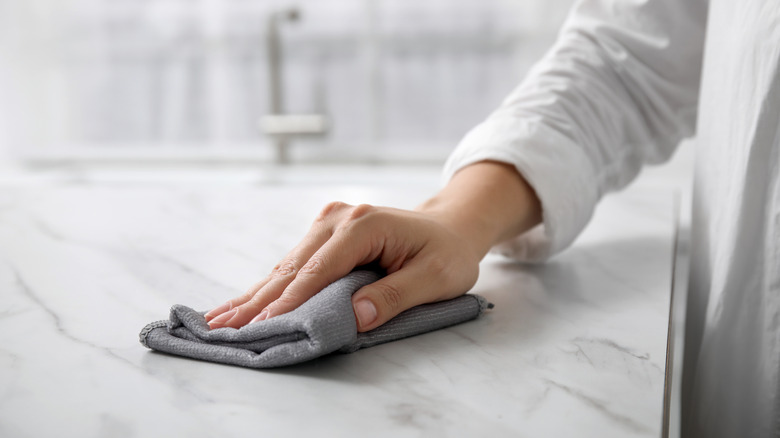
When in the midst of any home renovation project, you may have come upon deeply involved discussions that center on the best type of stone for your kitchen countertops. It's no surprise that marble countertops are among the list of home upgrades that reportedly boost the resale value of the property. They are deemed as a sign of luxury and add a sophisticated elegance to the ambiance. Marble countertops, however, come with an added cost, and not just financially. The maintenance it requires to retain the rich look may warrant a second thought before opting for marble in your kitchen as the stone slab of choice. However, if you've made the financial and labor commitment of installing marble and are seeking affordable ways for its upkeep, Jill Koch, the creator of Jill Comes Clean, a platform for all things home cleaning and organization, has some useful hacks to do things the right way.
According to Koch, the safest and most effective way to clean marble countertops without damaging the surface is with soap and water, or a marble cleaning spray. She also advises against acidic cleaners with the likes of lemon and vinegar in them, as they "can etch and stain the marble, which will ruin the look of it." This is because of marble's naturally porous structure. We then asked about what to look for if opting for store-bought cleaners, she recommended picking those that are safe for materials like stone, laminate, wood, or any sealed surfaces. Her advice is also to "look for labels that say things like biodegradable, nontoxic, or plant-based, as these are more mild cleaning solutions," making them suitable for sensitive stones like marble.
More tips for maintaining marble counters
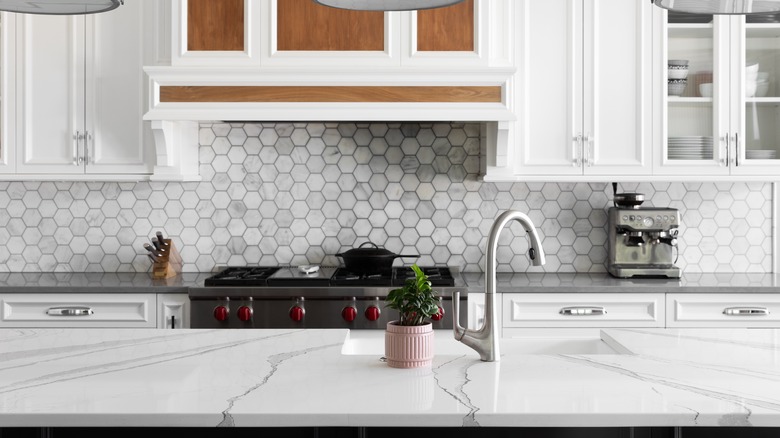
As previously discussed, the porous structure of marble makes counters made from it prone to being easily stained. This is why sealing the marble is important, as the sealing material helps slow down the staining source from seeping below the marble's surface by forming a shield of sorts. On the topic of upkeep for marble that is sealed versus not sealed, Jill Koch explains how when a marble is sealed, it is better protected since the seal serves as a "protective layer," making the marble less porous and susceptible, though not impervious, to damage. You can easily seal marble countertops yourself by cleaning the surface, evenly applying the sealant, allowing it to seep into the marble according to the time listed on the package, and wiping down the counter after.
For more thorough protection, consider opting for a sealing material that is both oil and water-repellent, and also food-safe for kitchen surfaces. That said, just because sealed marble is not as easy to get stained, it can still become damaged from acidic cleaning solutions, so the aforementioned tip on looking for mild cleaners with low acidity still holds for any type of marble. How frequently the marble needs to be sealed depends on how often the surface is used and the durability of the sealant. Some counters that just serve as display tables with little to no surface activity could get by being sealed about once every six to 12 months. However, kitchen counters would require more TLC, and could benefit from being re-sealed every two months.