

This Cheesy 1960s Appetizer Is The Bite-Sized Party Snack That Needs To Come Back

The culinary scene in mid-century America was pretty wild. It was a time when cooks had no compunction about combining ingredients that today we might think of as an odd pairing. For instance, there once existed a vintage dessert that contained lemon jello, canned tuna, and pimento-stuffed olives, all cooked up in a cheesy pie crust. While this combo may not appeal to modern sensibilities, there is one vintage dish that includes olives and cheese that definitely deserves a comeback, and soon. It's called olive cheese balls, and, like another old school appetizer, rumaki (bacon-wrapped chicken liver and water chestnuts), it's bite-sized, making it perfect food for parties.
Olive cheese balls typically only include four main ingredients: shredded cheddar or a similar cheese, butter, flour, and pimento-stuffed olives that are then baked in the oven and served hot. They combine the briny bite of green olives with the tang of cheese and the butteriness of the crust. They can be spiced up with hot sauce, paprika, and/or cayenne pepper for a bit of a kick. You can also serve them with ranch dressing for dipping to make these apps even more indulgent. While olive cheese balls had their heyday in the 1960s and '70s, there are versions that go back much further and are also worth exploring.
Variations on the olive cheese ball
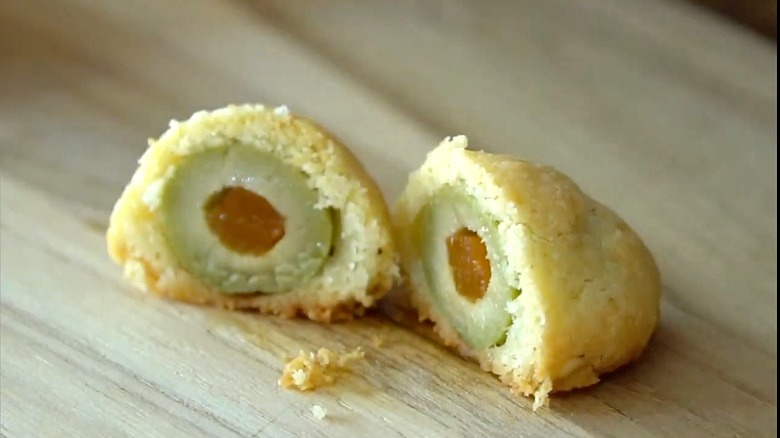
As far back as the 1920s (or earlier), there have been various versions of olive cheese balls, although they were quite different. Unlike the classic 1960s recipe made of baked dough-covered whole stuffed olives, these early versions weren't cooked and were made with cottage cheese mixed with chopped olives, rather than whole olives. One recipe from an April 1938 edition of the Democrat and Chronicle newspaper seems like a direct precursor to the 1960s version and actually sounds quite delicious. It uses sliced or chopped black olives, mixed with grated cheese, ketchup, and bread crumbs that's then dipped in an egg batter and deep fried.
These earlier versions likely used chopped olives, typically black (ripened) olives, because they were more readily available in cans shipped from California. Pimento-stuffed green olives would have been harder to get and more expensive. Before the 1960s pimentos had to be stuffed into the olives by hand, but in 1962, new technology from Spain came around that used machines to stuff the olives. This significantly lowered their cost, making them more popular in the United States. By the early 1960s, the recipe for the classic version of this appetizer began to be codified. And it's this version we suggest trying for your next party.