

The Reality Behind The Trader Joe's 'Fake Food' Conspiracy
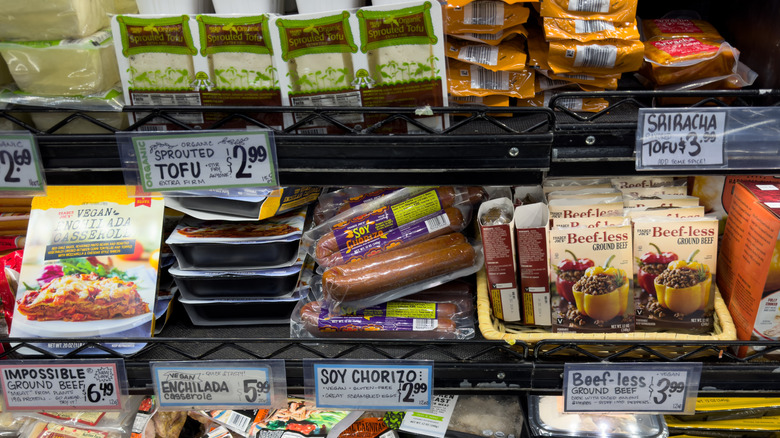
The Trader Joe's "fake food" conspiracy sounds a lot more ominous than it is, which should come as a relief to anyone who's enjoyed the chain's flurry of constantly rotating in-house branded offerings. Like most major supermarket chains, Trader Joe's gets its fair share of criticism, and some of it is justified. For one, there are many who claim Trader Joe's fresh produce tends to go bad quickly, and the reasons for it can range from the type of packaging to the quality of produce being sourced. The fake food conspiracy comes from a customer questioning quite the opposite — the seemingly long shelf life of a cooked chicken dish.
A TikTok explanation posted by @foodsciencebabe in response (which also features the original "fake food" video) clarifies the whole issue, and also points out how such claims, without adequate research, can spark rumors. Indeed, the video claiming Trader Joe's sells fake food bases it on the chicken dish in question having a shelf life of a month, which isn't quite out of the ordinary. Sure, regular chicken meat, if left outside for that long, would spoil. But the "fake food" argument completely disregards the multitude of preservation methods that most foods use in order to give them a longer shelf life and keep them safe to consume. In fact, a few years ago, a similar video of a person claiming that McDonald's burgers don't rot had gone viral. While such questions veer towards sensationalism in trying to hint at ominous additives or substitutions made to everyday food, it's worth taking a closer look at just what goes into giving the products stocked by large chains a longer shelf life.
Prolonging shelf life with packaging and preservatives
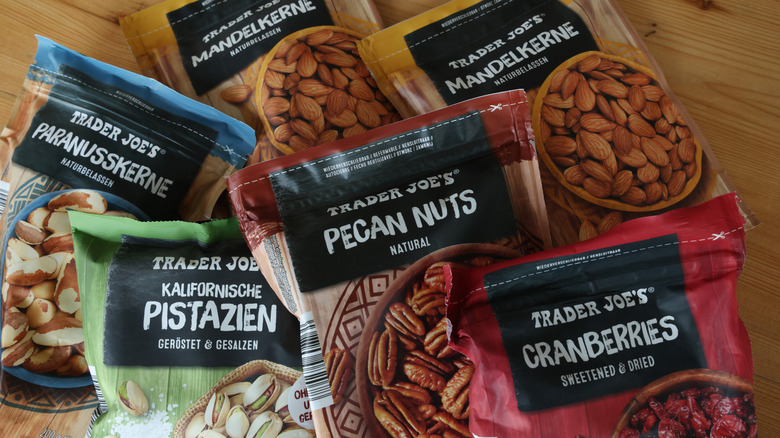
Two ways shelf life is extended are packaging and added preservatives. When possible, a combination of both is used for the best results, as is the case with most packaged and processed foods. Take a bag of chips; the chips themselves are made in a way that keeps them from spoiling. This is done by dehydrating the potatoes and adding various chemical preservatives to slow down microbial growth.
Next, the packaging is designed in a way to further protect the food through a process called "modified atmosphere packaging." This essentially replaces the air inside a sealed food packet or container with a mix of gases that are less reactive than regular air. This can further slow down the growth of microbes that cause food spoilage. In most cases, sealed food packets are filled with nitrogen, an inert gas that rarely reacts with or affects food. On the other hand, oxygen (which comprises 20% of our atmospheric air) rapidly reacts with and oxidizes substances, which is why food that is not sealed or that is otherwise exposed to oxygen spoils faster.
A third method of preservation is refrigeration or freezing, which is used as a substitute for modified atmosphere packaging and adding preservatives. Cooked food, such as frozen dinners, heat-and-eat meals, and even fresh produce, uses this method to increase shelf life. The benefit here is that refrigerated food can avoid the use of preservatives, resulting in a "cleaner" final product with fewer additives. However, such food has a shorter shelf life and shouldn't remain unrefrigerated for longer than two hours, per the U.S. Food and Drug Administration.
What to pick at the grocery store: long vs. short shelf life
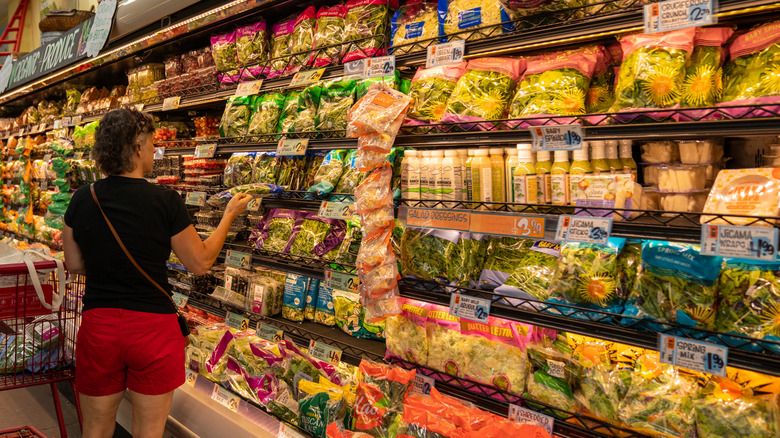
The idea of "fake food" stems from the suspicion that our food is so full of lab-processed ingredients that it's more artificial than natural. To be fair, this does hold a hint of truth with ultra-processed foods, which are essentially made of substances that are extracted from natural sources and then formulated into foods. Generally, packaged chips, sodas, candy, and even something as wholesome-sounding as dried potato flakes are ultra-processed. A good rule of thumb is, the longer the ingredient list of a packaged formulated product, the more processed it is. Therefore, when picking a food for its longer shelf life (as packaged food often has), keep in mind that it may also contain more additives and fewer nutrients. Conversely, foods that don't last too long in storage are usually healthy varieties such as nuts, spices, and potatoes.
Interestingly, Trader Joe's does better than many other supermarket chains when it comes to additives. The chain only allows the use of natural preservatives, such as salt, sugar, and vinegar (with a few exceptions), while avoiding chemical preservatives that can be harmful when ingested in large quantities. It's up to the buyer to check and decide how processed or unprocessed they want their food to be. Therefore, while the chain isn't perfect (and neither are its products), Trader Joe's certainly doesn't sell fake food.