

How To Fix A Leaky Dishwasher Without Having To Call A Plumber
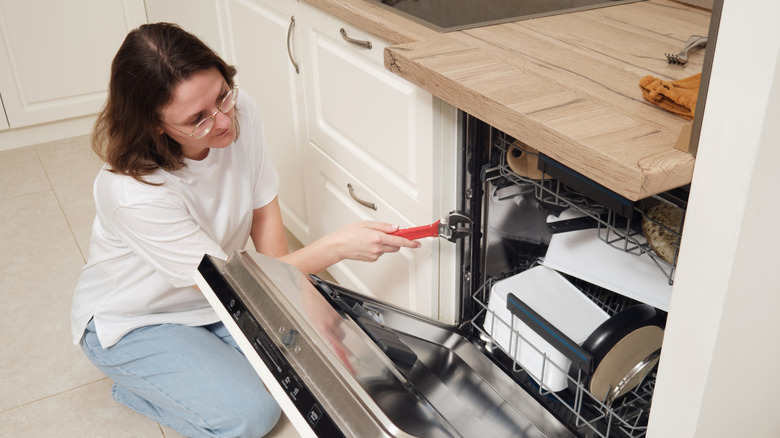
You walk into your kitchen, and you immediately see that your day just got a lot more frustrating — there's a puddle in front of your dishwasher. While it's natural to immediately start calculating the cost of a handyman's services when you notice that your dishwasher is leaking from the bottom of the unit, there's actually a good chance that you're totally capable of fixing the problem on your own. Chuck Pound, virtual plumbing expert at American Home Shield, spoke exclusively with Chowhound about how you can repair your leaky dishwasher on your own — without having to shell out for the help of a professional.
Identifying the problem is the first step when it comes to fixing a leaky dishwasher in your kitchen, says Pound, explaining, "A cracked spray arm, a seeping water valve, and a damaged drain line are a few of the more common causes for leaks." There are a few steps you'll want to take to figure out the cause of the problem. First, Pound recommends taking a look at the gasket door. "You should wipe it clean with warm, soapy water and look for cracks or damage," he recommends. (This is also a smart move to add to your cleaning routine, as it can help prevent a smelly dishwasher.) After checking the gasket door, you'll want to check the drain and inlet hose to make sure they're secure. A dirty filter can also be the cause of a leak. Thankfully, cleaning your filter is super easy — and it can go a long way to prevent dishwasher problems in the long run. Finally, be sure that your dishwasher unit is level. "An uneven unit can cause water to pool and leak," says Pound.
At-home repair tricks to fix a leaky dishwasher
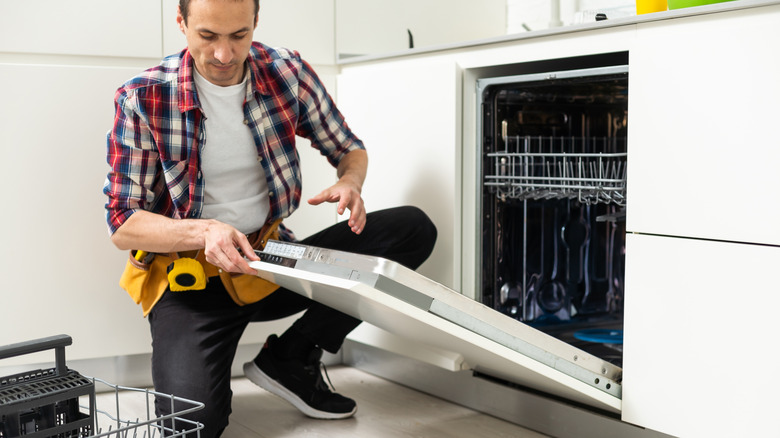
Before you start tackling your leaky dishwasher on your own, it's key to keep safety in mind. "Never touch anything under the dishwasher while it's running," recommends Chuck Pound. "Some parts carry electricity and could be dangerous."
Pound recommends getting started by removing the bottom panel of your dishwasher (it's commonly called the kick plate) with a screwdriver. After it's removed, start a short cycle to help you locate the source of the leak. If there's a leak near the door of the dishwasher, Pound recommends using warm, soapy water to wipe down the rubber seals, which may solve the problem. Then, turn the dishwasher back on to see if there's still a leak.
"If the leak continues, try gently blocking the lower spray arm from spinning (you can use a spoon or utensil)," says Pound. "If the leak changes, the spray arm might be cracked and need replacement." If you're still struggling to repair the leak, it may be helpful to find out where it's coming from before you decide to call in a professional — or start shopping for a new dishwasher. "If there's a leak underneath the dishwasher, look for steady drips or puddles forming. That can help you figure out which part might be causing the issue," Pound says.
Common DIY dishwasher repair mistakes you'll want to avoid
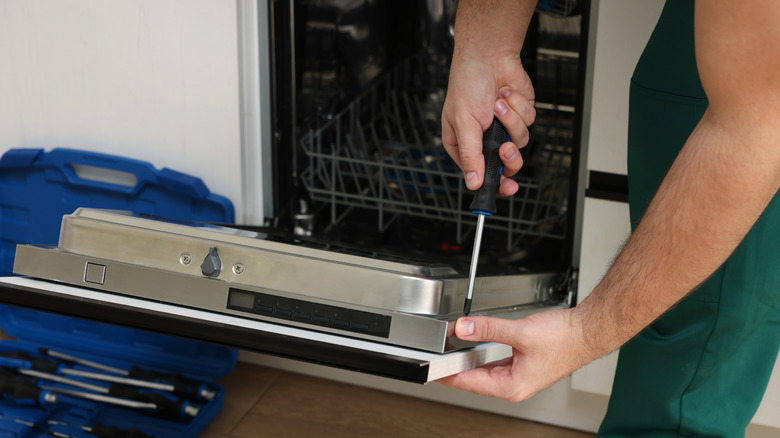
The last thing you want to do when you're trying to repair your dishwasher is make the problem worse — and avoiding some of the most common DIY dishwasher repair mistakes can help. "For example, if you replace the door gasket but install it incorrectly — like putting it in backwards or not sealing it properly — it can actually cause more leaking than before," says Chuck Pound. You'll also want to be careful if you have to move your dishwasher from its position under your countertop to access components during the repair process. "Make sure the power cord, water inlet line, and drain hose are all long enough," cautions Pound. "If they're too short or get bent, you could end up with broken connections or even more leaks."
If you find that you need to replace the seal of your dishwasher, it's important that you choose carefully. "When replacing a dishwasher seal, the best way to make sure you're getting the right one is to use your dishwasher's model number," says Pound. It's also key to stick with a part from the appliance's original manufacturer. "Aftermarket seals might not fit properly or could cause new leaks, which can lead to even more frustration down the line," Pound explains.