

Why You Should Avoid Draining Your Pasta In The Sink
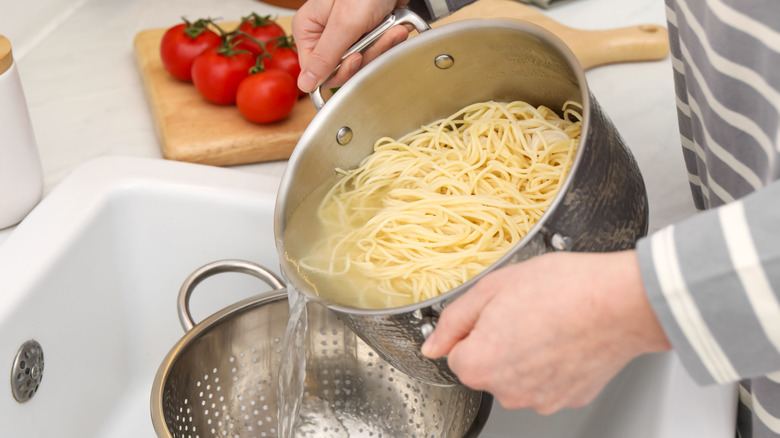
When going through the motions of making pasta for a quick and easy weeknight meal, once the pasta has been cooked until perfectly al dente, the natural next step might be to drain the water so that you can combine your noodles with sauce. However, just like how not properly salting the water is among the list of common mistakes one makes when cooking pasta as you miss out on added flavor, pouring the pasta water down the drain means your final dish could be missing out on a major textural upgrade.
There's a reason why pasta water is among the foods you should never put down the kitchen sink, and that's starch. It's the secret ingredient behind why leftover pasta water is considered liquid gold. When pasta is cooked, some of the starches are released into the surrounding water, turning it murky. This extra starch makes pasta water an excellent thickening agent and an emulsifier to create a silky, lush sauce that coats the noodles beautifully and affords a more flavorful bite.
Keep in mind that the amount of starch in the water depends on factors like how much water is used to cook the pasta. If you use a lot of water, the pasta will still be cooked well, but the pasta water will contain less starch than if you used less water to achieve the same desired texture of cooked pasta. Furthermore, artisanal pastas made with bronze die-cutting also tend to carry more starch, so they'll yield a murkier batch of this prized, inexpensive culinary condiment.
Other ways to use pasta water
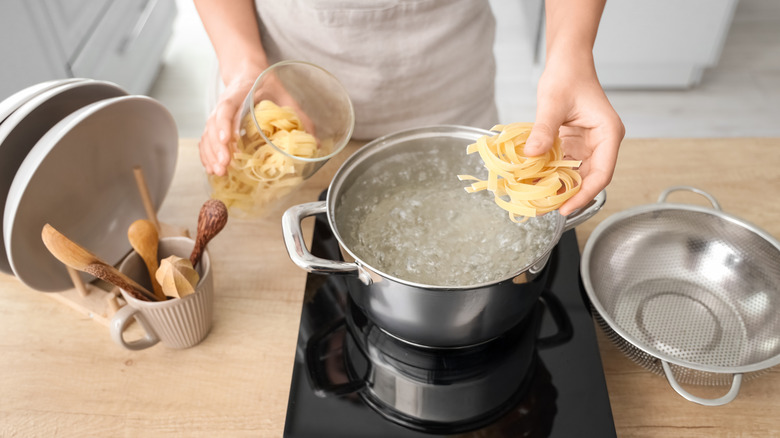
Starchy pasta cooking water is a single, no-cost ingredient that can effortlessly elevate your saucy pasta dish. Given the obvious lack of starch, fresh water doesn't stand a chance as a replacement for pasta water. That said, its utility extends beyond making a richer, more velvety pasta sauce. So, instead of sending this precious starchy water down the drain, strain your cooked pasta over another vessel to catch the cooking water, which you can store in the fridge for a variety of different uses.
For instance, the salt and starch from pasta water are a great way to add flavor and more body to hearty soups and stews. Avid bread bakers might want to take note of this next tip if they weren't already in the know: Starchy pasta water also works wonders when you use it in place of regular water to make dough. Not only will the bread rise beautifully, but the texture of the bread will also be softer. Plus, the added starch helps maintain the structural integrity of the bread.
You can also level up your side of cooked veggies with a touch of added flavor by steaming and blanching the vegetables in pasta water. The same applies to beans, wherein pasta water serves as a suitable stock to cook beans in. A seemingly "don't knock it 'til you try it" use for pasta water is to use it as an ingredient for a "healthier" dirty martini, thanks to the added starch, vitamins, and minerals present in the pasta water. If you're feeling adventurous or curious to try, you can also use some starchy water to thicken your mug of hot cocoa — a little salt may even boost the chocolatey beverage's sweetness.