

How To Put Together The Best Sushi Sandwich For A New Spin On Lunch
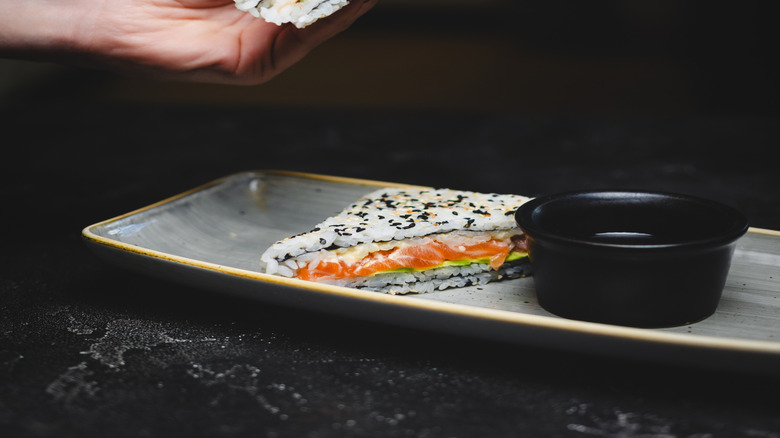
The packed lunch isn't always the most exciting meal, and even the most adventurous home chefs can fall prey to a boring, simple sandwich to satisfy their need for sustenance on the go. But crafty cooks don't need to suffer through dull, uninspired lunchtimes, so if you're tired of the same old routine of bread-filling-bread, why not try something new? Enter the sushi sandwich.
This trendy lunch idea is already a favorite among internet chefs (as evidenced by Emily Roz's viral sushi sandwich video) who've traded bread for sushi rice and opened the door to a whole new roster of portable, creative flavors. To find out more, we spoke to Namiko (Nami) Hirasawa Chen, founder and creator of Just One Cookbook and JOC Goods. "I've actually known about these sandwiches for years, and they're such a fun twist on the classic," she told us.
Like sushi itself, constructing a sushi sandwich starts with rice. Using short-grain Japanese rice (often labeled "sushi rice") is essential because it's stickier than other varieties and easier to mold into a compact "bread" shape. Press a scoop of freshly cooked sushi rice on top of a sheet of nori (dried seaweed), then flatten it gently so it holds together. Your options when it comes to filling your sandwich are innumerable, but fish is a great place to start. "For fillings, tuna, smoked salmon, fried white fish, anchovies, or sardines are all delicious options," Hirasawa Chen explained.
How to season your sushi sandwiches properly
Once you've picked your protein, it's time to think about how to balance the flavors in your sandwich using seasonings and other ingredients to create a delicious, unique packed lunch. Sushi is all about creating sensations of harmony and freshness, and you can bring those same principles to your sushi sandwiches. Seasoning the sushi rice with rice vinegar, sugar, and salt during the cooking gives it a subtle tang that keeps flavors balanced. If you have dried kelp (kombu) on hand, it'll also give the rice a boost of umami.
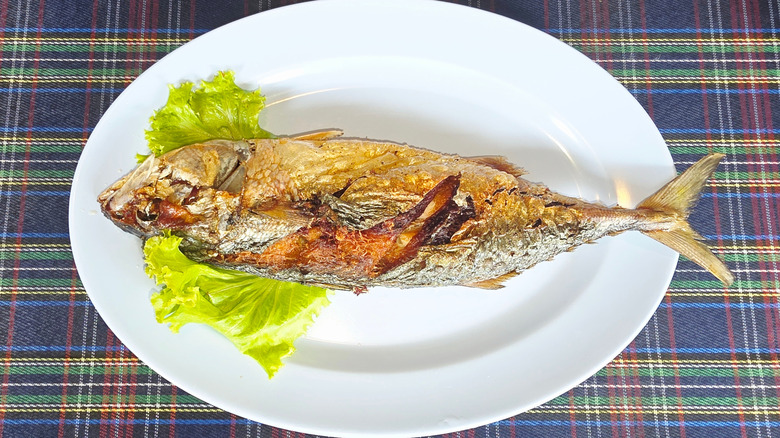
These sandwiches work best when you respect the natural character of each fish. Oilier fish like salmon and mackerel (which is also wonderfully affordable) need bright, zesty seasonings like mustard and herbs to contrast their heavier flavor, while milder fish pair better with creamy, salty seasonings like mayonnaise and soy sauce, Nami Hirasawa Chen told us. Meanwhile, intense savory fish like anchovies need freshness, to create balance. "For salty fish like anchovies or sardines, pair them with fresh vegetables, tomatoes, or cream cheese to balance out the saltiness," she said. "In short, balance richness with acidity, and keep the flavors light so the fish remains the highlight."
Get creative with fillings for a Japanese-inspired sushi sandwich
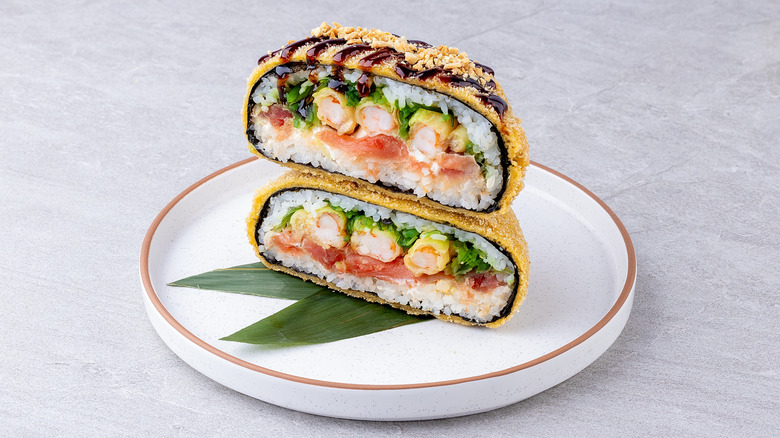
Sushi itself encompasses a wide spectrum of ingredients, and it's a great place to start for sushi sandwich inspiration. "For a Japanese-style version, fillings like smoked salmon with cream cheese and shiso (perilla) leaves, teriyaki chicken, tonkatsu with katsu sauce, or ebi furai (fried shrimp) with avocado work beautifully," Nami Hirasawa Chen said. Tuna and salmon bring those classic maki sushi roll flavors, while fried white fish and sardines lend a strong, salty kick and a crunchy bit of textural contrast, making for a truly unique and delicious lunch. "Vegetarian options such as egg salad, miso-glazed eggplant, or avocado with pickled radish add color and freshness," she added.
As always, the key here is creating a balance of flavors and textures: "Combine something creamy, something crisp, and a touch of salt or acidity to tie everything together," she explained. "Wrap the roll tightly in plastic, chill for a few minutes, then slice it like sushi for easy, bite-sized sandwiches."
In Japan, the "sushi sandwich" usually refers to something very similar, yet still distinct from this dish. "When we say 'sushi sandwich' in Japan, we usually mean onigirazu — a sandwich made with rice instead of bread," Hirasawa Chen said. "I recommend trying my Spam onigirazu. It's easy to make, delicious, and perfect for lunch or picnics." Spam, with its salty, savory crunch, is a deeply satisfying option for a great sushi sandwich — the popular Hawaiian spam musubi is proof of that. "Unlike traditional Japanese rice balls (onigiri), onigirazu allows you to pack in more fillings, making it extra satisfying and portable," she said.