

A Great Thanksgiving Debate: Should You Be Rinsing Your Brined Turkey?
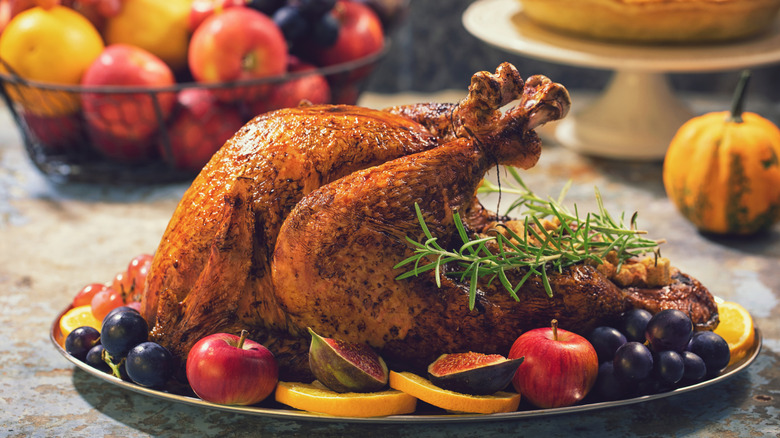
Dressing vs. stuffing, white meat vs. dark meat. pumpkin vs. pecan pie; there are plenty of Thanksgiving topics that are hotly debated. Now we're going to get into another one that's a talking point among foodies: whether you're supposed to rinse a brined turkey before you pop it into the oven or not. While there are some varying opinions out there, most agree that yes, it's a good idea to give your brined bird a quick shower under cool running water before cooking it. Let's take a look at why rinsing your brined turkey makes sense — and why some experts say it's actually okay to skip the rinse.
Ree Drummond, aka The Pioneer Woman, says that rinsing a brined turkey in cold water — inside and out — is an absolute must, as it allows you to remove excess salt from the bird. After you rinse your brined turkey, you'll want to dry it thoroughly. You can either use paper towels to remove any excess moisture, or pop it into the fridge to air-dry in a roasting pan (be sure to leave the lid off during the drying process).
Turkey often turns out dry, and brining gives you the chance to help your bird gain some much-needed moisture. When you soak your turkey in salty water, some of the brine is absorbed. This salty infusion doesn't disappear while your turkey cooks, rather, it helps create a moist, juicy final product that will leave you wondering why you didn't start brining your turkeys years ago.
How brining works — and how to get it right this Thanksgiving
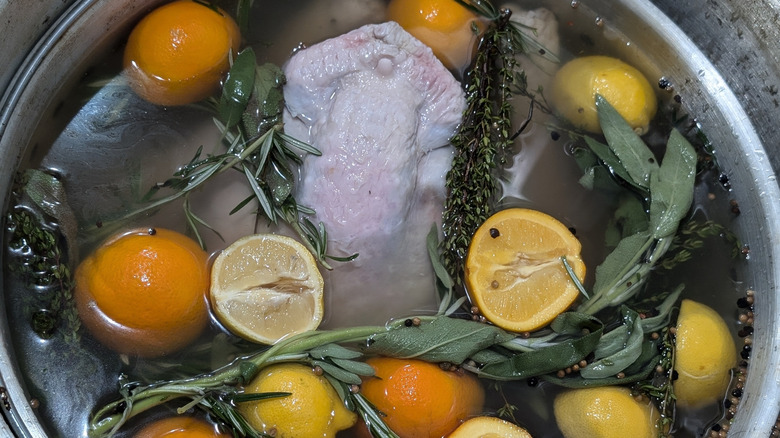
While many chefs say it's smart to rinse your turkey post-brine, they're not all in agreement. Some experts believe rinsing your turkey after brining simply isn't necessary. When you brine a turkey, the salt doesn't rest on the bird's skin — it actually moves through the meat. This fact — paired with food safety concerns — means it might not be worthwhile to rinse your turkey after brining. Even if you choose not to rinse, however, it's still important to dry your turkey after brining. Moisture is the enemy of crispy, golden-brown skin, and patting your turkey dry helps lessen the amount of steam in your oven, increasing the likelihood of a crispy outcome.
If you'd prefer not to bother with the mess of brining your turkey in salty water, you've got another option. Dry brining — rubbing salt directly onto the turkey and letting it sit in the fridge for a few days — can help infuse the bird with flavor and create a super crispy skin. The salt-infused skin is ready for roasting as soon as it comes out of the fridge, and you don't have to worry about rinsing it before popping it into the oven.
No matter what brining advice you follow, it's important to keep a few safety tips in mind. Be sure to thoroughly clean your food prep areas, especially where you place the turkey into and remove it from the brine, as splatter can easily contaminate your kitchen. If you rinse your turkey after brining, it's also essential to sanitize your sink afterward. Finally, don't forget to only brine your turkey in cold water, as warm water may start the cooking process, which can increase the likelihood of foodborne illness.
Tips to brine your turkey like a pro
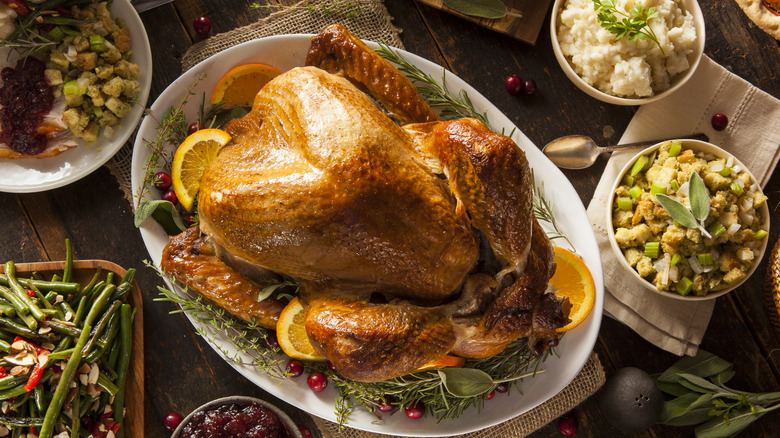
Getting ready to brine your turkey this Thanksgiving? You're on the right track to a seriously memorable meal. Brining is a great fit for meats — like turkey — that tend to dry out quickly. In addition to creating more tender meat, brining can also allow you to infuse flavor into your turkey before the cooking process begins. A basic brine of salt, water, and sugar can create a delicious bird, but you don't have to stop there. If you'd like to try something a bit more complex, you can use a soy sauce-based brine to infuse some major umami flavor.
There are several schools of thought when it comes to figuring out how long your turkey should spend in its brine bath. If you overdo it, you run the risk of creating an overly salty bird. Martha Stewart recommends allowing your turkey to soak in the brine solution for eight to 18 hours, while Ree Drummond recommends 16 to 24 hours. No matter what method you choose to create a perfectly brined turkey, planning ahead is key.
The bottom line: Whether you choose to wet brine or dry brine, rinse or not rinse, the brining process allows you to add a ton of moisture and flavor to Thanksgiving dinner. Choose your method carefully, and be sure to give your turkey plenty of time to brine in the fridge. Whether you go with the rinse or no-rinse method, follow food safety rules and enjoy your golden-brown, tender turkey with your favorite Thanksgiving side dishes.