

Why Restaurant Kitchens Don't Have Air Conditioners, Even When It's Scorching Hot
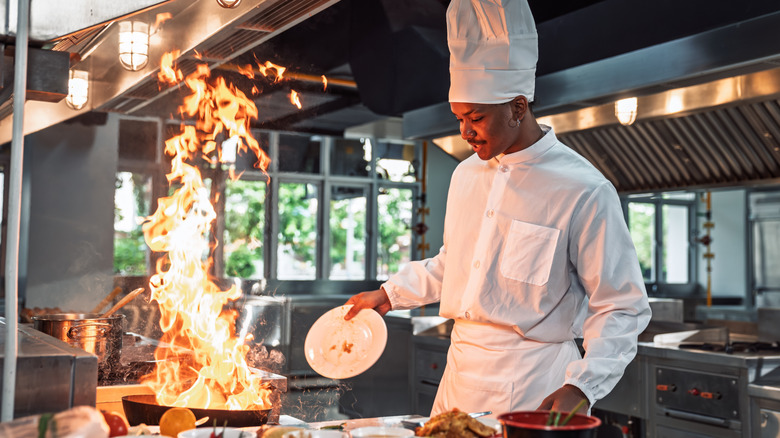
"If you can't stand the heat, get out of the kitchen" isn't just a saying; it's a nod to how hardy one needs to be to work as a professional chef. Sure, Gordon Ramsay's home kitchen channels a modern nostalgia, but a professional kitchen is about pure, almost brutal functionality — the antithesis of the elegant morsels that arrive at the table. Along with all the hot surfaces, sharp edges, and spattering liquids, chefs also have to deal with the kitchen's sweltering heat. One would imagine with all the fire, appliance heat, and frantically moving professionals crammed into the kitchen, an air conditioner would be a no-brainer. However, it's rarer than you think, and many professional kitchens are not air-conditioned and easily get hotter than 100 degrees Fahrenheit.
In an exclusive with Chowhound, Frankie Weinberg, restaurant manager and co-owner of Good Catch Thai Urban Cuisine and Pomelo in New Orleans, explained why having air conditioning in restaurant kitchens is so complicated. To ensure sufficient ventilation, large exhaust hoods are installed. Per Weinberg, who is also a management professor at Loyola University, "These hoods suck out tons of air, and quickly, the purpose of which is to remove smoke, grease, and heat from the kitchen space. If the kitchen were air-conditioned, the hood would just suck up that conditioned air as well, making it an expensive but ultimately futile and largely useless process."
While moisture-wicking clothing, strategically positioned high-powered fans, and specialized swamp coolers, which use ice for added effectiveness, help keep kitchen staff cool, conditions remain intense. Weinberg explains, "proper hydration is essential, and staff in hot spaces would benefit from not only consuming water but also, like athletes, electrolyte drinks can help to provide essential nutrients."
Air conditioning restaurant kitchens is complicated and costly
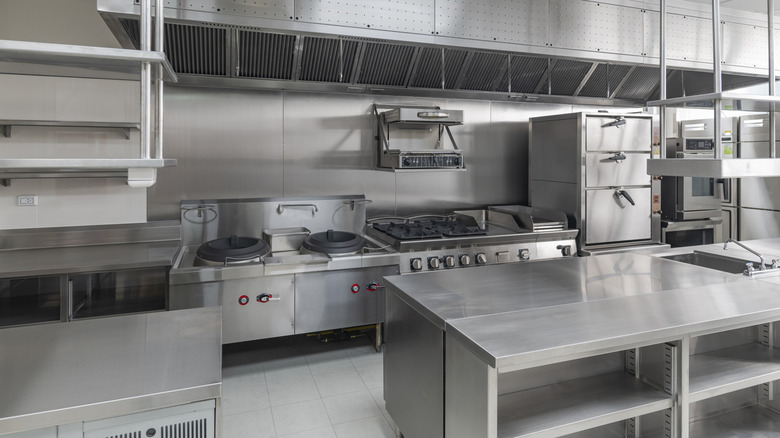
Because of all the simultaneous cooking processes, the airflow in a kitchen is wildly complicated and needs to be heavily controlled. Sufficient ventilation is key, but you can't just open a window as you would to keep your home kitchen cool for multiple reasons, including safety and hygiene. Open flames, fryers, and appliances give off heat in different parts of the kitchen, and an air-conditioning unit placed near any of them would be rendered ineffective and could potentially get damaged. Keeping in mind the long-running hours of a kitchen, the air conditioning unit would have to work at high capacity for equally long hours, making it extremely prone to wear and tear. You also cannot have an air conditioner that cools both the kitchen and the dining area, says Frankie Weinberg, since most restaurants want to avoid grease and kitchen odors spreading to where the guests are eating.
Even if you get a high-powered and resilient cooling unit that's positioned correctly in the kitchen, there is still the matter of the AC's outer unit. "In many restaurants, the kitchen is in the back of a mixed-use space or in a building that immediately backs up against the back of the building on the block behind the restaurant," Weinberg points out. "Without access to an exterior wall, it can become impossible to add a new AC system in the back, as the condenser for any unit needs to vent outdoors (this includes window units, split AC units, and central units)." Generally, the only workable option is an industrial duct-style AC unit, but these are expensive and require extensive work to install.
How heat-sensitive foods like desserts are managed in hot kitchens
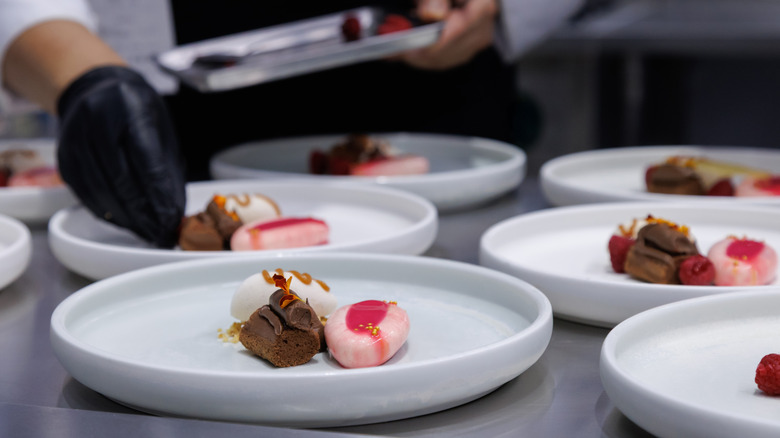
While chefs and culinary professionals are hardy enough to deal with the heat of a professional kitchen, the same can't be said for desserts and heat-sensitive dishes. Much of a dish's eating experience depends on it being served at the right temperature, which is further complicated by just how difficult it is to manage that very factor in a kitchen. The solution, Frankie Weinberg reveals, is all in the planning. "This one is all about timing and workflow. In the example of heat-sensitive preps, these tasks are often best to tackle early in the morning before the mid-afternoon heat rises," he says. Sometimes it is also helpful to make cool zones near serving areas to help get cold dishes quickly to the table without them being exposed for too long to kitchen heat. Of course, this process is more complicated with plated desserts that contain a combination of hot and cold elements.
In addition to learning about how to effectively prep, one of the most crucial lessons that chefs learn in culinary school is the importance of food safety. Weinberg reminds us that safety should always be a foremost consideration, saying, "While timing and technique matter, so does compliance: In all cases, it's of course essential to follow standard health department and food safety procedures to guide the process." Maintaining food at the right temperature isn't just about making eating it enjoyable; it also ensures that the ingredients are safe to consume.