

How To Make Steak Tenders That Fry Up Into Juicy, Crispy Golden Bites
We may receive a commission on purchases made from links.
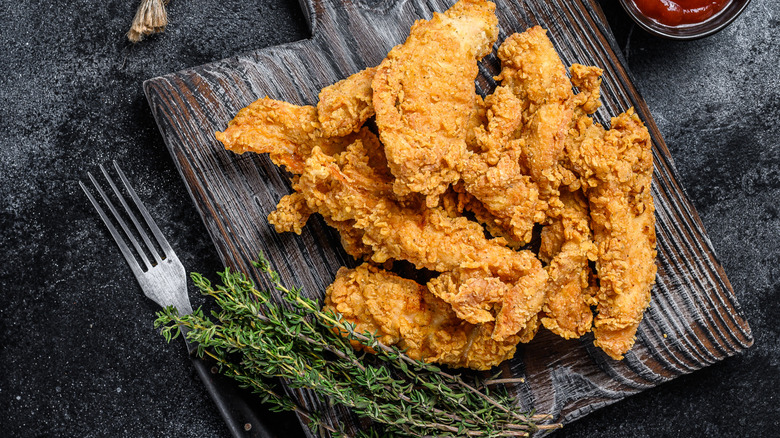
Whether you're just feeling hungry for steak but want something different from the usual (in which case, these regional steak styles are worth a try) or you're craving hearty finger food, give chicken a break and make steak fingers instead. These decadent, golden-fried tenders combine a crispy, seasoned batter-fried coating with succulent strips of beef, making for a deeply flavorful snack. The one thing you mustn't get wrong with these, however, is the crunch. While simple enough to make, if the steak's crispy coating doesn't have the texture it needs, or worse, falls off, you won't just have a disappointed audience, you will also end up wasting a good chunk of meat.
Chowhound got an exclusive with cowboy chef Kent Rollins, best-selling author and star of the Outdoor Channel series "Cast Iron Cowboy," on how to get our steak tenders perfectly golden and crispy while still retaining a juicy bite. "Double coating is best for a good, crispy steak finger," advises the national TV personality, who also has a following of over 3 million on his YouTube channel, Cowboy Kent Rollins.
Crispiness aside, what's inside also matters. Just like the difference between chicken tenders and fingers is in the meat, selecting the right cut for steak fingers is crucial. Rollins is partial to top and bottom round cuts for his steak tenders and avoids long-grain muscle cuts that tend to be tougher (although they do have a beefier flavor). Cube steak, which comes tenderized and is generally inexpensive, is a popular choice for steak fingers. The thinly pounded meat results in a tender, juicy bite that's perfectly complemented by the crispy exterior.
A good batter always makes it better
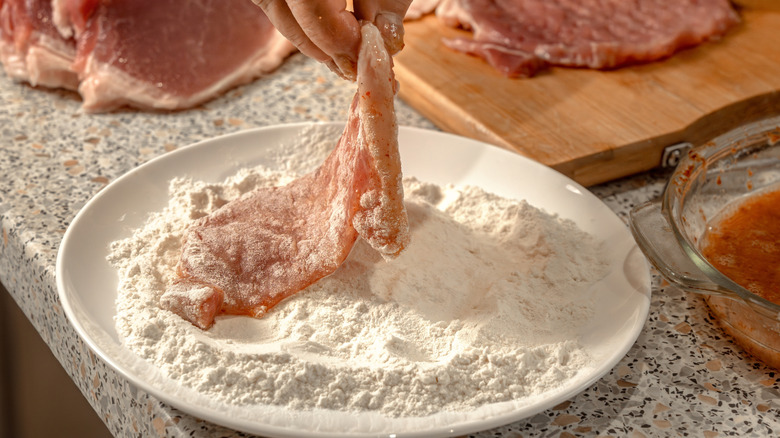
Once you've got the steak cut into strips, it's time to get the batter right. The perfect coating for classic chicken-fried steak fingers is light and flavorful, and must adhere to the meat well. Kent Rollins uses a combination of buttermilk, egg, and a dash of baking powder for the wet batter ingredients, and flour mixed with cornstarch and baking powder for the dry. Cornstarch adds to the crunch, which is why you can also use it to make the crispiest roasted vegetables or any other dish that needs a crispy bite. Baking powder keeps the batter light, giving the coating an airy crunch. Both wet and dry batter ingredients should get a generous hit of your preferred seasoning for a punchy flavor.
Next, to ensure the strips are well covered and there are no gaps, it's best to follow Rollins's advice and double coat with the batter. Start by patting the steak strips dry with a paper towel and then tossing them in the dry flour mixture. Follow this by dredging them through the wet batter mix. Now, back into the dry flour mixture and then back again in the wet mix. Give the strips one final toss in the dry mixture, and then you're ready to fry. (Remember, the order for dredging in the batter mixes is dry-wet-dry-wet-dry.) Let them rest for about 10 minutes before frying. Do this, and you'll get that perfect crispy, golden exterior every time.
Timing and temperature are key to perfectly fried steak tenders
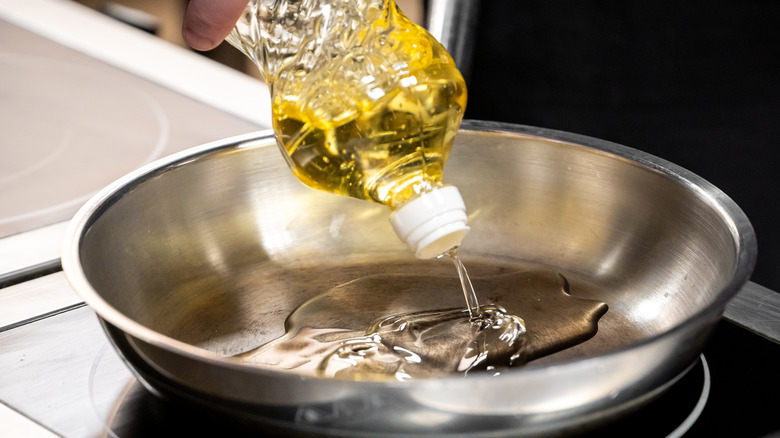
The fry is the final step, and this is where all the previous steps culminate into juicy, crunchy, beefy goodness. Kent Rollins reminds us that a high-temp oil (like canola, vegetable, or grapeseed) is needed, and it's absolutely crucial to make sure it's at the right temperature before you drop in the strips. He also recommends using a good meat probe to do so, and a handy one like the ThermoMonster instant read meat thermometer can handle the task.
The oil should be between 325 and 375 degrees Fahrenheit. Don't let it get too hot, as it may cause the tenders' outside to burn before the meat inside cooks all the way through. For a quick check, toss a pinch of the dry flour mixture into the hot oil. It should sizzle and come to the surface immediately, but if it turns brown too quickly, the oil is too hot. Remember that once you drop a few tenders in to fry, the oil's temperature will drop a little.
Let the strips fry for four to five minutes and then flip them over. Remove once perfectly golden brown, and pair them with some gravy or, for something a little different, a good French onion dip for absolute finger-food heaven. While best eaten fresh, you can also store leftovers and reheat them in the oven or air fryer till they get their golden, crispy texture back.