

This Easy Storage Tip Will Extend The Life Of Your Nonstick Cookware
We may receive a commission on purchases made from links.
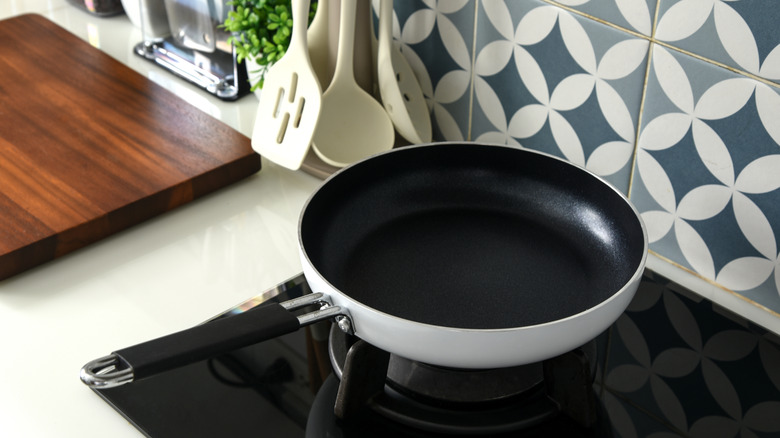
If you're someone who cooks often, you know that nonstick pans feel a little bit like magic. The Teflon or ceramic coating forms a protective layer that lets food particles slide right off, helping you reduce the amount of oil used to prepare your food. But this science-backed form of magic only works if you properly clean and care for your nonstick pots and pans. Chowhound spoke with chef and restaurateur Geoffrey Zakarian at the New York City Wine & Food Fest, and as someone with his own nonstick cookware line, he recommends pan protectors to extend the life of your pans.
"You want to store them with little pads in between so they don't get dinged," Zakarian explained. "They're made with felt or rubber." Many nonstick cookware brands sell them — for example, you can get the Le Creuset set of three felt cookware pads. Going the extra mile with these separators might feel a little over-the-top, but it's better than finding scraped-off pieces of pan coating in your scrambled eggs. In fact, Zakarian went so far as to suggest that it's better to replace scratched nonstick pans than try to save them. His advice for the forsaken pans? "Garbage," the expert told us.
Alternative ways to keep your pans in mint condition
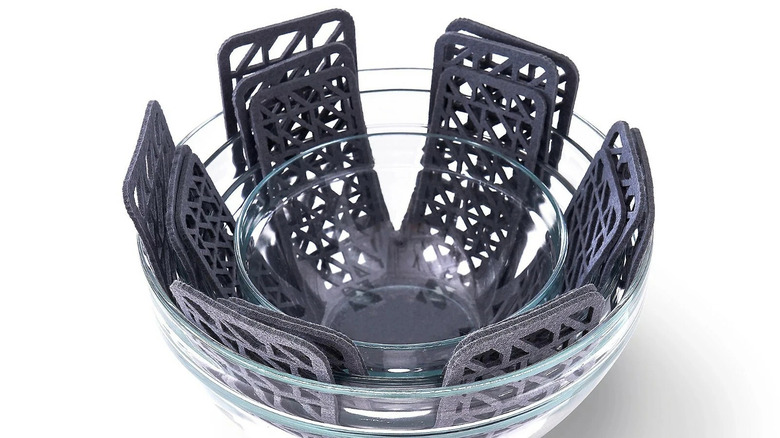
Ever since nonstick cookware was introduced to markets in the 1950s, keeping pans from scratching has been a concern. Polytetrafluoroethylene (PTFE), otherwise known as Teflon, contains per- and polyfluoroalkyl substances (PFAS). If that coating is scratched by, say, a metal spatula or another pan stacked on top of it with no separator, PFAS could escape into the food that you cook. Ingesting a small amount of coating isn't an emergency, but it's important to avoid longterm exposure and using Teflon pans on high heat (over 450 degrees Fahrenheit). Always use a rubber spatula with your nonstick cookware and keep it safe with some form of pan pads.
There are newer, quality nonstick cooking pans that are free of PFAS, but if you don't want to purchase yet another kitchen product, it's totally possible to be resourceful and use what you have. Some people place old dish towels between pans, while others go even further with the no-waste theme by keeping and using the cardboard separators that often come with cookware packaging. And if that still sounds like too much work for you, you might want to try learning how to cook with stainless steel pans for a nonstick effect instead.