

Don't Skip This Step For Fluffy Rice
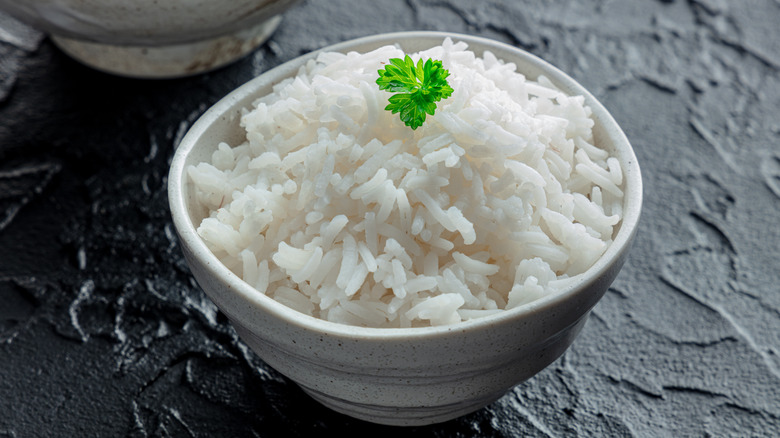
A vast number of rice-based recipes shine when the individual grains are separated. Whether you're making the best homemade fried rice using leftover rice, which is a hack to avoid mushy fried rice, or serving rice alongside an aromatic stew or curry, there's no denying that cooking with and serving fluffy rice makes a notable difference in how enjoyable a meal is.
There are a number of factors that impact how fluffy cooked rice ends up, including the natural starch content of the rice variety, the water-to-rice ratio, and cooking time, to name a few. But, according to chef Ayo Balogun, the founder of Dept of Culture Brooklyn — an eatery serving innovative dishes inspired by North-Central Nigerian cooking — there is one no-skip step that is the key to fluffy rice each time. When we had an exclusive conversation with Balogun at this year's New York City Wine & Food Festival, he told us that the non-negotiable step is simple enough: "Wash, wash, wash your rice."
Despite being an easy pro tip to try at home, Balogun takes thoroughly washing his rice seriously. It's not just a handful of washes until the water starts to run clear, but rather, a whopping 20 wash cycles. And that's just the minimum number of washes he recommends, because as he advises, "You just have to be very patient. Patience always works." The more times you wash the rice, the more of the starch that gets removed, and the less gummy the texture. So if you have the patience for at least 20 washes and really want to cook the fluffiest rice, it could be worth the result, both texturally and from a flavor standpoint.
More chef-certified tips for fluffy rice
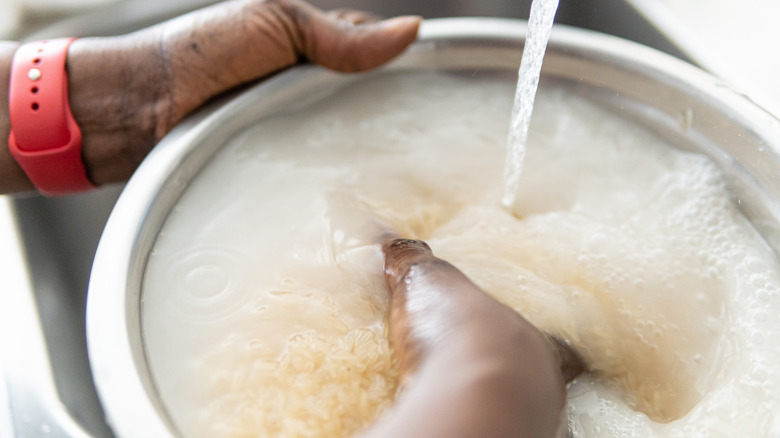
Considering chef Ayo Balogun's tip about washing your rice 20 times, you might be wondering how exactly the pro handles the grain to make sure it's thoroughly stripped of its starch. For him, the way to wash your rice is to rub your hands through it, as opposed to simply rinsing it in a colander. Taking the time to handle every grain is not only a plus for the rice's texture, but is a way to truly feel connected to the meal being prepared and even relax while cooking. "You know, cooking sometimes is just ... it's like you're chilling, it's very therapeutic — just lose yourself into it," Balogun says.
Still, Balogun acknowledges that not everyone has the luxury of time or the patience needed to wash rice this thoroughly. Nodding to Nigerian culinary practices, he tells us that adding some aromatics can also help fluff up rice. "Sometimes we use butter, but you might not need it if you've taken the proper steps and washed your rice," he says.
Additionally, when it comes to achieving fluffy rice, it's important to remember that different rice varieties have different amounts of starch, and their culinary applications can vary accordingly. For instance, short-grain varieties like those used for sushi carry more of the starch called amylopectin, which makes sushi rice sticky. On the contrary, long-grain rice has more amylose, making it lighter and fluffier. Balogun prefers Nigerian varieties like Ofada rice, which is a long-grain purple rice that is popular in the region. He notes that jasmine rice, another long-grain variety, is becoming more common for making traditional dishes like Jollof rice, but he opts to stay committed to his Nigerian heritage in his culinary ventures.