

Before McDonald's, This Beloved Restaurant Chain Once Ruled American Roads
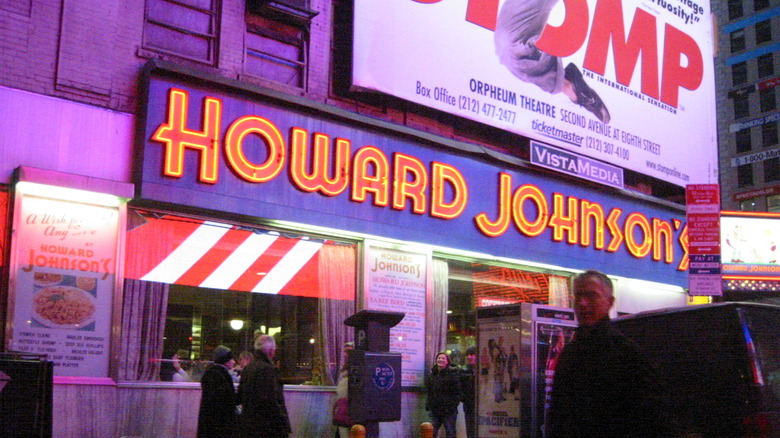
If you've heard the name "Howard Johnson's," you may associate it with roadside motels somewhere on the spectrum of "run-down" to "serviceable." But look back to the mid-20th century, and it was actually the world's largest restaurant chain and a pioneer for the now-ubiquitous franchise restaurant model. It started a century ago when Howard Deering Johnson opened an eponymous soda fountain in Quincy, Massachusetts, in 1925, around the time some of the oldest soda fountains in the United States were founded. He found success selling ice cream, devising a particularly creamy recipe with more butterfat than was normal at the time, and drew crowds, leading him to open more businesses and to start selling food like hot dogs and sandwiches before opening a full-service restaurant within a few years.
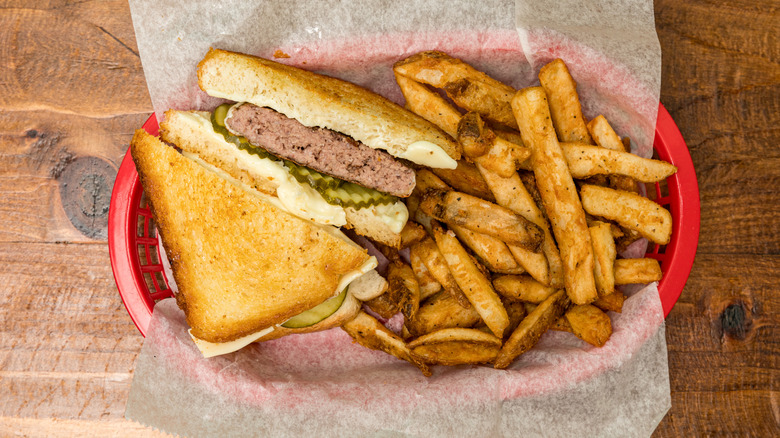
Cars were becoming ever more common, and Johnson was a forward thinker, deducing that there would be a market for roadside restaurants for drivers on longer journeys. So in the '30s, he started franchising, and it grew rapidly: Excluding a notable dip in business due to World War II rationing, HoJo's (as it was called) hit the big-time from the '50s to '70s, with many restaurants also adding on-site motels. It became an icon of American road trips, with neon signs and bright orange roofs that stood out from highways. While HoJo's did serve burgers and hot dogs (as well as Johnson's famed ice cream), it was much more a full-service restaurant than a fast food joint, with menu items including fried clams, potpies (pictured), spaghetti, and roast turkey. The chain even hired famed French chef Jacques Pépin for menu development in the '60s.
What happened to Howard Johnson's?
There wasn't one big misstep that caused the chain to decline, but rather, a series of problems from within and without. It faced competition from growing fast food chains like McDonald's and the original fast food restaurant, White Castle. These fledgling businesses developed factory-like models of food preparation that got customers in and out fast while keeping costs controlled.
Consumer preferences also changed, with travelers more interested in faster food service. As Johnson predicted, highways were fueling the rise of fast food chains, but that didn't help HoJo's. In order to compete, Howard Johnson's looked for ways to lower food costs, but that resulted in a lower-quality product. On top of that, the chain generally got more lax enforcing important minimum business standards among its franchisees, resulting in cleanliness and maintenance issues that made the chain look shabby to some customers. This was particularly notable given the chain's serious emphasis on cleanliness and uniformity in earlier years.
HoJo's was past its prime by the late '70s. Johnson's son Bud sold it to a British company, but the decline continued, and it was sold again to Marriott in the '80s. Marriott then sold off many restaurants and converted others to its own brand, Bob's Big Boy. A small number of restaurants staggered on until the 2010s, although the last surviving restaurant was arguably a HoJo's in name only, having retained the rights to the name through a legal technicality but retaining no official connection to its forebears. Meanwhile, Marriott eventually sold the motel side of the company off completely. Those motels, now owned by Wyndham, are now the only trace left of the original HoJo's — and while the company floated plans for a revival a decade ago, it seems they may also be in decline too: A few dozen still exist, but with no new openings and sporadic closures, it's also fading from the American highway landscape.