

These Are The Hands-Down Best Types Of Wine To Buy Canned
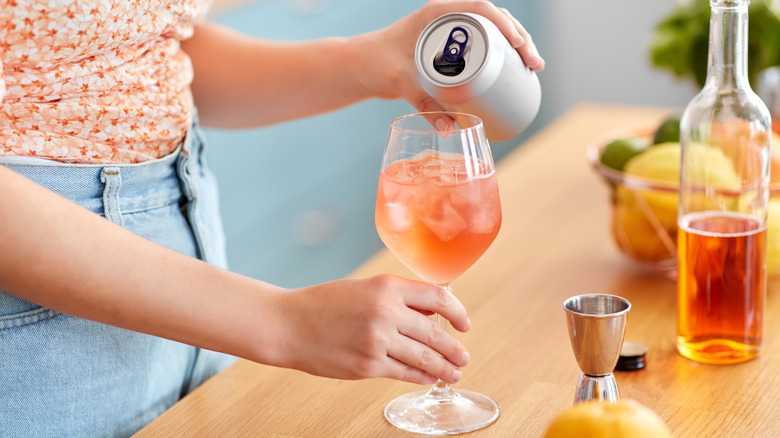
Canned wines, though different from boxed wines, also tend to share some negative press among the public, often regarded as cheap and inferior in quality. On occasion, that might be the case, with some canned wines having a distinct, unpleasant smell of rotten eggs. But, what if the problem is that you've been reaching for the wrong types of wine that are canned? To delve into the ideal wine type when going the canned route, Chowhound spoke to Helena Nicklin, a drinks writer, broadcaster, and founder of HelenaSips Wine Academy. According to Nicklin, who spoke with Chowhound exclusively, "Canned wines shine when the style is made to be fresh, crisp, and fruity rather than heavily oaked, too boozy, or tannic," meaning it's important to opt for refreshing, light wines. She recommends white wines that are crisp, rosés that are juicy, and reds that are light. Grape varieties to look out for include "sauvignon blanc, albariño, and picpoul for the whites, and grenache and gamay for the reds."
There also appears to be a reason behind why some types of wines work and don't work when sipped from a can, and that is the environment of the can, which is typically made of aluminum. "The can's environment is harsh with no light or air, which does not work for wines meant to age as they need an element of micro-oxygenation, which you only really get with real corks," she explains. However, these conditions are suitable for preserving the aromatics and freshness of lighter and more fruit-forward wines, hence why these varieties make for a far more enjoyable sip from a can.
The innovation behind canned wine
For the most part, canned wines are produced in the same way that conventional bottled wine is, with the most significant difference being the final bottling — or rather, canning — stage. Instead of a glass bottle, the final product is filled into an aluminum can. The canned wine is then dosed with nitrogen gas to eliminate any excess oxygen, which can ruin the flavor if left trapped in the can. The canned wine industry has made significant improvements in the production and quality of the wines it produces. These days, canned wines can conjure a visual of convenient poolside sipping, without the stress of glass bottles in the vicinity. But did you know that the origin of canned wine can be traced back to post-Prohibition America, when winemakers had the freedom and flexibility for more public-facing innovation?
At the time, the alcohol content of the wines and their acidic nature degraded the protective lining between the wine and the metal. As a result, the metal's taste would leech into the wine, and so canned wine wasn't viewed favorably. Over time and with improvements in material innovation, the stand-out "aluminum" flavor became a thing of the past. According to Helena Nicklin, as long as you don't let wine sit in the can for a long duration, you don't need to worry about the off-putting metallic flavor anymore. She explains how in the earlier eras of canned wine, "bad wines often went into unlined cans and came out tasting metallic and tinny." Thankfully, nowadays there is typically a food-grade polymer lining, resistant to wine's chemical composition, that protects it from the metal. So there's no metallic aftertaste and an assured palate-friendly sipping.