

Ground Beef Tasting Bland? The Solution Is Hiding On Your Bar Cart
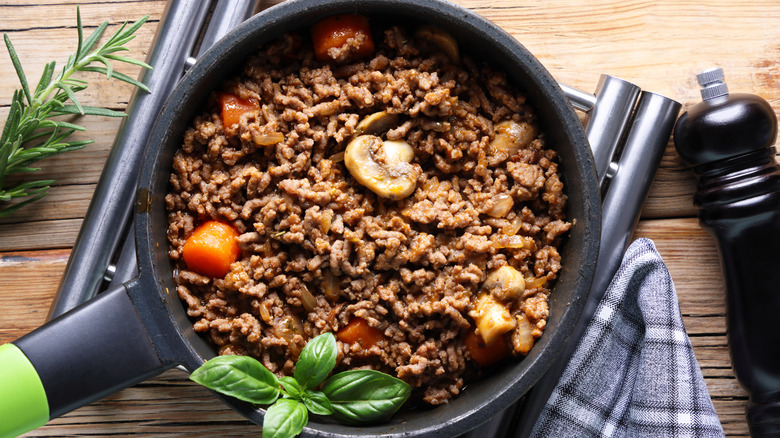
Ground beef is one of the most versatile meats you can cook with. Hamburgers, meatballs, casseroles — there's practically no end to what you can do with it. But even if you like to hack your way to browned ground beef perfection with baking soda, if you're not careful, the meat can still turn out a bit bland. While spices and other seasonings are important, your bar cart holds a boozy solution that will give your ground beef dishes a flavor you'll want every night of the week.
The next time you're making a dish with ground beef as the star, pop the cork on a bottle of wine and start pouring. You don't need to use an expensive bottle; just something drinkable — that way the leftovers won't go to waste! Cooking with wine doesn't just lend a more robust flavor to the meat, it also helps tenderize and accentuates the complex aromas in the dish. Since we eat with our eyes and our noses before we even taste the food, this makes wine the perfect addition to ground beef recipes. Whether you're whipping up a classic shepherd's pie or the Swiss macaroni and meat sauce dish called g'hacktes mit hörnli, adding wine to the ground meat mixture so it reduces and the alcohol burns off allows all of those beautiful simmered flavors to intensify.
Choosing the wine (and finishing it off) is the fun part
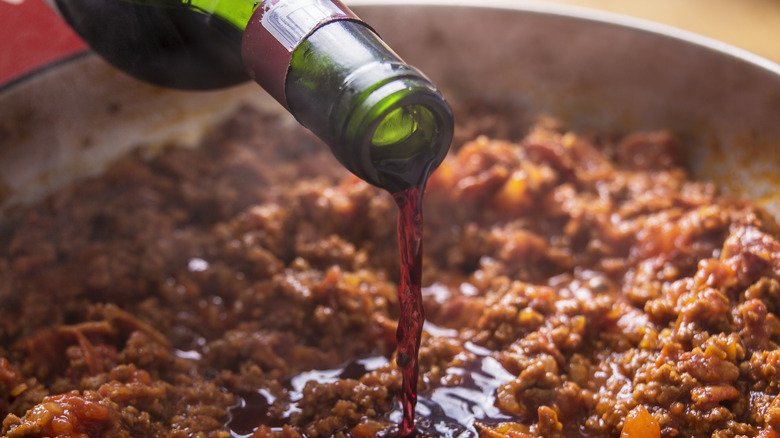
When choosing your wine, either red or white will work. Cabernets, syrahs, and zinfandels are solid red options, while chardonnays and viogniers will give you great flavor from a white. The key is to pair the wine with the richness of your meat, so if your ground beef has a higher fat content, opt for a fuller-bodied wine. These will complement your beef and bring out the flavor, especially if you are sauteing your meat with herbs and veggies. However, be wary of trying to pair the wine with spicy seasonings — you'll be wasting that beautiful booze when the fiery heat drowns out the other flavors. Beef and root veggies, like a mirepoix of onions, carrots and celery, are an ideal combination, and these ingredients will blend harmoniously with wine rather than trying to compete with it.
Whether you prefer red or white, one thing to keep in mind is that you should stay away from commercial cooking wine. While cooking may be implied by the name, don't let that fool you. Cooking wine is produced specifically for culinary purposes, meaning you wouldn't want to drink the stuff. And if you won't put it in your glass, why would you want to put it in your food? Cooking wine tends to have an excess of sodium, which will end up altering the flavor of your recipe and leave you with a dish no one really wants to eat.