

The 10 Oldest Chain Restaurants In America You Can Still Dine At Today
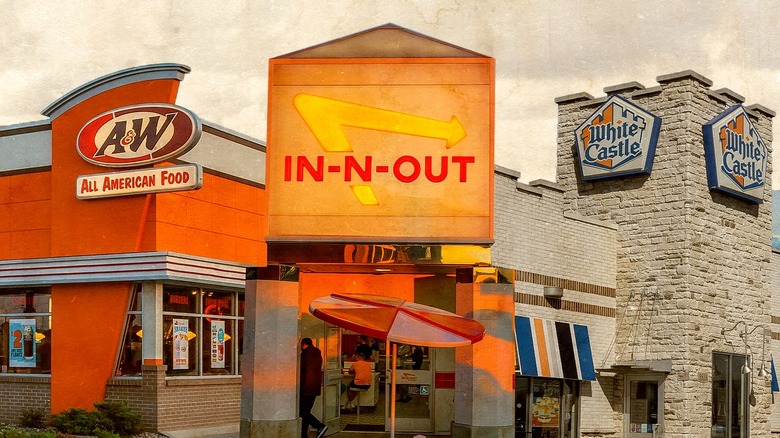
Talk of long-gone restaurants, lists of companies cutting back locations, and reports of current closures due to economic pressures may have you thinking that many other restaurants are on the chopping block — that's a depressing thought even if you don't eat out much. Many people who grew up in the U.S. have memories of going to eat out as a kid, and some remember getting certain treats like fast food or ice cream at the end of the school year. To think all those restaurants have shrunk their number of locations or gone away completely is sad — it makes it seem like nothing is left of your childhood food memories.
However, there is some good news. Some companies are trying to preserve those childhood memories, such as Hilrod Holdings' recent purchase of Thrifty ice cream from Rite-Aid, much to the relief of many who remember visiting those ice cream counters. Plenty of restaurants that have been in business a long time are still around and not planning to go anywhere. While it helps that they're part of multi-state or national chains and have more financial and administrative support than non-chains, it's a testament to how much people liked the food that these 10 restaurant chains that are still operating.
1. A&W (1919)
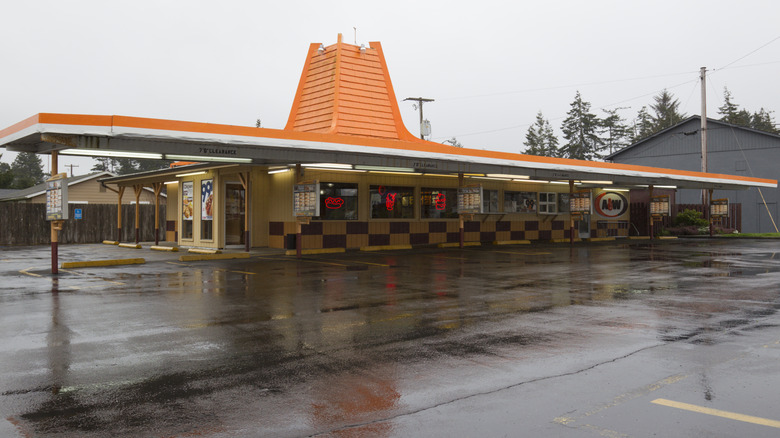
The oldest chain restaurant in the U.S. that you can still eat at is A&W. What started as a root beer stand in central California gradually turned into a popular chain of restaurants, not to mention a beloved brand of root beer sold in stores. In fact, the mugs the chain would serve root beer in were so popular that the company started selling them, creating some of the earliest restaurant merchandise that customers could buy. A&W was also one of the earlier restaurant companies to start franchising after the owners, Roy Allen and Frank Wright (you see how the name "A&W" was formed), decided to expand into other cities. A&W now has several locations throughout the U.S. and Canada, as well as in Asia and Europe.
A fun fact about A&W is that, without that little roadside soda stand, the Marriott chain of hotels likely wouldn't exist, at least not in its current form. In 1927, J.W. Marriott and a business partner started an A&W franchised root beer stand in Washington, D.C. Marriott's partner left, but his wife, Alice, took over the partner's role. As their franchise expanded, the couple renamed the new restaurants "Hot Shoppe," although they still served A&W root beer. Marriott later had the idea to create an airline catering service in 1937. However, 1957 was the big year; that's when the family decided to get into the motel business, which grew over the decades into the hotel giant it is now.
2. White Castle (1921)
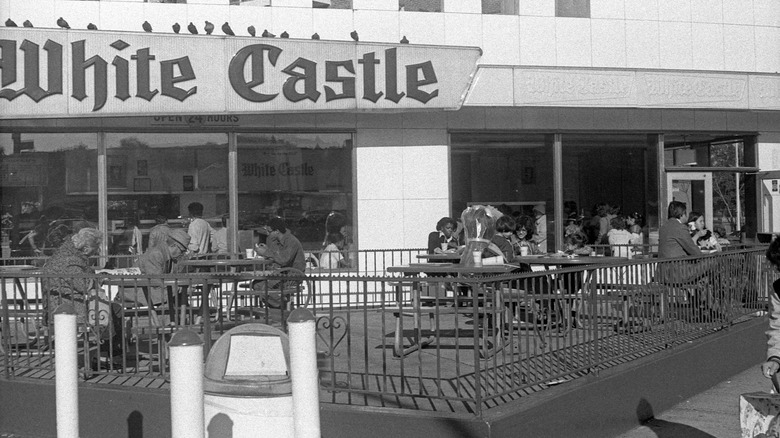
White Castle opened up in 1921 when founders Billy Ingram and Walt Anderson opened a hamburger stand in Kansas. Their timing was great because, at that point, there really were no chains that focused on burgers the way fast food does now. Combined with relatively cheap prices that allowed people to buy several of these small "sliders" that the restaurant would cook, White Castle's popularity took off. The company gradually expanded eastward, moving its headquarters from Wichita to Columbus, Ohio, in the process. White Castle's locations are in the Upper Midwest and Northeast now, but the company branched out into frozen foods in 1987, allowing people nationwide to have their sliders.
White Castle was an innovative chain. It offered bags of sliders to go, and it claims to have invented carryout food. Whether it really was the first is unknown, but it was certainly one of the earliest companies to do so. It was also one of the earliest, if not the earliest, to normalize the hamburger in its current form. Previous to the 1920s, hamburgers weren't that common; you could find meatballs between bread slices, of course, but the flattened patty may have been a White Castle innovation. The story is that Anderson got tired of frying meatball-shaped lumps and whacked one flat with his spatula. White Castle was among the earliest to advertise coupons in newspapers, in 1933, and the classic five-hole pattern in each patty was added in 1947.
3. Dairy Queen (1940)
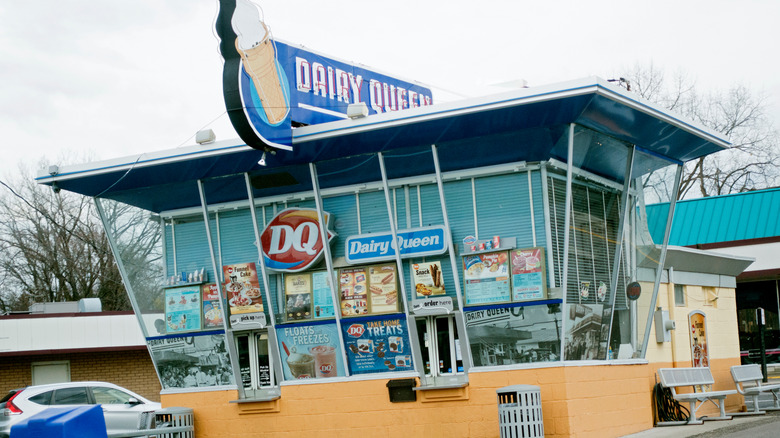
Dairy Queen officially began in 1940, although its founder created the recipe for its famous soft serve ice cream in 1938. J.F. McCullough and his son lived in Moline, Illinois, but found an ice cream shop in Kankakee, closer to Chicago, that was willing to test out the pair's recipe. That shop held a special event and served the new ice cream to over 1,600 people. After that, the McCulloughs quickly started sourcing freezers and eventually opened their first Dairy Queen location in Joliet in 1940, north of Kankakee. The chain has since expanded worldwide.
The treats that the chain is known for appeared gradually. The first malts and shakes didn't show up until 1949, for example, and there were several years between the introduction of some of the more famous treats like Dilly Bars in 1955 and Buster Bars in 1968 (Blizzards didn't appear until 1985). Dairy Queen's restaurants are divided between "food and treat" restaurants that serve foods like burgers (the "hot eats" from the company's old slogan) and smaller locations that are "DQ Treat Only," which serve only the cool items like soft serve.
4. McDonalds (1940 in its original form)
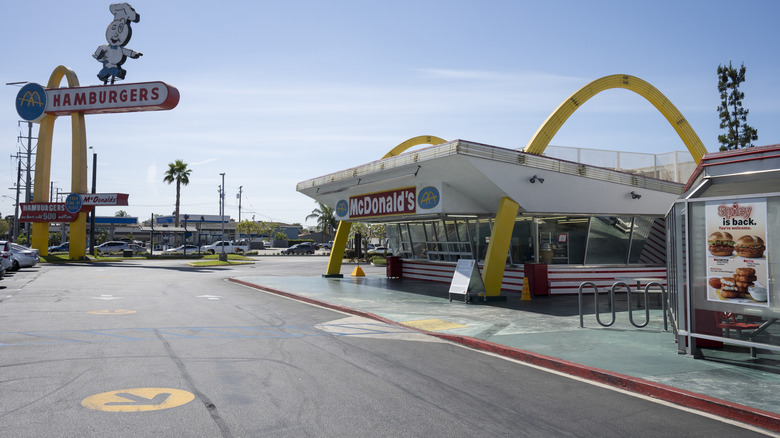
Many people think of 1955 as the year McDonald's began, and they wouldn't be completely wrong; that was the year that Ray Kroc opened a franchise of McDonald's in Illinois, which eventually gave rise to the McDonald's we know today. However, the true origin of McDonald's was in 1940, when the McDonald brothers, Dick and Mac, opened McDonald's Bar-B-Que in San Bernardino, California. In 1948, they created their "Speedee" system for serving burgers and began offering franchises. Kroc later bought out the company in 1961.
Interestingly, the buildings that we think of as "original" McDonald's architecture weren't introduced until 1953. Dick McDonald worked with an architect to create the style but thought that the initial model's roof was too plain. He was the one who suggested adding a yellow-colored arch on either side, creating the "golden arches" that gave rise to the nickname for the company. You can still see this style on the McDonald's in Downey, California, which is now the world's oldest operating McDonald's location. This is the one that still serves fried apple pies; as it was franchised by the McDonalds themselves, it wasn't subject to all the changes that Kroc's version of the company was instituting. However, it closed in 1994 after the Northridge earthquake. In 1996, however, the L.A. Conservancy and Downey Historical Society lobbied the company to reconsider. McDonald's did, eventually refurbishing the entire structure, adding a museum, and reopening the location.
5. Dunkin' (1948, as Open Kettle)
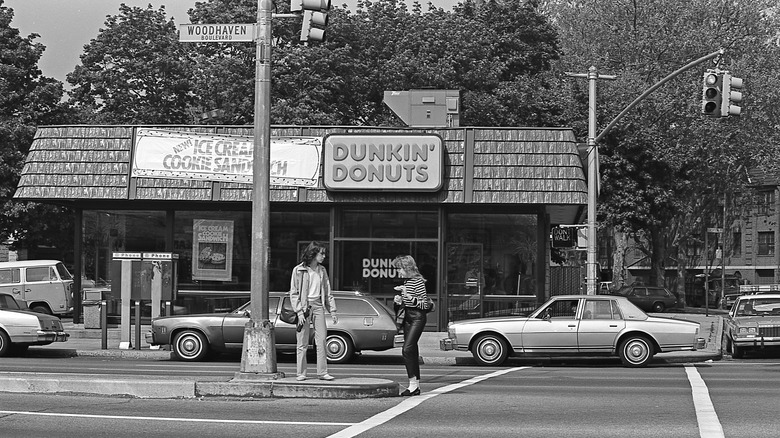
If you want to dine at an original location — as in the very first location of a chain — head to Quincy, Massachusetts, to eat at the original Dunkin', a.k.a. Dunkin' Donuts. The location opened in 1948 with the name Open Kettle, although founder Bill Rosenberg renamed it Dunkin' Donuts in 1950 (The abbreviation to Dunkin' happened in 2019). Rosenberg noticed that people were choosing coffee and doughnuts over other items on the menu, and he decided to rebrand with a narrower focus on those two items. The company's appeal was in both the food and the fact that its locations could serve as community gathering spots, those neighborhood joints where everyone would go. The Quincy location was renovated in 2011 to look like the original Dunkin' Donuts did back in the 1950s.
While the chain's main foods have remained coffee and doughnuts, it eventually added foods like bagels and sandwiches to the menu. Dunkin' didn't start franchising until 1955, but it grew rapidly after that, reaching 100 stores in 1963. It's now an international chain, and whether you're in North America, Asia, Europe, Africa, or South America, you can find a Dunkin' in many countries.
6. In-N-Out (1948)
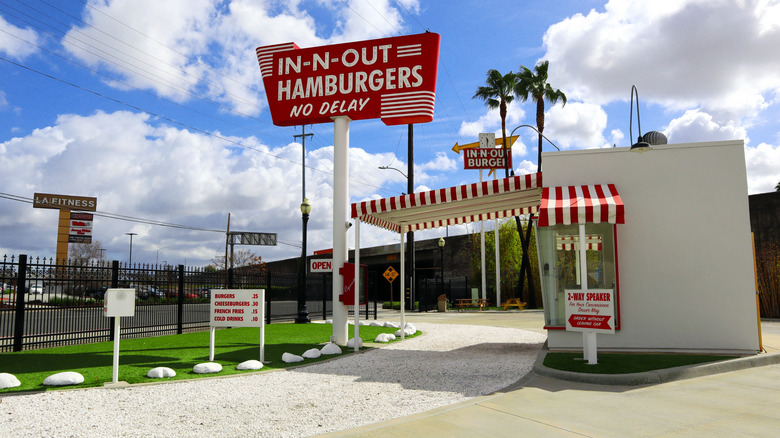
Fans of In-N-Out are so dedicated that it's not unusual to find people waiting hours in line when a new location opens. In 2020, the first location to open in Aurora, Colorado, had lines of people and cars waiting for literally 14 hours, requiring police assistance for traffic control. Even well-established locations aren't immune; one commentor online mentioned that his local In-N-Out has had wait times of one hour, and fans have said lunchtime lines can easily result in waiting 30 to 45 minutes to order. It's not a surprise that you'd have to wait that long, given that the chain doesn't make burgers ahead of time and constantly fields customized secret-menu orders.
In-N-Out opened in 1948 in Baldwin Park, California. The company's founder, Harry Snyder, was the first to use a two-way intercom system that allowed customers to order before they reached the window, reducing the time they had to wait to receive their food. The device was so unusual back then that he had to teach customers how it worked. In-N-Out didn't have its red-and-white dining rooms until 1979. The company took its time expanding, and there were only 18 locations by 1976 with none franchised; even today, the company refuses to franchise. It didn't expand outside California until 1992, when it opened a location in Las Vegas. Now, the company has locations as far away as Colorado and Texas, and it has plans to expand to Tennessee.
7. Jack in the Box (1951)
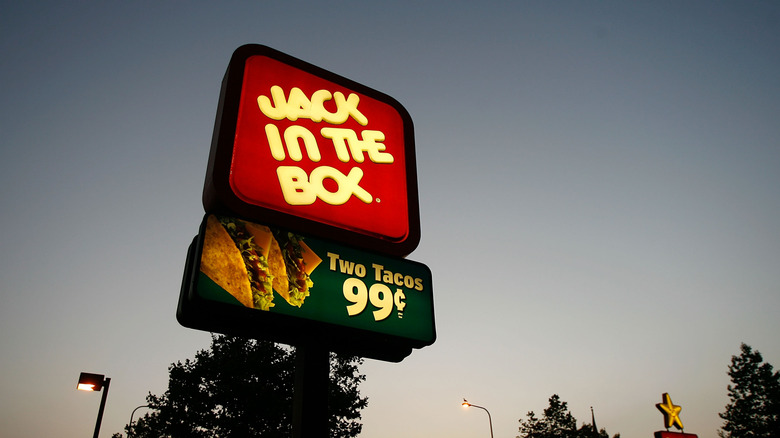
The first Jack in the Box opened in 1951 in San Diego, and like other fast-food chains, it's undergone quite a change from its earlier designs. The restaurant used toy Jack-in-the-box imagery with a garish clown head on a spring-like neck poking up above the roof of the restaurant. Restaurants were decorated on the outside in a way that appeared to vaguely reference circuses, which is a far cry from the boxy, wood-paneled exteriors you see today.
Jack in the Box actually started under another name much earlier than 1951. However, it wasn't like other companies where an owner started with one name and quickly changed to another. Instead, it was more like a spin-off. Robert Peterson, the founder, was already running Topsy's Drive-In, a successful chain with some locations that were later renamed Oscar's. Peterson converted a Topsy's location to Jack in the Box.
Jack in the Box didn't start franchising until the 1960s, and its approach was extremely methodical, even requiring psychological testing of potential leasees and providing computer-chosen locations (Remember, this was in the 1960s!). Jack in the Box now has locations across much of the U.S. and in Guam. It used to have a location in Mexico, which closed quickly; however, in 2023, the restaurant signed an agreement to open more franchises in the country.
8. KFC (technically 1952, as Kentucky Fried Chicken)
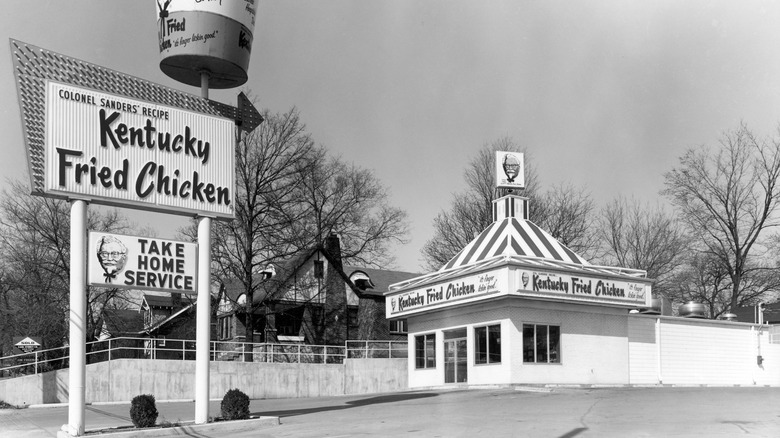
Kentucky Fried Chicken first opened in 1952 as a franchise, which is unusual. Normally, you see the founder open one location that becomes successful and that leads to more locations and then franchising. What's even more unusual was that the first franchise wasn't a formal deal between a person and a corporation. It was a handshake deal between Sanders and an existing restaurant for a fried chicken recipe.
Colonel Harland Sanders — the "Colonel" title was an honorary commission from the governor of Kentucky — had perfected his recipe for tasty fried chicken over the years when he served it in his cafe that was next to the service station he ran. However, the construction of an interstate meant that travelers would no longer pass by his service station. Sanders sold the cafe and decided to start franchising the recipe. He would literally show up at restaurants, offering to cook chicken, then offer to sell the recipe to the restaurants for a fee. It didn't go well at first, but he did get five restaurants to sign up. One of those was in Utah, and when that restaurant hired a sign painter to create a promotional sign, the painter came up with the famous name. Sanders liked it and used it when he incorporated Kentucky Fried Chicken in 1955. He later sold the company in 1964 but continued to appear in advertising. The rebranding to KFC came in 1991.
9. Sonic (1953, as the Top Hat Drive-In)
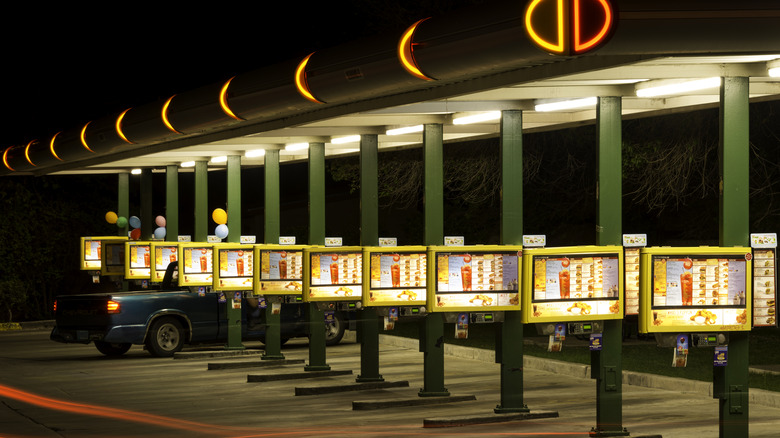
Sonic started in 1953 in Oklahoma as the Top Hat Drive-in. It was a successful chain, but in 1959, the owners decided to rename it to better fit with their slogan — and to get around a copyright issue that prevented them from expanding the chain. As the slogan was, "Service at the speed of sound," Troy Smith and Charles Pappe decided "Sonic" would be a more appropriate name.
Smith had long managed different restaurants, one of which was called the Log House. This place had a small drive-in soda stand on the premises that sold root beer, and he noticed that this was doing better business than the main restaurant. The drive-in was called Top Hat, and he decided to focus on that. Pappe joined Smith after contacting him and asking about partnering up to expand the chain. Unfortunately, they had to change the name as a copyright on "Top Hat" limited the area in which they could operate. Once they settled on "Sonic," they opened up in Stillwater, Oklahoma. That location remains in operation, if you want to experience some history while getting a cup of the "good ice."
10. Denny's (1953, as Danny's Donuts)
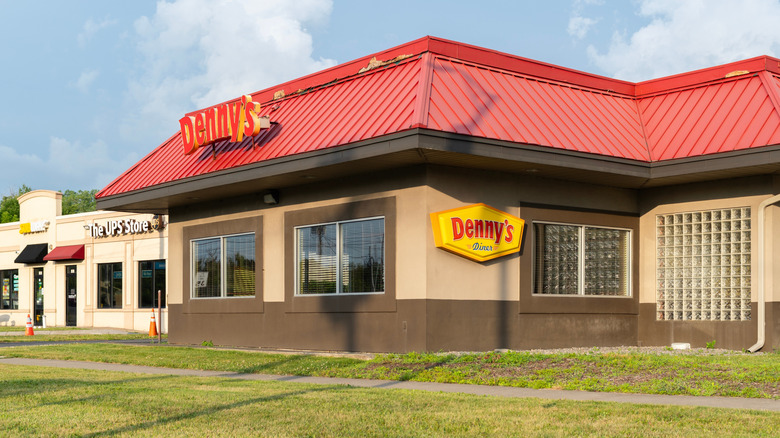
Denny's did the opposite of what Dunkin' did. Instead of starting as a restaurant and narrowing its menu down to doughnuts and coffee, Denny's started as Danny's Donuts and expanded into a full-service diner. Harold Butler and Richard Jezak opened the first Danny's Donuts in 1953 in Lakewood, a small city in southern Los Angeles County. The doughnut shop chain expanded quickly, but Jezak left in 1956. Butler rebranded the company as Danny's Coffee Shops with a larger menu that included meals, and in 1959, he renamed the restaurants Denny's Coffee Shops. There was another chain that used the name "Dan's," and Butler wanted to avoid confusion. In 1961, he shortened the name to Denny's.
Denny's eventually started franchising, and the company now has over 1,200 U.S. locations, as well as a presence in several countries. Its first location outside the U.S. was in Mexico in 1967. The company not only operates traditional-style diners, but also has locations in places like universities. In 2018, Denny's added a "mobile relief diner," which travels to areas suffering from natural disasters to help feed people.