

The Fiber Myth You Need To Stop Believing About Smoothies
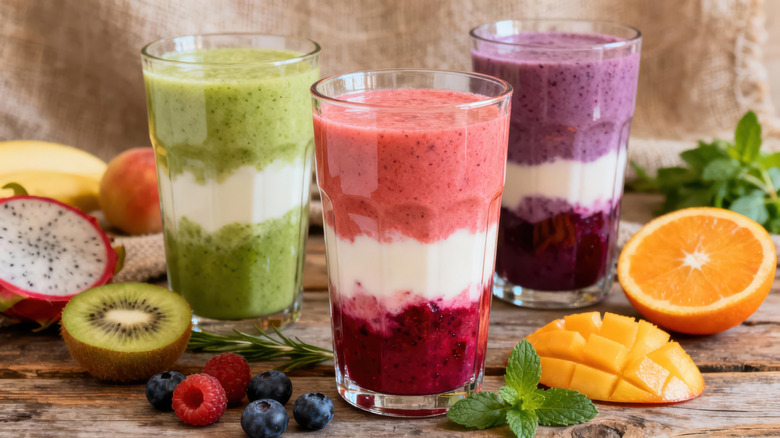
It seems like every few years, a new nutrient gets tossed into the limelight to become the most important thing to put into your body. In the 2000s, we were all supposed to be packing in the antioxidants by stocking up on "superfoods," while the 2010s ushered in an obsession with protein, especially lean proteins like salmon, chicken, and beans. Halfway into the '20s, the latest focus seems to be on fiber — how much of it you need, which foods contain the most, and how to eat more.
While these trends aren't inherently bad — eating lots of nutritious foods is always a good thing — they can lead to misinformation that causes people to avoid certain food preparation methods that could make it easier to consume more of the stuff they need. In this case, a viral rumor began trending that blenders destroy the fiber in your smoothie ingredients, but this is actually the furthest thing from the truth. If anything, the blender minces up the fiber in your two-in-one morning coffee smoothie, making it even easier to digest.
Why is this information important? Smoothies are a versatile, accessible, and portable way to fill you up with not only fiber but a range of other nutrients as well. Knowing that you can buzz up a creamy and flavorful smoothie full of frozen fruit to help meet your daily fiber requirements opens up a world of possibilities when assessing your options for a light meal or nutrient-dense snack on the go.
Smoothies are made for consuming more fiber
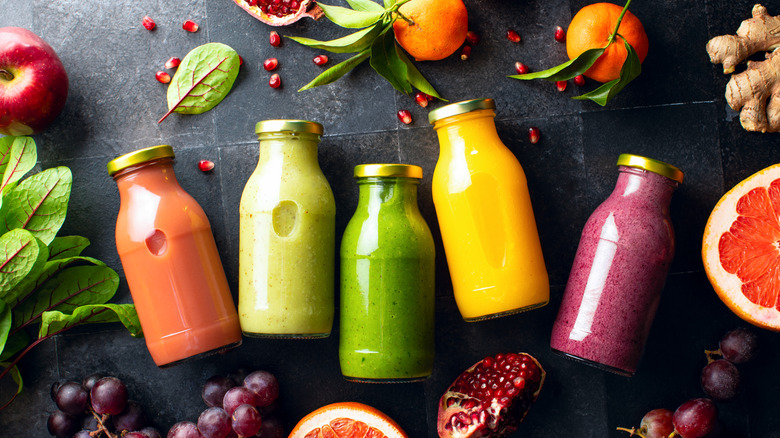
The greatest advantage to learning that fiber remains intact even after being blended into fruity, delicious smoothies is that they naturally contain loads of the stuff. Fruits, leafy greens, and even things like pureed pumpkin and sweet potatoes are all chock-full of fiber. Even tofu, which infuses your smoothies with plenty of protein, contains about 1 gram of fiber per serving. Most nut butters — another popular way to infuse these drinks with protein — have an average of about 2 grams of fiber per serving.
This means that smoothies aren't just convenient, they're also incredibly nutrient-dense. They're a great choice for busy professionals, and they also offer a tasty way to help children and the elderly get their daily dose of fiber and vitamins, especially if chewing whole fruits is difficult. Fiber is important for feeling satiated after a meal, but also for maintaining healthy cholesterol levels, balancing blood sugar, and ensuring your digestive system works properly.
Additionally, smoothies are endlessly versatile. There are literally thousands of smoothie recipes out there, but it's best to look for blends that include a balance of fruit and protein with honey or dates as a sweetener rather than added sugar. For example, our plant-based coffee smoothie recipe has approximately 10.5 grams of dietary fiber while getting its sweetness from dates and bananas. With the natural properties of fruits and vegetables, your smoothie is almost guaranteed to have fiber in abundance.