

Does Your Vegetable Garden Actually Need Expensive Fertilizer? Or Can The Cheap Stuff Work Just As Well?
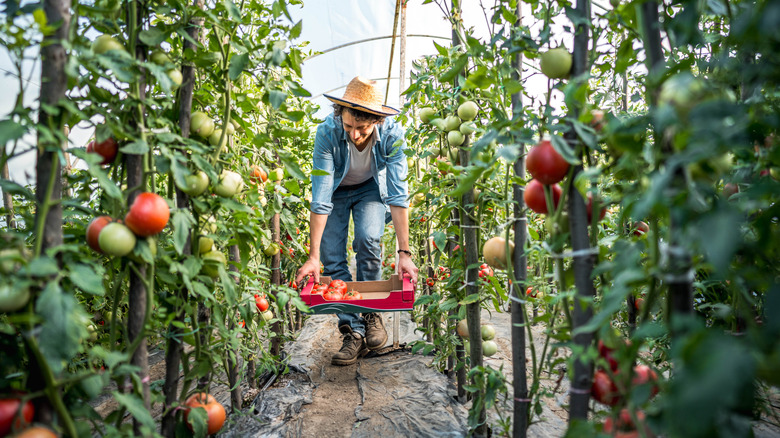
Growing your own vegetables can be a rewarding project. It gives you something to focus on and something to be proud of — plus, it saves you money at the farmers market. There are plenty of tips for growing vegetables, but if you're a novice gardener, you could be wrongly swayed into spending more money than you need to on fertilizer.
"Expensive fertilizers do not always work better than less expensive ones," Tammy Sons, horticulturist, CEO, and founder at TN Nursery, told Chowhound in an exclusive chat. "I have had great success growing healthy vegetables with low-priced, high-quality, well-balanced fertilizers, as well as with more expensive store brands."
Fertilizer works by offering additional nutrients to plants, such as nitrogen, phosphorous, and potassium, which all work to help the plants grow and thrive. While water supplies ample nutrients like oxygen, hydrogen, and carbon, fertilizer supplements with those other elements that aren't as easily offered through nature. "The best fertilizers are those that are tailored to the nutrient makeup of your particular soil," Sons said, adding that it's best to focus on "the N-P-K ratio, organic vs. synthetic ingredients, [and] presence of organic matter." The N-P-K ratio is the ratio of nitrogen, phosphorous, and potassium — a ratio such as 10-10-10 is generally a good option.
Focus on the soil more than your fertilizer
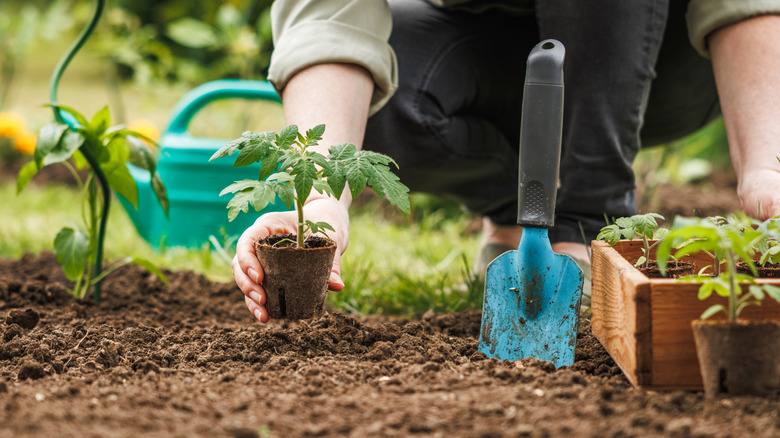
Since fertilizer offers supplemental nutrients, it's not as important as the soil, from which your plants get their main nutrients. "In the home garden, it is more important to have good soil and to apply consistent fertilizing than it is to purchase a certain brand-name product," Tammy Sons said. She noted that high-end fertilizers are best if you're growing a specialty crop or are working with soil that's in rough shape and lacks nutrients.
"For most homegrown vegetables, a simple, well-balanced fertilizer will work fine," Sons continued. "I prefer natural fertilizers that will feed the soil and the soil's microbes in the long term because healthy soil will continue to produce healthy, flavorful crops year after year."
To understand what fertilizer works best for your garden, talk to an employee at your local garden center, or even a friend who has gardening experience with growing vegetables. If you've never gardened and don't know your soil's quality, there is a simple test: Dig a small, 6-inch hole and see how many bugs and creatures are crawling around after a few minutes. If you count more than 10, then your soil is probably in good shape; if less than 10, then it might need some help. Other aspects of growing a garden, such as the vegetable layout, play a role, too. And no matter how good your soil is, properly water your plants to ensure they survive.