

The Lemon Hack That Makes Stainless Steel Pans Look New Again
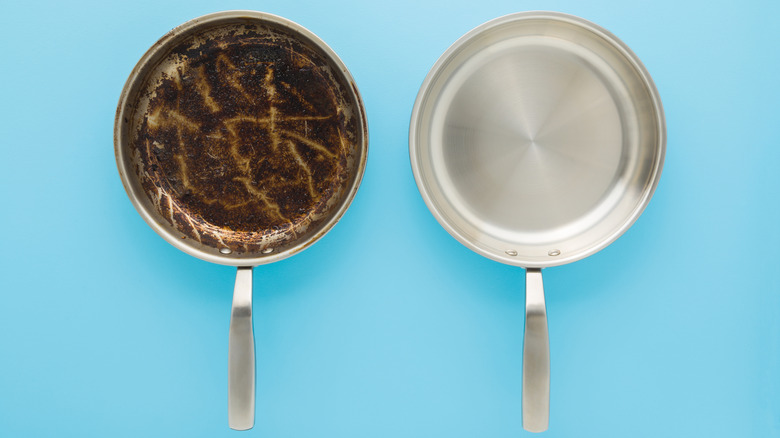
From work surfaces to cookware, anything in an intense, high-heat professional kitchen is likely to be made of stainless steel. While not to the same extent, the durable and versatile material has also taken over a significant portion of our home kitchens. In fact, Ree Drummond's stainless steel kitchen island goes to show that the metal is being used increasingly not just for domestic kitchenware but also for home kitchen counters. Used correctly, a touch of industrial aesthetic from stainless steel can add a nice contrast to the kitchen. However, one thing that doesn't look too pleasant is dulled and stained stainless steel cookware. Unfortunately, over the long life that these hardy utensils have, they're sure to take on heat and grease stains that seem almost impossible to get rid of. Enter: the humble lemon.
Lemon juice contains a strong concentration of citric acid, which acts as a cleaning agent as well as a disinfectant. In fact, many store-bought cleaners contain it as well, as it helps break down grease, grime, and even rust. With all these benefits channeled by a simple lemon, all you need is another household staple to complete the high-power cleaning duo — salt. The next time you want your stainless steel pan back to its shiny former glory, simply take a lemon half, dip the cut side in salt (either fine or coarse are recommended), and scrub the pan with it. While this easy hack makes cleanup easy, you can avoid (or at least delay) having to scrub your pans by cooking on high heat and using these helpful tips for nonstick cooking with stainless steel.
Two methods of using lemons to clean stainless steel
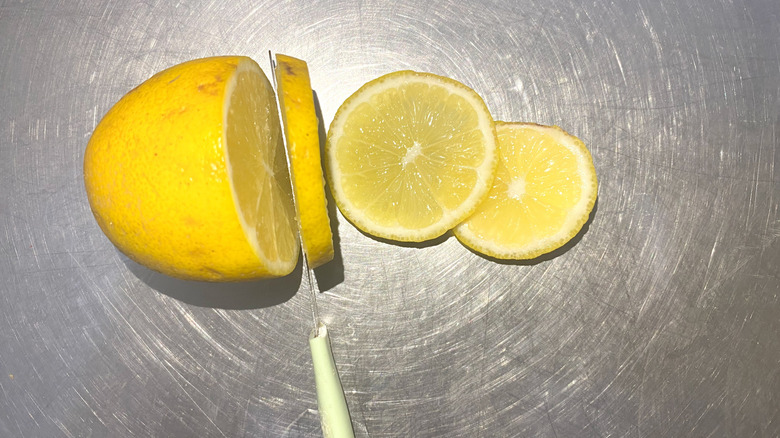
Once you discover the lemon's cleaning superpowers, you should go ahead and use it on your other stainless steel kitchenware. However, be careful when attempting to clean other metals, like brass and aluminum. Lemon juice's acidity can strip the former of its patina and react with the latter, causing potential leaching or corrosion.
The simple lemon scrubber made by dipping a lemon half in salt works great for pans, pots, and most other cooking utensils. You can also add a drop of washing liquid to help make the scrubbing motion smoother. Since you only need a little bit of lemon juice, consider using leftover lemons that have been partially juiced to make your pans shiny again.
For more stubborn stains or to save yourself some scrubbing effort, you can also use the boiling method. Simply leave one or two used lemon halves, along with a few cups of water, in a stainless steel pot or pan and bring the water to a boil. Turn the heat off after about 10 minutes, wait for the pot to cool down, and give it a scrub. The stains should come off much more easily. Much like food stains, rust can also be removed from stainless steel pans using lemon and salt.
Alternatives to lemon for cleaning heat stains and other stainless steel surfaces
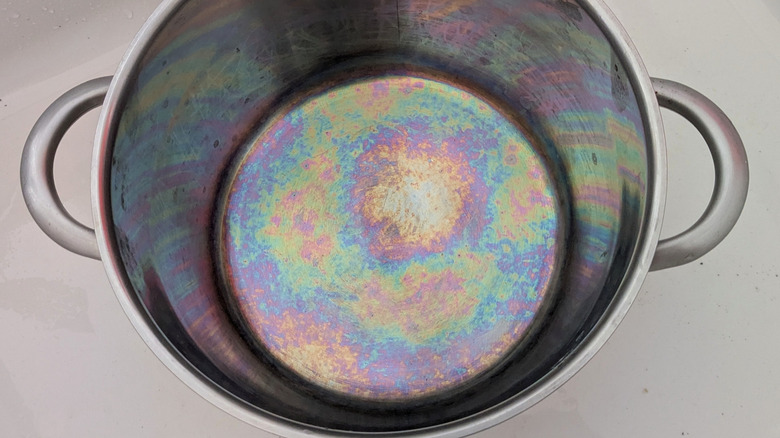
While lemon juice works well on most stains that you may encounter on stainless steel cookware, it may be ineffective against stubborn heat stains. These are circular, generally bluish or slightly iridescent patches that appear on stainless steel surfaces when heated. If lemon juice and salt can't handle these, turn to two other common household products you've probably already got in your kitchen — vinegar or baking soda (combined, their effectiveness is neutralized). One of the two, along with some water and perhaps dishwashing liquid, helps clean stainless steel pans with ease, and also gets rid of those pesky heat stains.
Lastly, keep in mind that while lemon and salt are great for cleaning utensils that are built for hardy use, some other stainless steel surfaces may be delicate and prone to scratching from the salt or reaction from the strong citric acid in lemon juice. This may be something to watch out for with appliances that have a brushed stainless steel exterior. Fortunately, a common cooking oil can help make steel appliances shiny again — simply add a dab of olive oil to a soft cloth and buff any delicate stainless steel surfaces to bring back their gleam.