

The Smart Buffet Tip To Keep Guests From Wasting Expensive Food
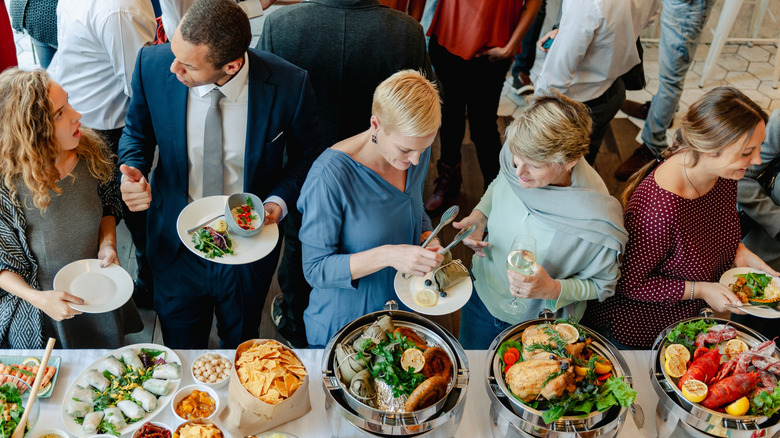
Buffets are great, but such setups can also end up being wasteful if not carefully planned. Though buffets are the best style of catering for large crowds and can save you significant effort and money while offering enough variety for guests with differing food preferences, this aspect, especially of all-you-can-eat buffets, is not too pleasant. Unserved leftovers on chafing dishes can still be salvaged and repurposed, but it's what guests serve on their plates and don't finish that can end up contributing to much of the food waste. Even the most well-meaning guests, when faced with a buffet, can end up over-serving themselves — and it's even worse when the food being tossed out is expensive.
As you may have imagined, buffet planners employ strategies to avoid expensive dishes from being wasted, and they say that one trick is to keep the costly items toward the end of the spread. Chowhound got an exclusive with the professionals at Southern Standard Hospitality of Houston, Texas, about how one can put such a strategy to use. Vince Boisaubin, chef and culinary lead, Matt Torres, who handles operations, staffing, and finance, and DavidLee Martinez from sales and marketing, together encompass the culinary, business, and logistical aspects of catering events and buffets. According to them, "The golden rule for any buffet setup is to place proteins and higher-cost items at the end of the line. This encourages guests to fill their plates with sides like potatoes, vegetables, and bread before reaching the main attraction — like prime rib — at the finish."
Tips to avoid food waste at your next home buffet
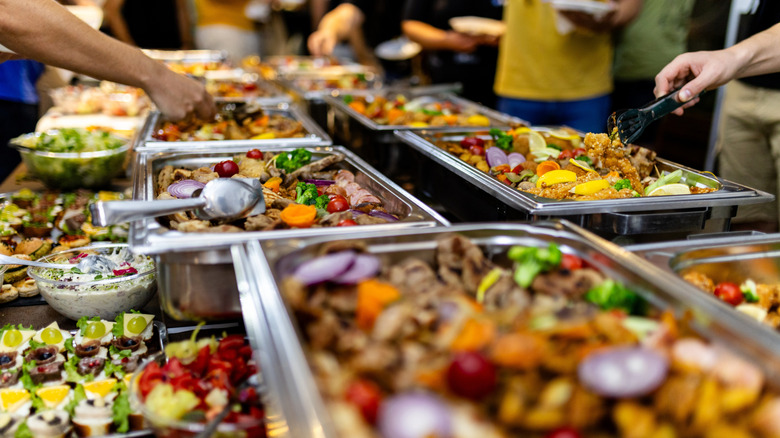
While it's important to try and gauge as accurately as possible how many guests will eat and how much a person will consume on average, there is always a little variation. It's good form to keep a little extra, as you don't want items on your buffet to finish before everyone has had a chance to try them. Of course, this means that you will often have leftovers. "Keep plenty of meal prep containers on hand for leftovers or to-go boxes when friends come over for dinner. After everyone's had their turn at the buffet, place a neat stack of them by the plates so guests can easily pack up extras," say the pros from Southern Standard Hospitality.
The strategy needs to be more psychological when it comes to ensuring that guests don't waste food, especially expensive dishes like brisket, fish, and other proteins. It all comes down to the layout. "When designing your buffet, start with the supporting dishes and finish with the stars of the show. Load the front half with favorites like sweet potatoes, green bean casserole, and mashed potatoes. By the time guests reach the end, they'll have less room for a double portion of brisket — and your spread will stay balanced and plentiful."
You can also try a few other strategies by using slightly smaller serving plates so that they look fuller, and guests will take smaller servings at a time. Remember that smaller servings, even when served frequently, can help reduce food waste. Also, cold and room temperature dishes are easier to manage and preserve than hot dishes, and try and avoid fried foods in buffets, since they are harder to repurpose.