

The Herb You're Better Off Growing From Cuttings, Not Seeds
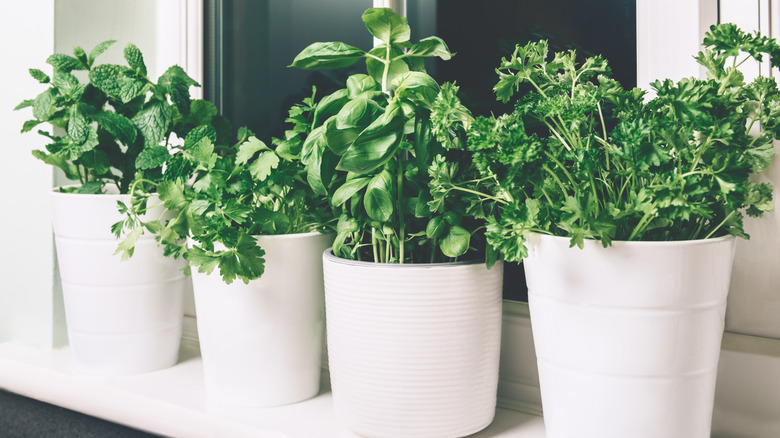
One of the easiest herbs to grow in your summer garden is mint, but wait before grabbing a pack of seeds from the store. Chowhound spoke with Deanna Talerico, creator of Homestead and Chill, for guidance on planting mint. She shared that mint is one herb that actually grows more easily from cuttings than it does from seed, making the whole process a whole lot faster and straightforward.
"It's possible to grow mint from seed, but it tends to be finicky and requires ideal conditions for success — including consistently warm, damp soil, ample bright light for germination, and a bit of patience," explains Talerico. "It can take two weeks or longer for mint seeds to sprout, and several months until the seedlings reach a harvestable size."
There's actually no need to go through this extra labor when growing mint from cuttings is actually more efficient. "Mint cuttings easily take root within just a couple of weeks, giving you decent-size mint seedlings that are ready to plant before the seeds will even sprout," she says. "By starting with cuttings, you'll be harvesting fresh mint in no time!"
How to grow mint from cuttings
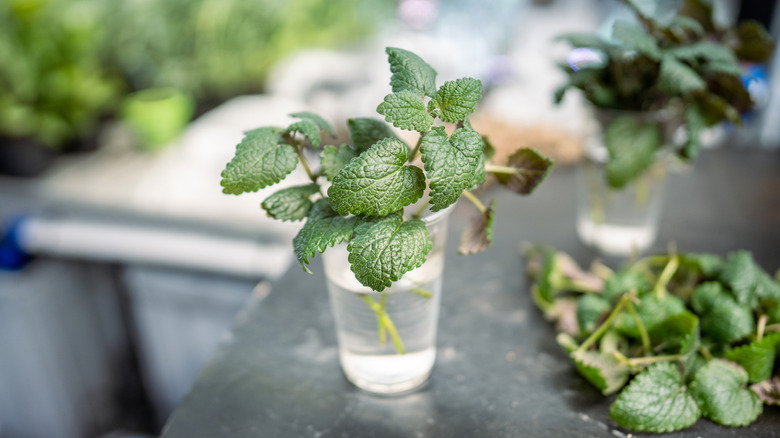
Any kind of mint cutting will do, according to Deanna Talerico, so long as you choose the freshest, most tender-looking stems for best results. "You can easily propagate mint cuttings from your own plants, a friend's garden, or even mint from the grocery store — and get free plants," she says.
The best part? You can skip the rooting hormone and simply propagate in a glass of water. "To do so, snip a fresh mint stem that is at least 4 to 5 inches long — cut at an angle and just above a leaf node," says Talerico. "Strip away the few lowest leaves, leaving the bottom 2 inches of the stem bare. Then place the stems in a glass of water in a location that receives bright ambient light, but not direct sunlight."
The water should then be changed every few days, or whenever it begins to look murky, and new roots will start growing within one to two weeks. Once the roots are at least a couple of inches long, Talerico suggests gently transplanting the cutting into a container with loose, fluffy potting soil. Even if you are moving your plant outside to your garden, it's important to never plant mint directly in the ground or garden bed. "Mint spreads aggressively via underground runners and is nearly impossible to get rid of once it's established," she warns. To keep it separate, try growing a small budget garden anywhere by keeping herbs in individual pots and containers.