

Dark Chocolate Is Hiding A Flavor Secret Many Have No Clue About
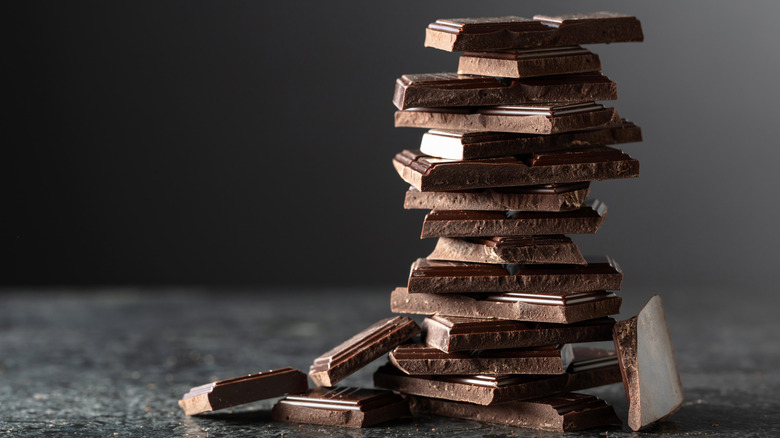
Dark chocolate is something of a confectionary anomaly. Unlike sugarier varieties, high-quality dark chocolate is a rich, complex tasting experience, more suitable for adults with highly developed palates than kids in a candy shop. While milk and white chocolate tend to have lots of added fats and fillers, the best dark chocolate is made with a very sparse ingredient list — often just cocoa solids, cocoa butter, and sugar — meant to highlight the varied and delicate flavors of the cacao itself.
Far from monolithic, cacao beans contain a diverse array of flavors influenced by their origins. Some might mistake these for added flavors, but they're actually naturally present in the bean, according to chocolate expert Nicole Patel. Patel is the founder of Delysia Chocolatier and was named 2025's Best Chocolatier in the Americas with the highest honor, Six Star Award: Grand Master Chocolatier, so she's the perfect person to explain the hidden secrets of dark chocolate.
"The complexity comes directly from the cacao beans," she notes, adding, "Much like wine grapes or coffee beans, cacao is influenced by terroir (the soil, climate, and environment) where it's grown." Ever noticed that Sauvignon Blanc from California tastes pretty different than Sauvignon Blanc from New Zealand? The same principle applies to cacao beans. "For example, cacao from Madagascar often carries bright red fruit notes, while Venezuelan cacao leans nutty and caramel-like," Patel says.
Other factors impact the dark chocolate tasting experience
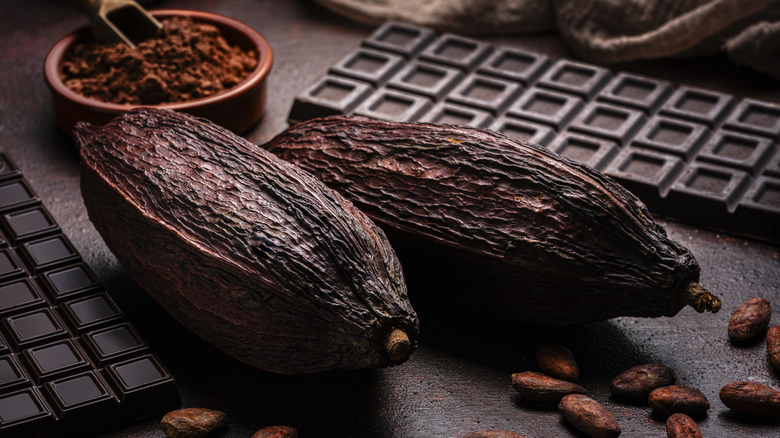
Cacao beans obviously play a major role in the flavor of dark chocolate, since it has the highest cocoa percentage (the ratio of cocoa products to other ingredients) of any chocolate type. That means that dark chocolate is made up mostly of cocoa solids (the processed form of cacao beans) — generally at least 40% cocoa solids but sometimes more than 80%. The remaining ingredient content consists mainly of sugar, which is part of why dark chocolate with a higher cocoa percentage is considered healthier — but don't discount the importance of sugar in the dark chocolate tasting experience, either.
Like red wine, cacao beans contain tannins, a kind of polyphenol responsible for bitter and astringent tastes. "The addition of sugar softens that sharpness, making the chocolate more palatable," Nicole Patel explains. "Even in the smallest amount, sugar can highlight notes already present in the cacao, much like how salt added to savory dishes makes flavors 'pop,'" she adds. So, even though we don't typically prize dark chocolate for its sweetness, its sugar content is an important part of making the unique flavors in cacao palatable and crave-worthy. "It balances the bitterness and flavor profiles of the cacao to enhance the overall tasting experience," Patel says.