

This Simple Jar Trick Will Extend Your Strawberries' Shelf Life
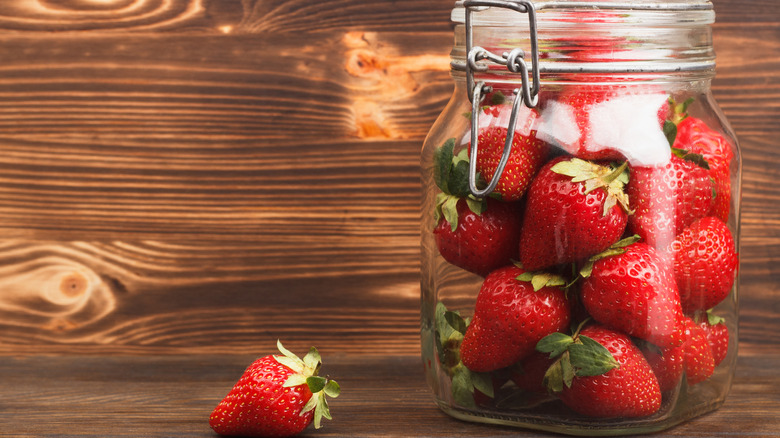
From shortcake toppers to yogurt mix-ins to a delicious (and fiber-loaded) snack, strawberries are great to have on hand. There's just one problem with these delicious little nutrient powerhouses: They tend to mold super-quickly, which can make it tough to get through an entire container before they go bad. Kantha Shelke, PhD, certified food scientist, principal at Corvus Blue, LLC, and senior lecturer of food safety regulations at Johns Hopkins University, spoke exclusively with Chowhound about how you can use a simple glass jar and lid (such as a Mason jar) to help your strawberries hold up over time, increasing the likelihood that you can enjoy every last one before mold begins to take hold.
"Storing strawberries in sealed jars can indeed extend their shelf life by a few extra days," Shelke says. While some articles on extending the life of strawberries recommend covering strawberries in water when storing them in glass jars, Shelke disagrees. "Humidity from the berries, trapped in the jar, can create a mini greenhouse ecosystem for the mold. Adding water can increase the moisture available for mold growth and make firm berries mushy," Shelke says. Moisture is enemy number one when it comes to strawberry freshness, and ensuring the inside of your storage jars are perfectly dry is an important step toward helping your berries hold up over time.
How to prep your strawberries for Mason jar storage
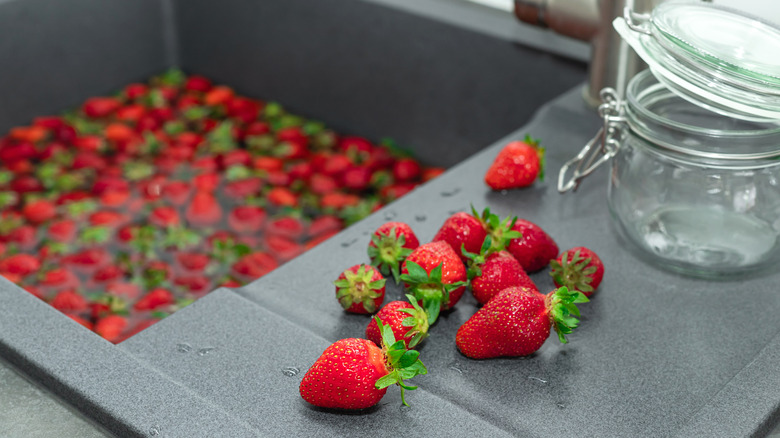
Once you've got your Mason jars ready, prepare them to help your strawberries stay fresh in the fridge. Thankfully, Kantha Shelke says the preparation process is pretty simple. There's no need to wash your berries before storing them; instead, Shelke recommends waiting to wash your berries until you're ready to enjoy them. This can help reduce the chance of trapped moisture, making it less likely that your berries end up getting moldy. To ensure your berries stay as dry as possible during storage, Shelke says it's smart to line the inside of each Mason jar with a folded paper towel. Another important note: Be sure to remove any strawberries that are already showing mold growth. "The jar works when it is clean, dry, and stored at the right temperature without any moldy strawberries in the mix," says Shelke.
Once your berries are prepped and your jars are ready, simply place the berries in the jars, add the lids, and place them in the fridge. Shelke recommends keeping your fridge between 32 and 36 degrees Fahrenheit for best results. When you're ready to enjoy your strawberries, give them a wash with water and vinegar. "A quick vinegar bath (three parts water to one part white vinegar) kills surface spores," says Shelke. If you don't have any vinegar on hand, there are other strawberry cleaning methods that make use of kitchen staples. The bottom line: Keep strawberries dry and covered to help them hold up in the fridge. Just be sure to give them a good wash before you enjoy your surprisingly long-lasting treats that taste like summer.