

Use Thai Curry Paste As A Rub To Add A Flavorful Spicy Touch
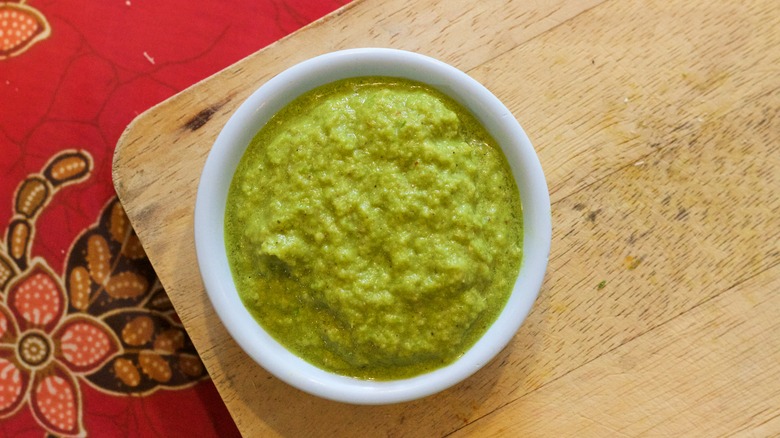
If you're sitting on some extra Thai curry paste at home (not curry powder — that's a different thing), don't assume that your only use for it is to make stew, soup, or noodles. It also makes a fantastic wet spice rub — basically somewhere between a dry brine and a marinade — for grilling. Someone who knows this all too well is Dhanapol "Oak" Marprasert, chef-owner of acclaimed Queens, New York restaurant Kam Rai Thai. Speaking with Chowhound exclusively, he expressed enthusiasm about using different curry pastes to coat meats and vegetables. "Many home cooks think of Thai curry paste only for soups and stews, but it's a secret weapon on the grill," he said, adding, "When used as a wet rub, the paste builds a savory crust, locking in juices while adding layers of spice, herbs, and aroma."
Considering the often lenghthy ingredient lists in Thai curry paste, like chiles, garlic, lemongrass, galangal, makrut lime, shrimp paste, coriander, and more, using them this way can add some serious complexity to your 'cue. Luckily, Marprasert has some pointers on how to pair these powerful seasonings with your grill ingredients. For pork, (like his signature grilled pork jowl), red curry paste rules. In fact, red is quite the all-rounder, working with most meats, including chicken, beef, and lamb — its comparative spiciness pairs with intense meaty flavors. For slightly more delicate green curry, stick to chicken and seafood, plus vegetables like eggplant or cauliflower. Even milder, yellow curry goes well with lighter items like seafood and veggies, Marprasert advises.
Tips for using Thai curry paste as rub
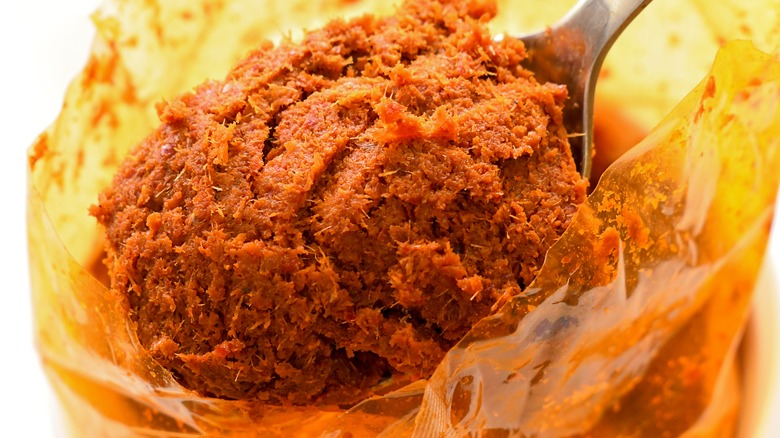
Keep in mind that there are some tricks to using curry paste as a marinade. It starts before your meats and vegetables even hit the grill: These seasonings typically have a lot of intensely concentrated flavor, so Dhanapol "Oak" Marprasert suggests taking it easy when applying them to meat — no need to slather them on, as just a thin layer will work.
You might even try mixing the curry paste with coconut milk, which will both dilute it and make it easier to spread. Brush some on and let it soak in — just don't leave it for too long (there's such a thing as over-marinated meat). Some advocates for curry paste marinades also suggest using other complementary liquids, like soy sauce, lime juice, or fish sauce — a versatile ingredient you should have on hand, anyway. Whatever you choose, one ingredient you should definitely add to the mix is oil, says Marprasert. "Oil helps the paste coat evenly and prevents sticking, palm sugar or brown sugar creates caramelization, and fish sauce or light soy adds umami."
Speaking of sugar, pay attention when applying the rub. While adding sugar can be a good idea for balancing your marinade (bear in mind that some Thai curry pastes already contain it), it makes the coating more prone to burning. To better avoid this, stick to medium or indirect heat. With these tips, you'll be on track for a Thai taste sensation at the cookout.