

The One Type Of Mess You Should Always Avoid Cleaning Up With Vinegar (And What To Use Instead)
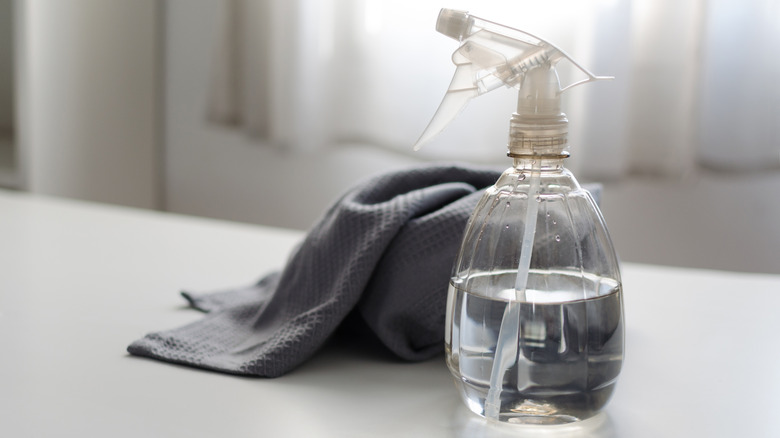
Vinegar is a popular kitchen cleaning agent for multiple reasons. It is a natural and non-toxic solution, yet still powerful enough to effectively clean food grime, grease, stains, and mineral deposits on appliances, utensils, and cookware. It's also a great odor absorber, which is why there should always be a cup of vinegar on your kitchen counter. While an excellent all-purpose cleaner, you might be surprised to learn that there is one thing vinegar is not good at cleaning: eggs.
Egg messes are inevitable. Maybe they roll off the counter or you crack one with a little too much force. Perhaps, regrettably, your house is subject to a teenage egging on Halloween. No matter how you or someone else create a mess with raw eggs, do yourself a favor and resist reaching for your spray bottle of vinegar to clean it up.
The reason vinegar is a poor choice for cleaning liquid eggs comes down to science. Vinegar is an acid, more specifically, a combination of 4 to 6% acetic acid and water. When combined with the proteins in the raw egg, the acid causes the egg whites to coagulate. This process is called denaturation — a structural change that unravels or alters the form of a protein chain. This is why vinegar is often used when making poached eggs to help the egg whites set around the yolk. It's also why spraying or wiping egg whites with the acidic cleaning solution will only create a bigger sticky mess.
Alternatives for cleaning egg messes
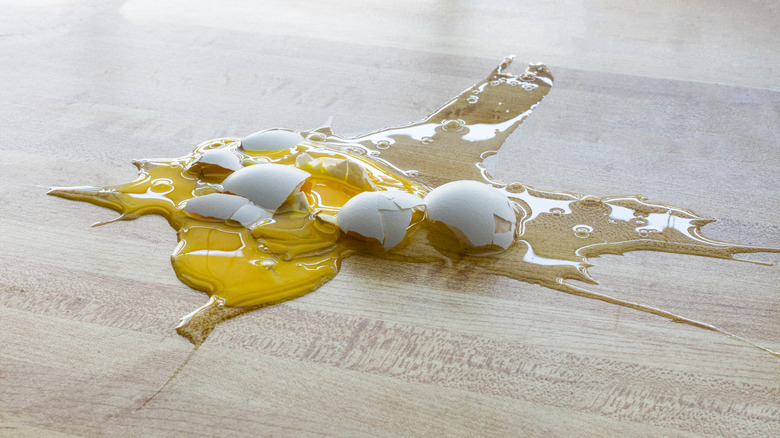
There are plenty of ways to keep your kitchen fresh and clean with vinegar, but as you now know, cleaning liquid egg messes is not one of them. Luckily, there's another easy way to clean up that egg you accidentally dropped on the floor or countertop. All you need is an ingredient found in everyone's kitchen: table salt.
If you have ever tried wiping up raw egg liquid with a sponge or wet paper towel, you've probably noticed that it simply smears and spreads, causing an even gooier mess. The solution to this problem is to sprinkle some table salt on the egg mess and allow it to sit for several minutes. The salt dries up the liquid and solidifies it through a process called osmosis, making it much easier to wipe up the mess with a wet cloth or paper towel.
Uncooked egg can contain salmonella, therefore it's important to disinfect the area after wiping up the raw egg spill. First, remove any remaining residue with warm soapy water. Then, spray or wipe the area with an EPA-approved disinfectant such as diluted bleach or a Clorox wipe. Make sure to follow a guide to avoid various kitchen sanitization mistakes, like using the wrong disinfectant on certain countertop materials.