

10 Easy Tips That Make Any Dinner Party Near-Perfect
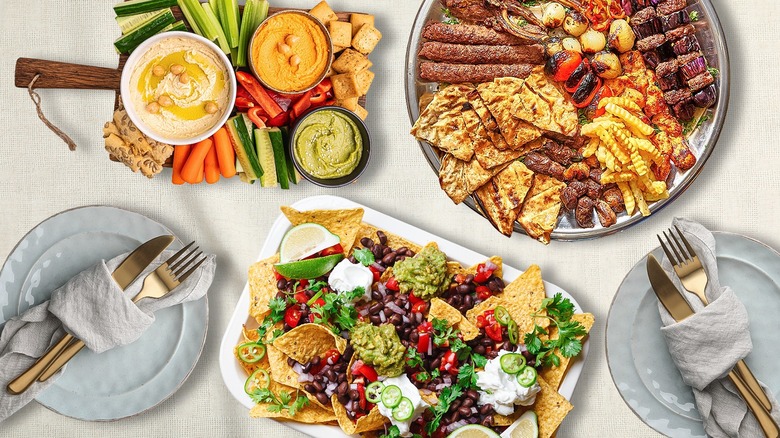
Dinner parties may conjure up images of frilly and ostentatious gatherings from a bygone era, but the truth is that these intimate events couldn't be more "in." Compared to other parties over meals (like weddings), dinner parties tend to be held in someone's home or in some sort of shared space. Unlike supper clubs, dinner parties are usually thrown by one individual who cooks, plans, and hosts; they can be a casual "Hey, come over for dinner tonight?" or an RSVP-worthy affair that makes you feel like you need to buy a fancy new outfit.
While the scale and circumstances surrounding dinner parties vary, there are some important things that hosts (and guests) should keep in mind if they plan on bringing one to fruition. In order to get the scoop, we consulted two experts: executive chef Trimell Hawkins from Poetry on Plates and Cassie LaMere, founder and creative director of Cassie LaMere Events. They shared their top tips for dinner party success, from planning to execution, and offered some inspiration for your next get-together.
1. Prep easy-to-portion foods

One of the most important parts of a dinner party is, of course, the dinner. You might feel pressure to whip up an elaborate, multi-course affair with fancy dishes like beef Wellington, prime rib, and more. But if one of your goals is to actually enjoy your event and have time to greet and mingle with your guests, you may want to rethink your menu a bit.
Instead of opting for a traditional meal that takes hours upon hours to plate, try Chef Trimell Hawkins' approach. "Street foods are perfect for large gatherings: They're portable, flavorful, and easy to prep in bulk," he says. He likes to add a creative twist to this fare by making what he calls "bundle skewers," combining diverse street foods together on skewers. You can make these around themes like bao, gyros, or tacos, to create flavorful bites that are easy to assemble and will add a creative touch to your main course. Plus, these bites can feel unfussy and give your party a more laid-back feel.
When deciding on your menu, you'll want to consider a few primary factors. The first is, of course, how much time you have to prepare your dish, plate the food, and complete all of the setup needed for your dinner party. If you're opting for an elaborate gathering with decor, for example, you may want to opt for easy-to-portion dishes that don't require as much setup time. But if you can delegate the setup tasks to another person, then you can channel more energy into your food.
2. Make hosting easy with 'set and forget' foods
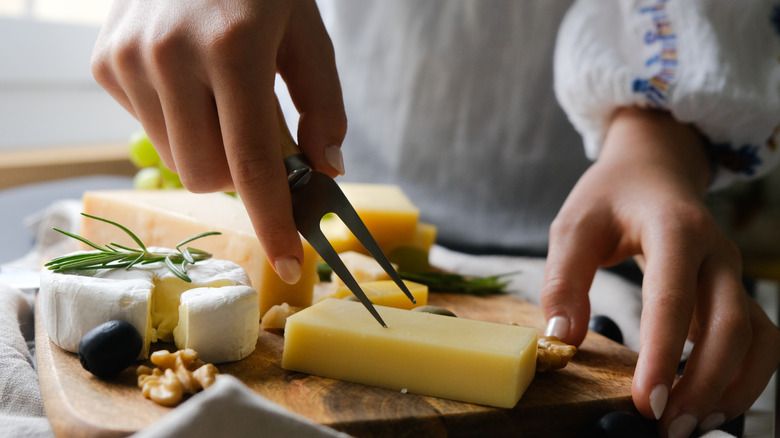
Mingling is a common part of the dinner party experience. By serving what Trimell Hawkins calls "set-and-forget" foods, you can focus more of your effort on preparing the main course and socializing with your guests. He recommends items like fruit and cheese, veggie platters, and pre-made salads, all of which can be assembled ahead of time and placed out once your guests start to arrive. You don't need to constantly be refreshing your board, but if you anticipate a lot of people flocking to the table at once, you may want to keep a tray of cheese and cut fruit or a box of crackers nearby to replenish as needed. Just remember that some foods, like certain types of cheese, taste better at room temperature, so you may want to allocate some time for cheese to sit on your counter before adding it to the serving platter.
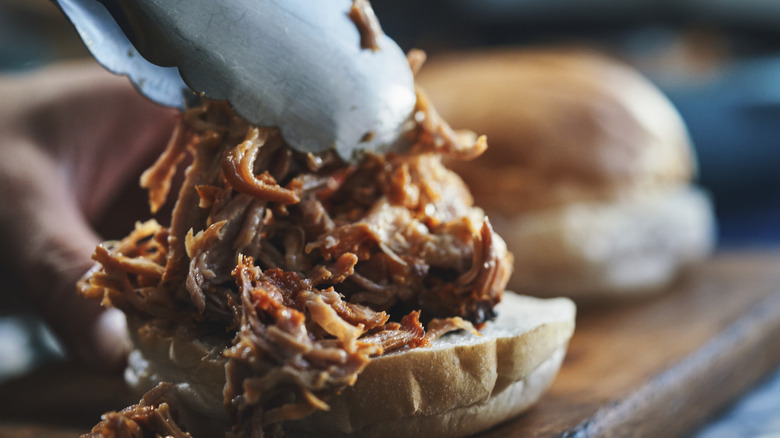
These set-and-forget foods don't just have to be cold options, either. As Hawkins suggests, "Diversify your table with a range of options, including hot, cold, and room-temperature selections." This is the perfect time to pull out your slow cooker, pop in your favorite Buffalo chicken dip or some slow-cooker pulled pork, and let the festivities commence. Just avoid making these food safety mistakes, like letting food linger in the food safety "danger zone" between 40 F and 140 F for too long. After your guests are done munching, put your leftovers away to keep foodborne bacteria at bay.
3. Try prepping as many dishes ahead of time as possible
A dinner party isn't something that you can come up with that morning and execute that night; it can require several weeks of planning and prepping. Who do you invite? How much food will you need? Does Costco carry the exact brand of cheese you want? The mantra of prepping things ahead of time also factors into the preparation of the food itself. The more dishes that you can prepare ahead of time, the better. "Success starts the day before," says Trimell Hawkins. "The more you can prep early, the more you get to enjoy your own party." He suggests making foods like marinades, grilled veggies, mac and cheese, rice, and meatballs before your event. You can store them in your fridge until you need them, which will mean fewer headaches for you when guests start arriving.
Equally important as the dishes you can prep ahead of time are the ones that you can't. Anyone who has had to eat soggy leftovers knows that there are foods that just aren't as good on day two. These include anything fried or breaded — like chicken — some types of seafood (like shrimp), pastries, and bread. You might be able to get some components of these dishes ready ahead of time — like making a homemade jam for your pastries or the marinade for your shrimp — but hold off on actually preparing these foods until the main event.
4. Be considerate of the dietary needs of your guests
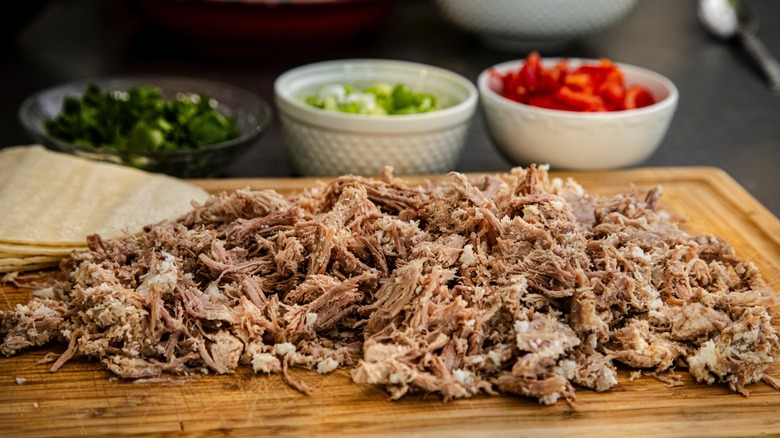
Anyone who has a dietary restriction knows that dinner parties can be nothing short of a headache. But it can be equally tough as a host to decide which foods to serve while still meeting the dietary needs of your guests. Trimell Hawkins recommends serving dishes that offer something for everyone, including hummus and veggie plates, fruit salads, grilled veggies, and gluten-free proteins and mains like chicken wings or tacos on corn (rather than flour) tortillas.
Event planner Cassie LaMere expresses a similar sentiment. "Thoughtfulness is the first ingredient. I ask ahead so guests feel seen, then build menus where everyone has at least one beautiful option." She suggests opting for a "build-your-own" option, which allows guests to customize their dish based on their preferences. This can include things like grain bowls and taco spreads, which are just as Instagram-friendly as they are accommodating. LaMere emphasizes the importance of "keeping the experience communal" — meaning you don't want to make someone feel excluded if they have a dietary restriction. That said, as a guest, you should give ample notice to your host ahead of time so that they can accommodate you.
5. Set up your space ahead of time
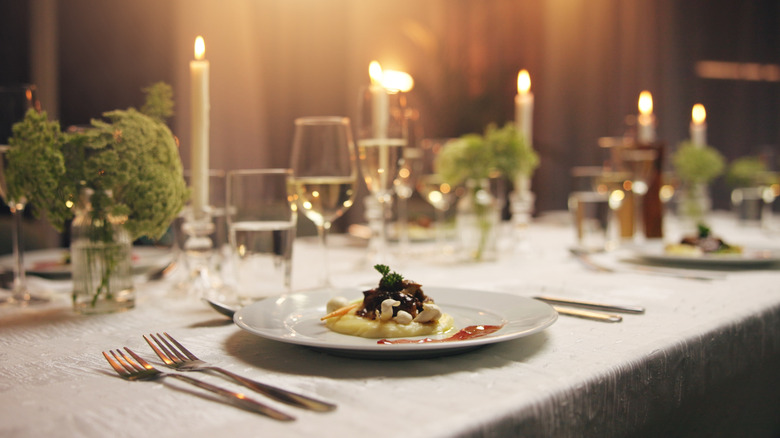
Say it with us: There is no reason you should be frantically vacuuming your living room floor, making a last-minute trip to the Dollar Tree to pick up that one utensil you forgot to grab, and worrying about whether your candle looks better 2 inches to the left right before your guests arrive. Like preparing as much food in advance as possible, you should also consider prepping your space ahead of time to minimize undue stress before your guests arrive.
Cassie LaMere prefers to set up the space prior to hosting a dinner party. "It transforms the space and eliminates stress on the day of," she says. "You can easily prep [moreish] snacks in silver bowls ahead of time and stage your bar with stemware, spirits, [barware], and accoutrements." Doing a second check of all of these small details will also ensure that you have enough supplies before your guests start arriving.
Not only should you expedite the setup process as much as possible, but the cleanup process as well. After you spend all day prepping and setting up, the last thing you want to do is spend several more hours cleaning before you turn in for the night. LaMere recommends keeping trays nearby so you can clear the table in small sweeps as the night progresses. "I do my best to reset the kitchen before bed, so the next morning feels fresh, not chaotic," she says.
6. Buy enough food for your event

This hack seems super straightforward: Duh! You should always make sure that you have enough dinner for your aptly named dinner party. But the definition of how much food is the right amount of food really depends on several factors, including how many people you're having, what type of food you're serving, if there are going to be appetizers beforehand ... you know, the works. Luckily, Cassie LaMere has some advice.
"I recommend thinking in layers: [six to eight] bites per person for hors d'oeuvres, a full portion for each main course, with a little extra for comfort," she says. It's always better to have too much food than not enough to accommodate your guests. As for wine, expect that guests will drink about a glass of wine per hour. As with food, it's always better to have an extra bottle of wine at the ready in case the conversation keeps going.
7. Be methodical about where you seat your guests
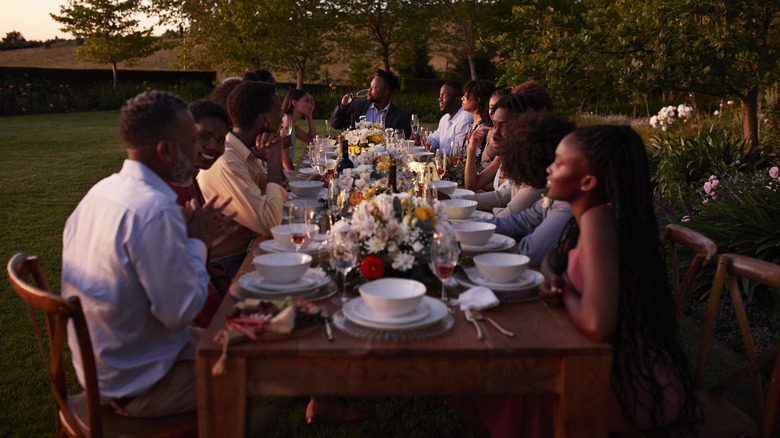
If you are planning an informal dinner party where guests can mingle and move to their heart's content, you might not see a need for a seating chart. But if you want to add a level of formality and classiness to your occasion, it's time to buy some seating cards.
Executing a seating arrangement is kind of like being a matchmaker; you have to think about where you're going to place people to scaffold conversations and build connections. It's easy if your guests already know each other, but accommodating shy guests or "lone wolves" may be more difficult. Cassie LaMere is here to help. "I believe in the art of the seating chart, and the magic of a dinner party is in the mix," she says. "I like to seat guests who may not know each other but are likely to click — it creates those unexpected new friends and conversations that make the night memorable." If you know details about your guests, like their hobbies, careers, or similar interests, you can seat your guests more methodically.
When introducing guests to one another, LaMere likes to not only share names but also an anecdote about how she knows them, which can help drive future conversation. According to LaMere, you can also prompt open-ended questions about their favorite meal or travel destination to help drive conversation.
8. Let your lighting set the mood
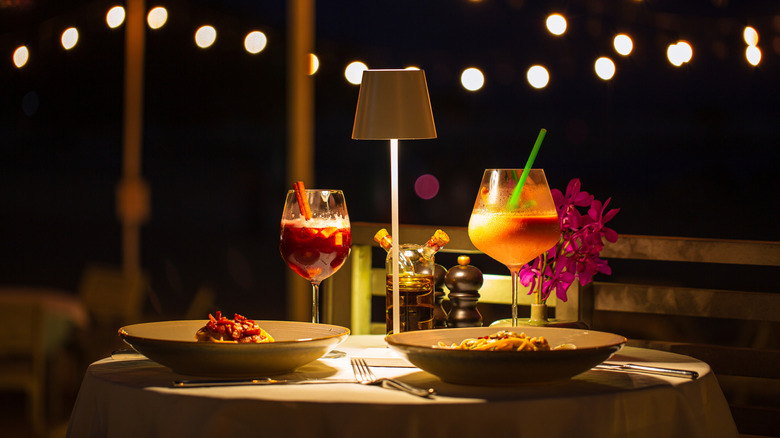
Think about this: The lighting in a dive bar is going to be very different from the lighting in a romantic fine-dining restaurant. That's to say that lighting can make a space feel very open or very intimate. As a host, you can play with lighting to cultivate a certain feeling or ambiance around your dinner party.
"Lighting is everything, and candles are non-negotiable," says Cassie LaMere. "A cluster of votives or a few tall tapers instantly shifts the mood and makes the table feel inviting." Your lighting is definitely going to depend on your dinner party location; outdoor spaces could benefit from string lights that physically enclose the space but also make it feel light and nostalgic, while indoor settings may benefit from vignettes made with tall candles and seasonal greenery. If you want your space to feel warm and welcoming rather than clinical, use light dimmers for overhead fixtures or warm tones.
9. Layer decor to give your space a unique feel
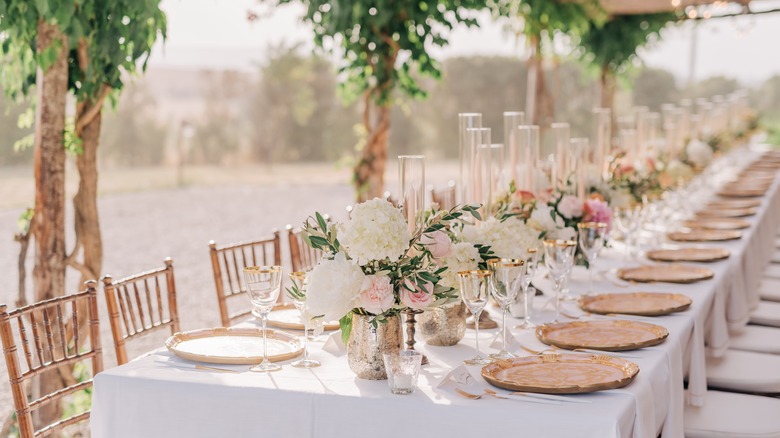
No matter what your Instagram feed tells you, you don't have to spend thousands upon thousands of dollars on matching decor for your annual dinner party. You can look to local thrift stores, your own cabinets, or online to find design inspiration and small, thoughtful pieces that will elevate your space. "It doesn't need to be elaborate — the best décor feels effortless, layered, and just a little bit unexpected," says Cassie LaMere.
One big statement piece for LaMere is her antiques. "My collections show my personality and the stories of how and where these treasures were unearthed makes for easy conversation. Hosting essentials like silver trays, cut crystal decanters, and serving pieces are made all the more interesting when they're vintage and delightfully mismatched." To that note, you can look for pieces that are centered around a certain era in design or play with certain textures to create a cohesive spread. Something as simple as a funky fruit bowl or a bouquet of colorful flowers can make your space pop by adding visual dimension.
10. Be a considerate guest

If you're a guest at a dinner party, you play just as important a role in making the event a success as the host does. This means being attentive, kind, and treating your host like you would want to be treated if you were in their shoes. That means giving advanced notice if you plan on ducking out early so that they can adjust how much food they prepare accordingly, or letting them know ahead of time if you have a dietary restriction. "The goal is to celebrate together, not add pressure to the host's plans," says Cassie LaMere.
Another question that we asked LaMere was centered on whether guests should bring a gift for the host. She shared that it's thoughtful when guests arrive with something special in tow, whether that's a dessert from a bakery or a favorite candle of theirs. "It's less about the contribution itself and more about adding a touch of themselves to the evening," she says. "Keep in mind that the gift doesn't need to be folded into the menu that night — in fact, it's often more helpful when it doesn't." Let the piece that you bring spark conversation, or at least show the host that you are thankful to have been invited.