

If You're Not Using This Simple Flour Combination For Your Homemade Onion Rings, You're Seriously Missing Out
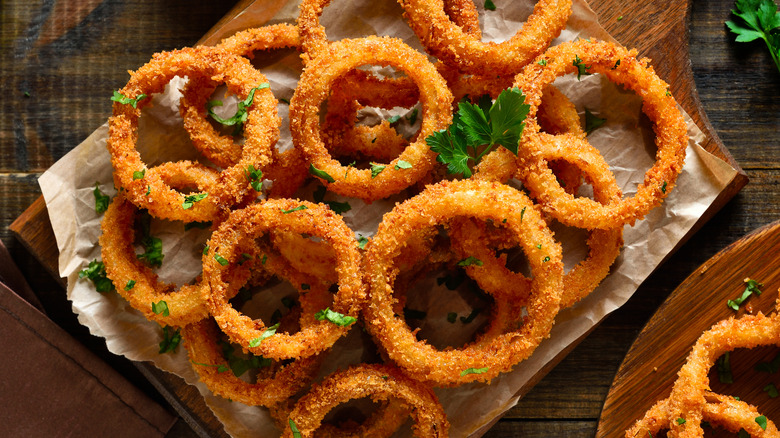
If your usual onion ring recipe calls for a simple plain flour with a little cornstarch, then we're about to rock your world, because the real secret to that crunch isn't hiding in any seasoning and it has nothing to do with oil temperature — it's in your flour combination. All you have to do is stir some semolina flour through the usual all-purpose to change your onion ring game altogether, semolina works to bring a coarser texture that clings to the onion and gives it some crunch while the softer all-purpose flour keeps the whole thing nice and light. And the best part is that you don't need to change your whole process, just swap out half your all-purpose for semolina in 1:1 ratio.
So if reading this has you already planning your next onion ring night, don't forget to soak your onions before frying too – that little step takes the sharp bite out of the onions and helps the semolina batter stick better. And for an even smoother frying experience, check out more of our tips for the best homemade onion rings, the semolina will help you nail the texture, then it's all about the technique.
Give semolina a chance
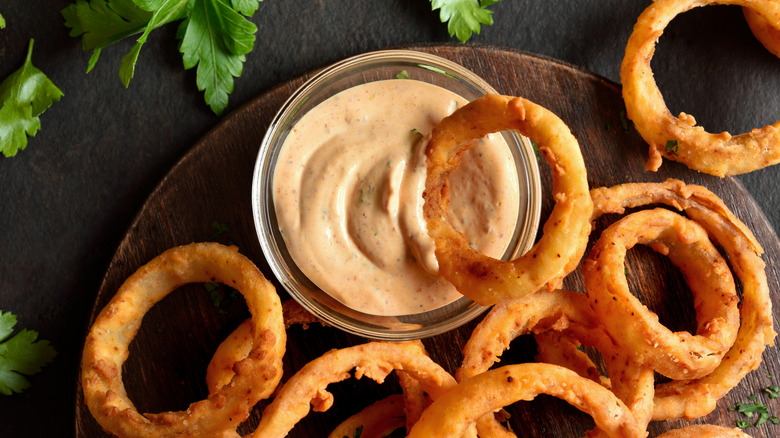
Frozen onion rings have a time and a place, but homemade is always better — and using semolina isn't just about showing off (although it is a little), it's also about control. You get to decide how thick the batter is, how golden the rings get in the fryer, and how much salt you sprinkle on at the end. Because it is made from durum wheat (which is same kind of flour used for dry pasta), it is slightly coarser than all-purpose flour, plus it's higher in protein, which gives it a study and crispy bite. And that grainy texture is what makes your coating rough enough for oil to grip and crisps it all up evenly. So instead of a flat, smooth shell that softens quickly, you will get golden, ridged edges that stay crunchy even after they cool down. Yay to no more sad and limp rings after five minutes on the plate — these are rings that will withstand a good dip in sauce.
Another big perk with using semolina is that it's naturally more golden in color, so it will leave you with a gorgeous amber crust that can be achieved without any risk of overcooking the onion inside. And as the semolina is also slightly less absorbent than all-purpose flour, it won't soak up loads of oil the way other batters do, and the result will be crisp without being greasy. It's like the best diner-style onion rings you've ever had, only better, because you get to say you made them yourself.