

Your Garden Basil Needs Special Care In Fall And Winter. Here's What To Do For Optimal Growth
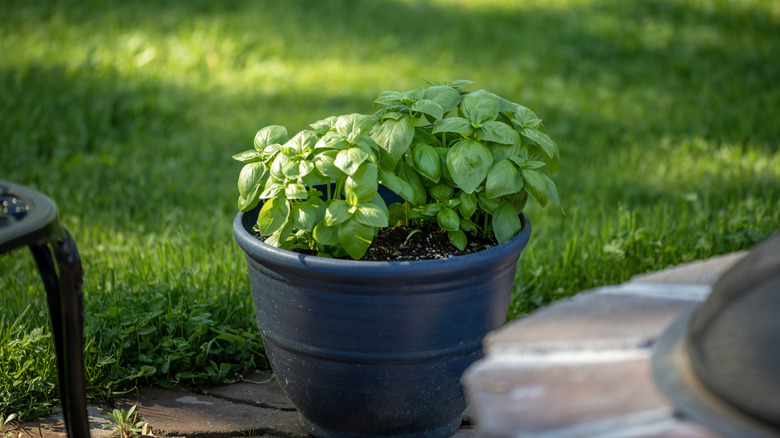
Growing your own herbs is one of the smartest moves home cooks can make. Not only will you save money and time by skipping the grocery store, you also have access to herbs at their absolute freshest. But herbs are delicate and need the right growing conditions to do their best. Basil is no exception — it thrives in the warmth of summer but is not a fan of cold weather. This means that if you live in a climate that gets cold winters, growing basil in your garden gets tough during the fall and winter. It simply won't survive the cold, frost, and snow. Although basil has made its way into just about every cuisine, it is originally native to the warm climates of Africa and Southeast Asia, which could explain its fondness for warmer temperatures.
But despite its distaste for cold weather, it is still possible to have fresh basil for your pesto sauce — or for one of Martha Stewart's favorite slushy cocktails — all year long, as long as you take the right steps to make sure your plants get the attention they need once the temperatures start to drop. The best way to do this is to relocate them indoors for the winter, giving them a nice cozy spot inside where the temperature is controlled and they have some sun to be happy. Whether you plant them indoors in a container garden, or grow them outdoors in pots and bring them indoors for the fall and winter, you'll be able to keep your plants safe from the freezing temps that will destroy them.
Tips for keeping basil happy in the house
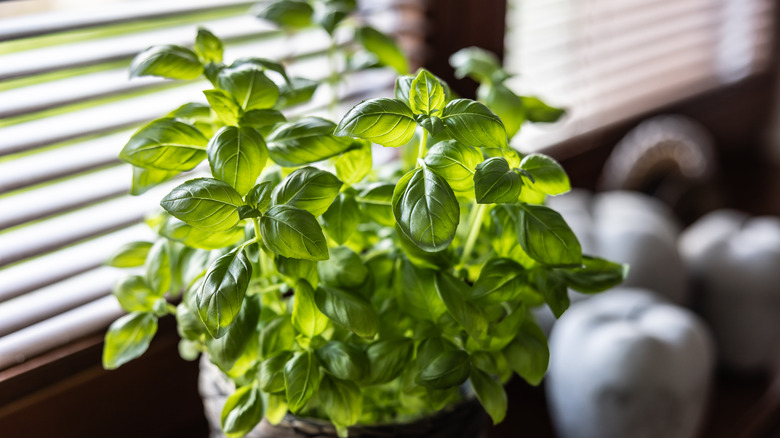
Basil is one of the most useful herbs in the kitchen — there are practically endless ways you can cook with basil and it's a fresh herb that even helps keep winged kitchen flies at bay. Plus, the versatility it offers in flavor alone is pretty impressive. You can get varieties that have notes of cinnamon and anise or others which have hints of lemon and lime, and you can find basil that gives a gentle kick of spice or an underlying sweetness that will drastically enhance the flavor of a dish, too. But if you don't care for it properly in your kitchen garden, all of that good flavor is irrelevant.
Basil needs consistent watering (you want to keep it moist, not soggy-wet), but it doesn't grow as fast during the winter, even if you keep it indoors, so you may not need to water it as frequently as you would in the summer. Your plants will also need plenty of light, at least six to eight hours a day. If you don't have a sunny indoor spot for your basil to reside through the winter or live too far north to get that much sunlight, then you can substitute natural sunlight for artificial grow lights, but you'll want to use them between 12 and 16 hours a day to keep your plants healthy. Take special care if you do have natural sunlight and keep your plants by the window. Even though they are inside, they can still get too cold if they are in a drafty location, which can damage the plants. Keep them happy and they'll stay healthy to give you fresh basil all winter long!