

7 Easy And Effective Ways To Keep Cockroaches Out Of Your Kitchen
There are very few bugs more universally hated than cockroaches, and it's pretty clear why. Several species of cockroaches are perfectly content making themselves at home with us, and once you've got an infestation, they can be hard to get rid of. And, while cockroaches aren't known for carrying diseases in the same way that mosquitoes and ticks are, they can still carry pathogens that make people sick. As an added bonus, their debris, like droppings and shells, can trigger asthma attacks in some people.
I live in the upper Midwest, so cockroaches have never really been on my radar until a few years ago. At the time, we were living in a townhouse that shared walls with two neighbors, and one day, one of those neighbors came to tell us he had bugs. He brought over a specimen, and my husband, who had worked in pest control for several years, was immediately (and unfortunately) able to identify it as a German roach. I went crazy cleaning my kitchen and, to be safe, we hired Joseph Nguyen, owner of Habitat Pest Solutions, to do a preventative treatment.
Despite our kitchen sharing a wall with the neighbors who had cockroaches, we never saw even a trace of the bugs. Regardless, I still get paranoid about seeing these pesky pests. So I chatted with my husband, Timothy Vallie, and Joseph Nguyen to learn more about how to keep cockroaches out of the kitchen.
1. Know your enemy
Before you can keep cockroaches out, it's important to know what they look like. Cockroaches aren't native to North America, but there are a handful of species that live here. These include the American, German, Oriental, and brown-banded cockroaches.
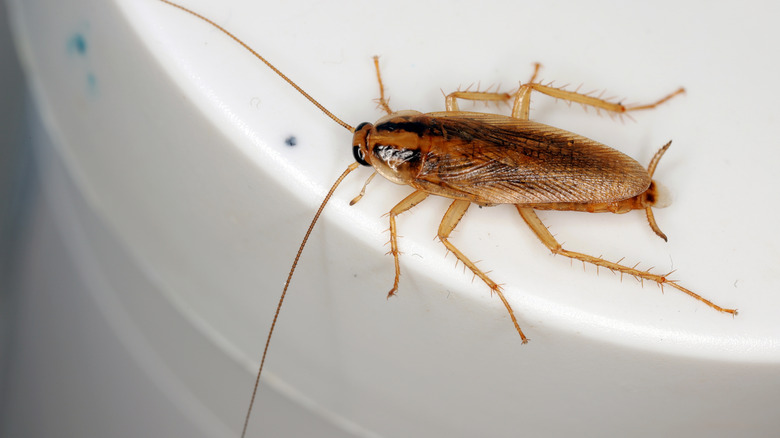
They all look a little bit different, and Joseph Nguyen gives a great breakdown of each. He explains that American cockroaches are large, 1½ to 2 inches long, and reddish-brown; you may hear people refer to them as palmetto bugs. German cockroaches are small (½ inch long), tan/light brown, with two dark stripes behind the head. Brown-banded cockroaches are about the same size, but they're light brown with pale bands along the wings. Oriental cockroaches are closer to 1 inch long and are black or very dark brown and shiny.
The ones that cause the most chaos in homes are German roaches (Blatella germanica). Unlike the other species, they almost exclusively live indoors. They also breed quickly and carry their eggs on their back, keeping them protected. Their small size and flat bodies make it easy for them to slip through cracks and narrow openings. "Roaches are drawn to areas that are moist, warm, dark, and cluttered, especially places with easy access to food and water," Nguyen explains. In the U.S., they're most common in southern states — especially in hot, humid areas like California and the Gulf Coast. But Timothy Vallie stresses, "They can be found in all major metropolitan cities and towns throughout the United States."
2. Keep your kitchen clean
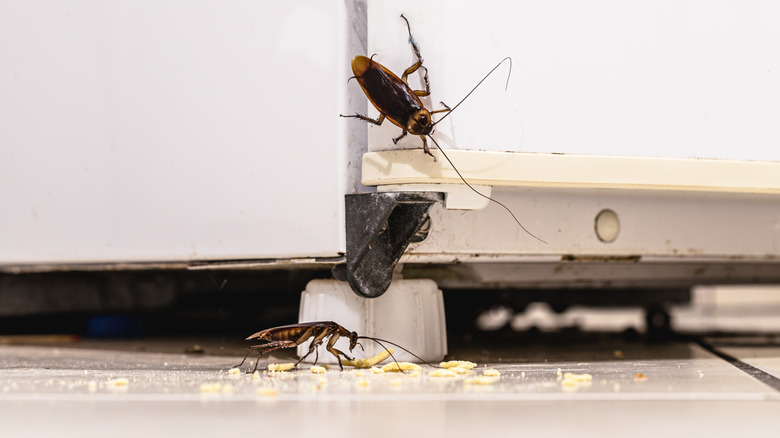
According to Joseph Nguyen, the first step to keeping out cockroaches is to maintain a clean and sanitized kitchen. As scavengers, cockroaches will go after food scraps and garbage. Thus, all food should be kept in airtight containers, refrigerated when possible, and never left out overnight. Cockroaches use their antenna to detect chemical odors and locate food sources, so with food on the counter, they'll be sure to find it. Keeping perishable food unrefrigerated is also a huge food safety mistake, since many types of bacteria thrive at room temperature.
Keeping it clean doesn't just mean putting food away; it means washing your dishes on time, wiping down counters and stove tops, and cleaning spills right away. Your kitchen doesn't have to be scrubbed down with bleach every night, but make sure there are no remnants from your cooking left out in the open.
Additionally, try to reduce kitchen clutter. "Cockroaches prefer to hide throughout most hours of the day," Vallie explains, "Reducing clutter in an environment decreases their ability to do so, [thus] making [it] less attractive for them."
3. Watch the humidity
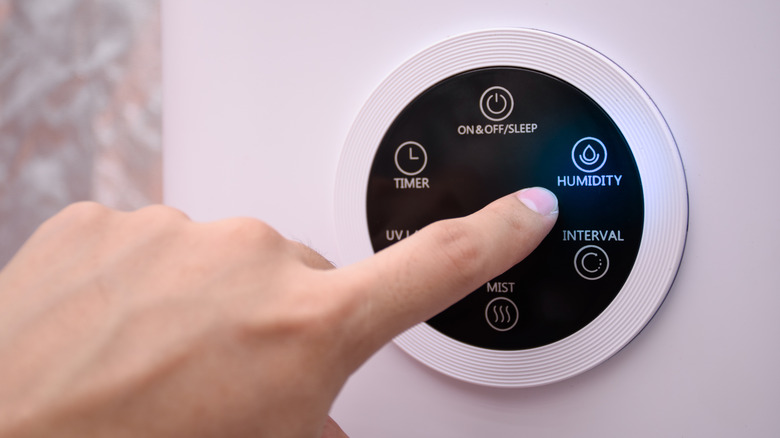
Because cockroaches like dark, moist spaces, managing the humidity levels inside your home can go a long way to keeping these pests out of your home. One of the best ways to do this is by investing in dehumidifiers, which filter moisture out of the air. Use them in your kitchen, as well as other high-humidity areas of your home, as this prevents cockroaches from seeking an entrance point elsewhere and migrating into your kitchen.
Monitoring humidity levels is wise even if cockroaches aren't your biggest concern; high humidity can lead to the growth of bacteria, mold, or mildew. In your kitchen, this can cause food to spoil faster or lead to unwanted foodborne illnesses.
But it's not just ambient humidity that can attract roaches. Even in a drier environment, leaks and drips can create pockets of humidity and moisture that can appeal to cockroaches. An active leak can spike your water bill and cause damage in the home, so you'll want to take care of it even if cockroaches aren't a major concern.
4. Seal up food containers
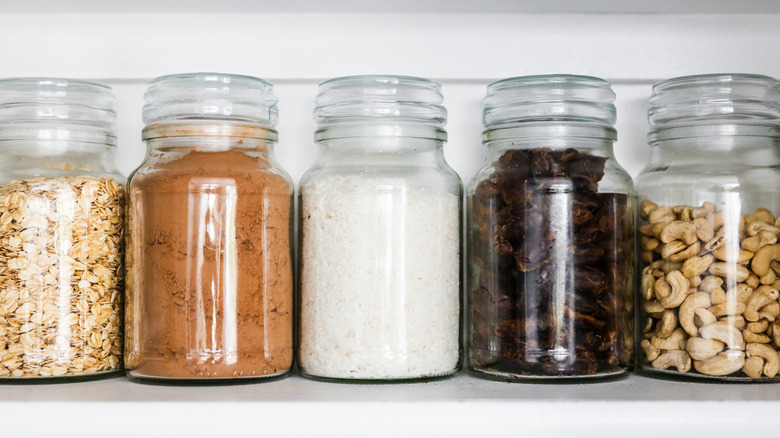
As Joseph Nguyen mentioned earlier, keeping out roaches means not just keeping your kitchen clean, but also storing food in airtight containers. Cockroaches will eat through cardboard and wrappers, so a lidded glass or plastic container is your best bet for things like rice, cereal, chips, and other dry goods. The lids should fit properly and be air-tight, as even a small gap can be an opening for a German roach. Timothy Vallie suggests using clear containers, as they're "easier to monitor for signs of infestation."
Because these roaches eat just about anything, pantry staples like sugar and flour should be stored in airtight, sealed containers as well. In fact, even if you aren't too worried about cockroaches, you shouldn't store open bags of flour or other baking supplies in your pantry because they can attract other pantry pests like grain weevils or meal moths.
5. Monitor what you bring in

As with many other types of invasive flora and fauna, cockroaches hitched a ride to the U.S. from their original habitat, and they continue to travel today. This means that even if you live in an area where cockroaches aren't common, these determined pests can still end up in your home by sneaking into luggage, packages, and even groceries.
When you're shopping, make sure to check your produce for bugs and avoid buying products with damaged packaging. If you buy something secondhand, do a quick search for critters so you're not bringing home any unwanted hitchhikers. When it comes to cockroaches, they often arrive in a box. According to Tim Vallie, "This can even happen when ordering items from Amazon, as all it takes is a male and a female roach to wind up in a box in a warehouse somewhere and for it to be shipped to your home."
If you open a package and discover cockroaches, what do you do? Easily enough, just get rid of it. Joseph Nguyen adds that you should thoroughly clean and sanitize the area once you've removed the infested package from your home. If you're really concerned, you can always call a pest control specialist to do an inspection.
6. Invest in repellents

Sometimes, you can do everything right and still end up with cockroaches in your home. If you live in an area where cockroaches are common or you're in a situation where there's a risk for roaches, there are several DIY treatments you can apply to repel cockroaches. If you have pets or kids in the house, you may want to start with natural insect repellents. "Treatments such as peppermint oil, cedarwood oil, tea tree oil, eucalyptus oil, neem oil, and thyme oil have both natural insecticidal and/or repellent properties that can help to reduce the potential for activity," says Timothy Vallie.
Another natural option, Joseph Nguyen says, is diatomaceous earth. Diatomaceous earth is made from the "fossilized remains of tiny, aquatic organisms called diatoms," according to the National Pesticide Information Center (NPIC). It works by soaking up the oils and fats in an insect's exoskeleton, causing these bugs to dry out and die. It may cause slight irritation to humans who touch or inhale it, but it is otherwise nontoxic.
If you want something stronger, try products containing boric acid. Boric acid is a compound found in a variety of pesticide products, and it works by damaging the nervous system of insects that ingest it. The downside is that for humans, touching it can cause irritation, and ingesting it can make you sick. So if you choose to go this route, be sure to keep it out of reach of kids or pets.
7. Call in an expert
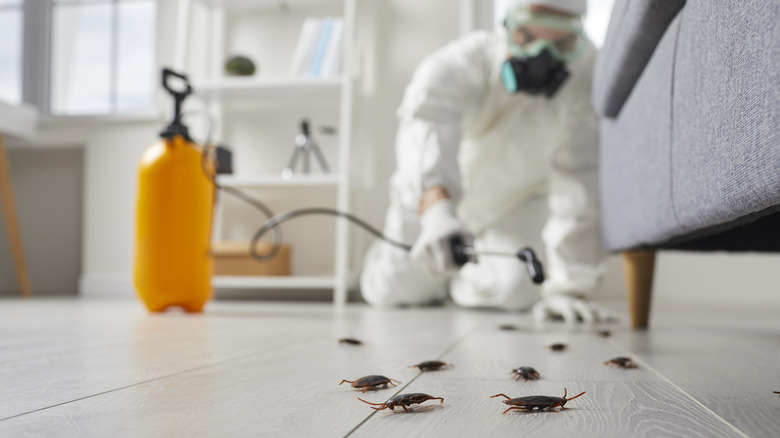
Options like essential oils, diatomaceous earth, and boric acid are all great at keeping cockroaches from entering your home in the first place. However, they're not ideal for roaches that have already established a clear and present infestation. When that happens, you need to go a little further.
Many stores sell at-home bait and traps for cockroaches, which can be useful. But if you've got a full-blown infestation, you're going to want to bring in a professional to deal with it. "Call a professional if you keep seeing roaches, find droppings, egg cases, or if DIY treatments aren't working," says Joseph Nguyen. Cockroach droppings are tiny, often looking like specks of dirt, ground coffee, or ground black pepper. Cockroach egg cases, called oothecae, can vary between species. However, they're usually long, thin, and a shade of brown.
Still not sure if it's time to bring in a professional? "Most pest management companies offer free inspections," Timothy Vallie says, "which can help to identify any signs of an infestation early on, leading to an easier time treating and getting the situation under control." Josephy Nguyen agrees that "taking action early helps stop the problem from getting worse." When it comes to cockroaches in your home, it's better to be safe than sorry.