

Olive Garden Actually Doesn't Use Real Butter For Its Breadsticks

Taking advantage of the unlimited baskets of breadsticks when dining in at Olive Garden is a mandatory ritual for almost every patron of this nationwide restaurant chain. They are pillowy, warm, and taste so delicious on their own that you probably wonder if they are made fresh to order. These breadsticks are also great for dunking into your choice of soup or dipping sauce, or to mop up any leftover marinara that remains on the plate. Each breadstick comes glistening with a buttery coating and topped with garlic salt, making for a delectable bite. But did you know that Olive Garden doesn't actually use dairy-based butter for its breadsticks? Instead, the restaurant chain uses its dairy-free cousin, margarine, making its iconic breadsticks suitable for plant-based and dairy-free diners. This comes as welcome news, especially when it comes to a chain that is not particularly known for a diverse selection of vegan options.
Contrary to its unwarranted negative reputation that was forged by the powerful dairy industry, margarine is a great replacement for dairy-based butter. Keep in mind that not all margarines are plant-based or even dairy-free, though. Some brands may include animal-derived ingredients — including dairy — in their margarine. So, when you're trying to recreate Olive Garden's breadsticks at home, make sure to check the ingredients list on the label before adding a tub or block of margarine to your shopping cart.
Tips when cooking with margarine
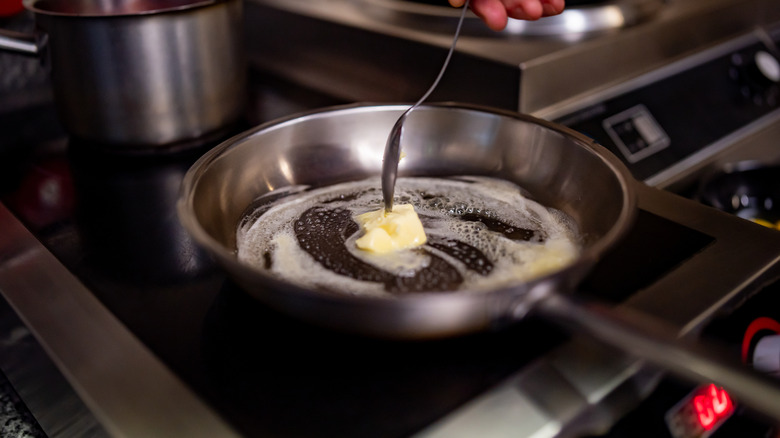
Butter is a prized culinary ingredient with versatile applications, ranging from making a base like a roux for the perfect homemade gumbo to greasing the pan. That said, there can be a number of reasons why folks may choose to omit butter, whether it's a conscious choice to minimize or avoid the consumption of animal products, or a matter of being sensitive to dairy. However, the good news is that you can deliver delicious results when swapping out the butter with margarine. But there are a few essential details to pay attention to so that you end up with something that'll have you flummoxed in the best way.
If you're wondering how to best substitute butter with margarine when baking, usually a one-to-one replacement does the trick. For best results, make sure to opt for margarine brands with a higher fat content, closer to that of conventional dairy-based butter. Look for margarines with about 80% fat, as low-fat margarines or tubs of whipped margarine introduce unwanted moisture and air that will ruin the texture of the baked product. In addition, it is typically recommended to use margarine sticks instead of the tubbed varieties for baked goods, which tend to be lower in fat. For non-baked recipes like a savory sauce or simple serving of buttered noodles, using margarine as a direct butter replacement does the trick just fine.