

How To Prep Your Fridge Before A Big Storm Hits
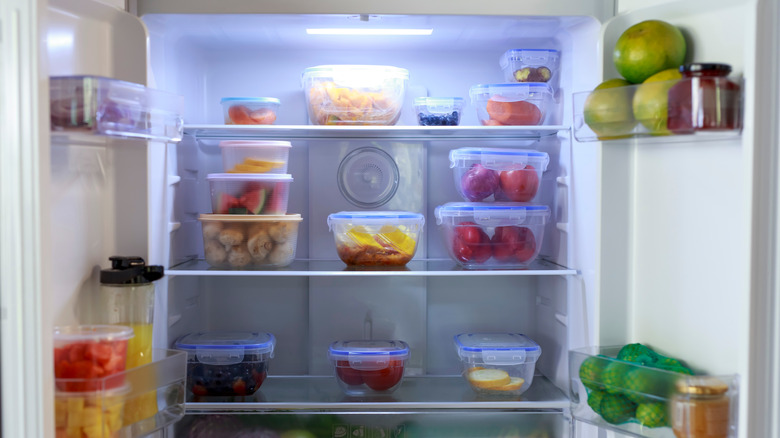
Whether a hurricane is barreling your way or tornado weather is in the forecast, you'll want to make preparations. When it comes to food, this means stocking up on non-perishable items that won't require cooking. But what about the food that's already in your fridge and freezer: Is it salvageable, and is there any way to make it last if the power goes out?
According to Campbell Mitchell, the founder and managing director of food safety management company Quest 4 Food, the answer is yes. However, you'll need to take certain steps and be aware that once the power is out, there are still time limits, even if you manage to keep your food cold for longer.
You'll want to start thinking about this well before a storm actually hits. Mitchell says to set your fridge and freezer colder than normal: under 40 degrees Fahrenheit for the fridge and around 0 degrees Fahrenheit for the freezer. This way, if the power goes out, foods will have a little longer before they warm up to unsafe temperatures. You'll also want to pack items closely together, so they retain the cold from each other. If you have time, it can be worth preparing or buying bigger ice blocks (this can even just mean filling up bottles and containers with water and freezing them, notes Mitchell). You could even invest in dry ice: 50 pounds should keep an 18-square-foot freezer cold for around two days. That said, dry ice may be available only at bigger grocery stores like Walmart or Costco, and you'll need protective gear for handling it.
Once the storm hits
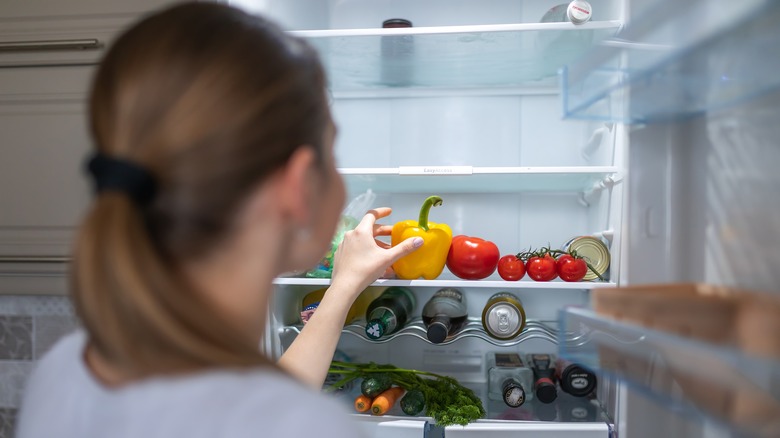
If you lose power, this is when you'll need to start being attentive to both timing and temperatures of your cold food. According to Campbell Mitchell, your fridge should stay sufficiently cold for food safety purposes for around four hours, while a freezer will be okay for anywhere from 24 hours (if it's half-full) to 48 hours (if it's fully packed). This is partly because frozen food can still warm up to anywhere under 40 degrees Fahrenheit while remaining safe to cook or re-freeze. But to maximize these time spans, try to avoid opening the refrigerator or freezer doors as much as possible, Mitchell says. It would be wise to keep a thermometer inside both appliances so you can accurately know whether temperatures are still outside of the danger zone.
If the power outage is dragging on, you may need to think strategically about what to eat first (or save for later). Mitchell advises using up meat, seafood, eggs (the U.S. Department of Agriculture says eggs will last only a couple of hours at room temperature), milk, soft cheeses, and any cooked leftovers or sliced produce. Other items may survive a bit longer — some examples include hard cheeses, butter (it may remain safe at room temperature for a matter of days), whole fruits or veggies, pickles (not all pickles even need refrigeration), and a lot of condiments, although it would be best to check specific food safety information for each item to be sure.