

Does This Popular Herb Really Help With Digestion?

When you think of oregano, you may associate it mostly as an essential ingredient in a good Italian herb mix or even as one of the best infusions for olive oil — but among some health enthusiasts, it's sometimes claimed to have benefits for your digestive system. But how much truth is there to these claims?
There are many different types of oregano. Some researchers have suggested that oregano may work as an antispasmodic, meaning it could help calm contractions in digestive muscles, in turn helping with symptoms like bloating, gas, or stomach cramps. But it's important to note that evidence of oregano countering these symptoms is very limited, with few studies performed on humans (and some of the limited studies are commissioned by supplement manufacturers, making them perhaps less than reliable).
That said, there's some animal research that has provided encouraging signals. It's been claimed that oregano can help counter food poisoning. To that end, one study in BioMed Research International involving pigs found oregano oil strengthened the intestinal barrier, reducing harmful E. coli bacteria. Another study in Frontiers in Microbiology suggested that oregano improved the gut lining health of bulls when supplemented with oregano oil. That said, it's a bad idea to assume this translates to humans, as the vast majority of medical studies on animals don't cross over.
What to keep in mind with oregano
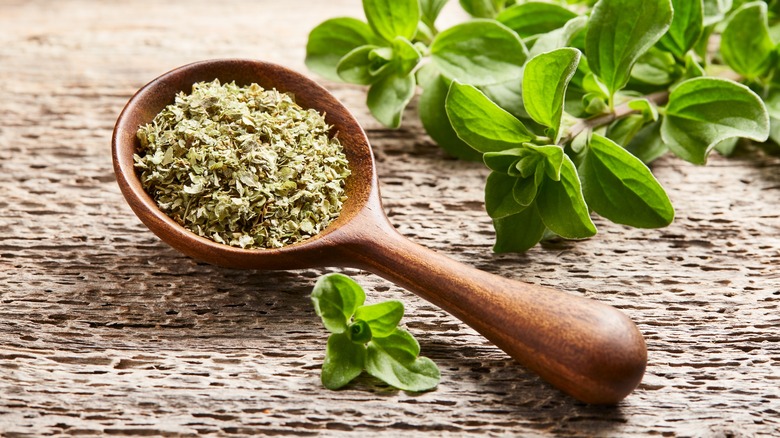
Unfortunately, when it comes to whether oregano helps with digestive problems, the answer is "possibly, but we don't know for sure." Where oregano has been touted as a digestive remedy for ailments like bloating, diarrhea, indigestion, or a gut imbalance, these claims may stem from the fact that oregano has long been used in folk or traditional medicines (including for other non-digestive issues, in particular colds and other respiratory issues). This is not to say that such herbal treatments are inherently invalid, but rather (at least in the case of oregano) that they haven't been studied. A lot of reliable health or scientific sources typically point out the lack of human trials or note that these benefits may simply be marketing claims.
The same applies to the possible benefits of oregano essential oil beyond digestive issues — for example, it contains carvacrol and thymol, which are plant oils that act as antimicrobials, meaning they can slow or stop the growth of certain bacteria and fungi. Yet essential oils are different from the dried leaves typically used in cooking. Whether oregano can stop infections from these microbes isn't clear, even if it may be beneficial.
So, without clear evidence, it's probably best not to lean on oregano for anything serious or prolonged. (And if you are going to use it, be aware of the difference between oregano oil, which is safe to eat, and oregano essential oil, which is not.) Instead, it may be best to consult a health professional for medical advice instead.