

This Common BBQ Myth Is Ruining Your Results
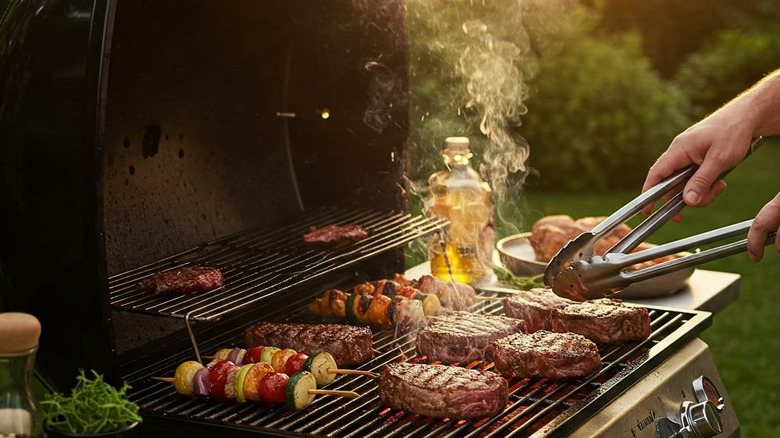
Both barbecue, the culinary category, and barbecuing, the act of joining meat with flame, are steeped in myth, legend, and a little bit of superstition. Many folks have some novel old sauce addition or unexpected protein tenderizing technique passed down through generations that's more rooted in family lore than actual food science, but still does the trick every time. Then there are the actual common grilling mistakes that could be doing you a disservice when the fire flicks the grates. So Chowhound smoked out a few truths with Patrick Klaiber, business partner and lead pitmaster at Riot BBQ in Denver, Colorado.
While "low and slow" could, generally, serve as barbecue's battle cry, slow does not necessarily mean slowest, to start. Contrary to popular opinion (and catchphrase), the longest cooking times just don't always net the best meats. Klaiber tells Chowhound exclusively, "This often leads to overcooked, overly smoky meat. It is not necessary to cook a slab of ribs for 8 hours when it can be done in 5 or 6 hours, or smoke a brisket for 18 hours when it can be done in 12 or 13 hours." Even the latter truncated time is still half a darn day, so why gild the lily — or, as the case may be, overheat the beef?
More meat myths deserving of a meat mallet bash
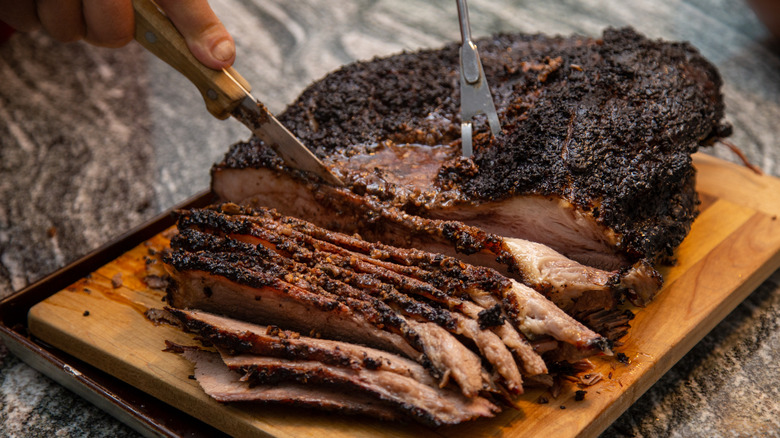
Smoked meat devotees might also be conditioned to covet a smoke ring — that ombré mauve that emerges beneath your meat's surface and only becomes visible once you set to slicing. But it does not actually signal any superior deliciousness. "Achieving a smoke ring looks nice, but it is not necessary," Patrick Klaiber says. "Some days we have a smoke ring and other days we don't, and guess what? It still tastes amazing! Don't fret if you don't have a smoke ring, focus on tenderness and flavor." It's just like we always say: you can't judge a chuck by its color.
There's also a less prevalent lie, but vexing one nonetheless, that any of this will be easy. There's a reason that people will actually head to their favorite local barbecue spot early to secure a spot in line: this is a specialized skill. But it's also one that you can hone. "Practice, practice, practice," Klaiber says, stressing that one must learn the contours of one's own equipment, along with its perks and quirks. "I guarantee you will mess up multiple cooks before you figure it out. I know I did. Adapt, overcome, and conquer," he says.