

The Important Distinction Between Cheese Curds And Mozzarella Sticks That No One Talks About

"Two fried cheeses, both alike in tastiness, on an extensive menu where we plan our meals." Okay, okay, so choosing between fried cheese curds and mozzarella sticks may not be as romantic as Shakespeare makes it out to be in "Romeo and Juliet." Still, the task of choosing between these two fried cheese dishes can be quite dramatic, if not confusing. After all, how different can two fried cheeses be? Both dishes, at their most basic level, consist of small pieces of cheese that are battered or breaded and then fried. Both are served with an accompanying dipping sauce and have a gooey, soft center. However, there are some key distinctions between these two dishes. Perhaps the biggest of which is the type of cheese used as their base.
Let's start with curds. While cheese curds are a form of fresh cheese, they are also a byproduct of the cheddar-making process. Essentially, they are curds of cheddar cheese that haven't been "cheddared" (a process that involves cutting curds into small pieces and then pressing them into a stack of sheets that press together to expel moisture). Meanwhile, mozzarella is a type of fresh cheese that's processed past the curd phase. Typically the whey is drained from mozzarella curds using a sieve or cheese cloth. Then, it's stretched out to form that signature, stringy, smooth texture.
Telling one cheese from another
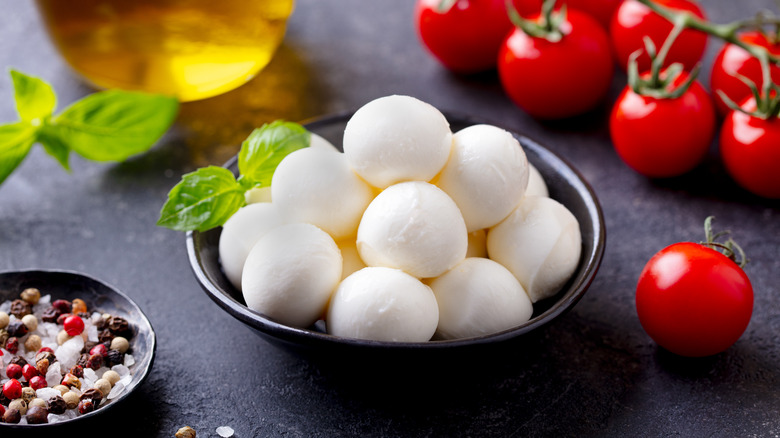
Of course, these differing production methods may not mean much to someone unacquainted with the intricacies of cheese craft, but you don't have to know the ins and outs of dairy to tell the difference between these two cheeses. You can taste (and feel) what separates them. Let's start with mozzarella. Unlike cheese curds, which are simply pre-cheddar curds removed from whey, mozzarella is made by stretching out curds to varying consistencies. Typically, low moisture mozzarella is used for mozzarella sticks as breading adheres to its surface more efficiently and it fries better than its high moisture counterpart. Mozzarella's stringy structure is great for pulling into ooey, gooey strands. You can also use the aptly-named string cheese, a form of mozzarella that has been stretched to form a thread-like structure. When fried, mozzarella becomes soft and creamy. It often has a mildly acidic, milky flavor.
Cheese curds, on the other hand are much saltier and a bit similar to cheddar in taste, though not quite as distinct. Cheese curds offer a characteristic squeak, at least when they're fresh, due to the in-tact nature of they're tightly-bound calcium and protein structures. When fried, cheese curds won't become as melty or stretchy as mozzarella. Instead, the texture is gooey and soft. They may stretch a bit, but will generally maintain their shape. These distinctions are subtle, but they do make a difference in the final product.
Other differences between the dishes

Of course, the difference between fried cheeses curds and mozzarella sticks doesn't just boil (or fry) down to the type of cheese used. These two dishes are often prepared and served differently.
Let's take, for example, the iconic Wisconsin staple (cheese curds are particularly popular in the Midwest and Canada). Although you can find fried cheese curds in many shapes, sizes, and preparation styles, the most popular is the beer battered and fried curd. The light and airy batter pairs perfectly with the dense, bouncy filling. Mozzarella sticks, on the other hand, tend to be breaded rather than battered. This seasoned bread crumb coating adds a crunch to the creaminess that gives fried mozzarella some much needed structure.
In terms of dipping sauces, mozzarella sticks are usually dipped in marinara sauce (though Melba sauce is also a popular choice, especially in upstate New York). Fried curds are also served with the humble but delicious marinara, though ranch dressing is also a popular accompaniment. This herbaceous, creamy dip may seem redundant when paired with the equally dairy-focused curd. But trust us, it really works. There aren't any hard and fast rules regarding either dish, so feel free to mix things up. It just might, like "Romeo and Juliet," bring a tear to your eye (though for tasty rather than tragic reasons).