

How Ripeness Affects An Apple's Taste, Texture And Juiciness
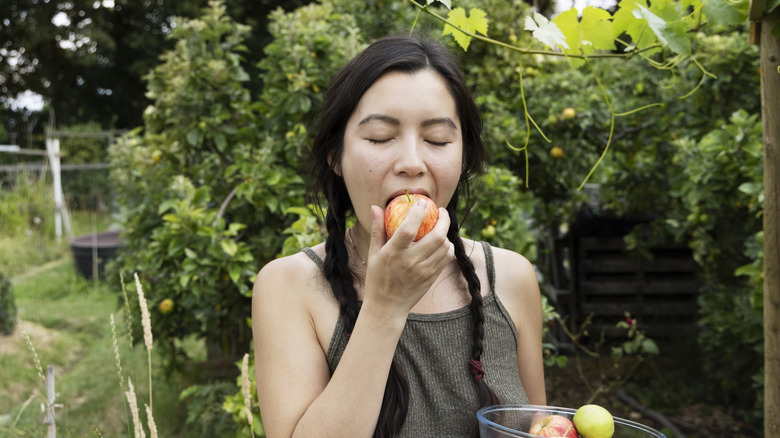
Have you ever bitten into an apple only to be instantly disappointed by its notable lack of flavor and an unpleasantly mealy texture? It's likely an experience we've all endured at some point, and possibly to the extent of being scarred enough to stave off apples. On the other hand, you may have also taken a bite of a perfectly crispy, juicy, and sweet apple that will have you buying them by the dozen during peak apple season. The ripeness of an apple is the key factor that influences its taste, texture, and juiciness, but all the important details are happening under the skin.
Zooming into a microscopic level, apples are composed of individual cells, and during the fruit's optimum ripeness, the cells are extremely taut from the outward pressure from the moisture that builds up against the cell walls. This is what is responsible for the satisfying crunch and burst of juicy goodness when you bite into a ripe apple. Overripe and underripe apples lack that suitable level of moisture, and can be soft and mealy. Overripe apples have lost their moisture and the cells of underripe apples completely developed.
If you're able to source them, tree-ripened apples are the best as they develop all the necessary sugars for maximum flavor. But if store-bought apples are what's available to you, make sure you pick apples that are firm without soft spots, heavy for their size, and are free from significant bruising.
Best ways to use up apples of varying ripeness
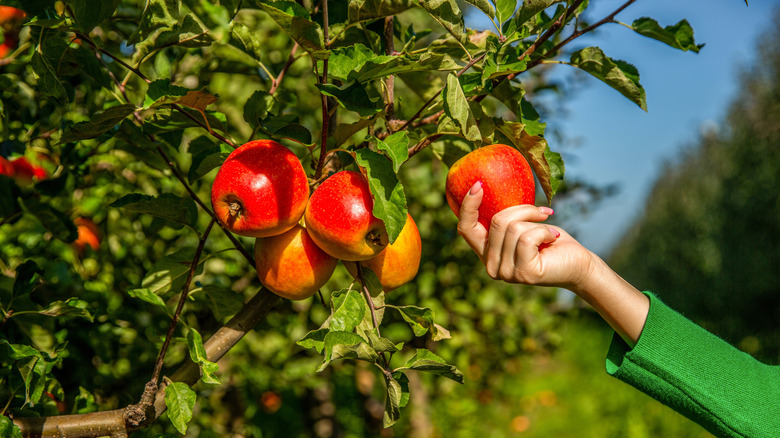
There are thousands of apple cultivars to choose from, each with its unique taste and texture to enhance your creations. Some varieties are better suited for baked dishes, while others are go-tos snacks like caramel apples. Obviously, we all want the apple to be perfectly ripened in the Goldilocks zone: not overripe, not underripe, but just right. Yet, if you still find yourself with some apples that fall short of or are past their prime, there are several inventive ways to use them up, core, peel, and all.
When it comes to underripe apples, there are ways to accelerate the ripening process even after it's been picked from the tree. This is because apples are climacteric fruits, which means that they can still ripen after being picked because they produce a gas called ethylene, which is the hormone that aids in the ripening process. Just like one of the many ways to ripen an avocado, you can place the apple in a paper bag along with another ethylene gas-producing fruit, like a ripe banana, at room temperature. However, keep in mind that the ethylene will not affect the sweetness of the apple but rather, its texture, so you're likely to end up with a soft apple that still lacks the desired sweetness.
Instead of trying to salvage the apple for a fresh snack, consider turning your subpar apples into crispy, air-fried apple chips, or a homemade, unsweetened apple sauce that you can use as a substitute for oil and butter in baking. You can also stir them into a warm and cozy serving of autumnal apple and cinnamon oatmeal.