

The Ultimate Guide To Choosing The Right Fat For Cooking Your Eggs
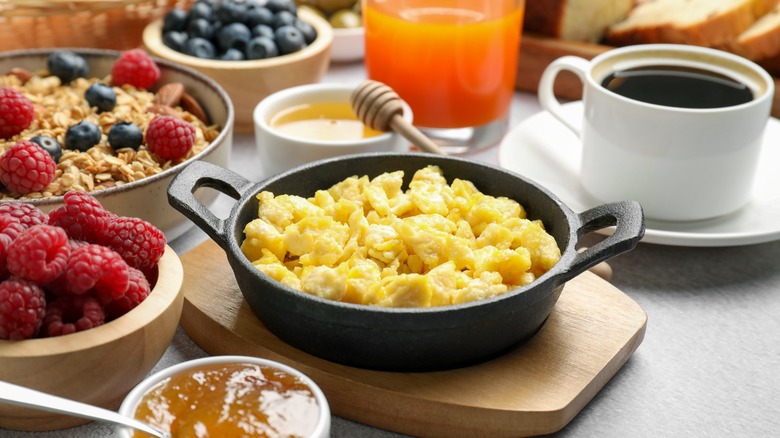
Quick, easy, and packed with protein, eggs are a simple go-to breakfast. Whether you prefer eggs on their own or you prefer them as a part of a one-pan breakfast sandwich, there are tons of ways to customize eggs to create the perfect morning meal. No matter how you prefer your egg-loaded breakfast, it's key to nail the basics — and that means cooking your eggs in the type of fat that's the right fit for your preferences and taste buds. Cookbook author and chef Rick Martinez (check him out on Substack) spoke exclusively with Chowhound about how different types of cooking fat can affect the taste of your eggs — and how to choose the option that's the right fit for the end result you want.
Martinez says frying eggs in butter creates a classic taste that's tough to beat — but good olive oil gives butter a run for its money. "I have really good olive oil here that's produced in Baja, California," Martinez says when asked about his favorite fat for frying eggs (he's not the only chef partial to olive oil from California). "It's got really grassy, sort of sharp, fiery notes, and I really, really like it. I started using that for scrambled eggs and now I really like that flavor better."
The type of fat you prefer for your eggs is really a matter of personal preference, according to Martinez. Butter creates a rich dairy flavor, while olive oil lends more earthy notes. He also says that cooking eggs in bacon or chorizo fat can be a good fit for breakfast skillets or tacos.
Pro tips to keep in mind for perfect fried eggs
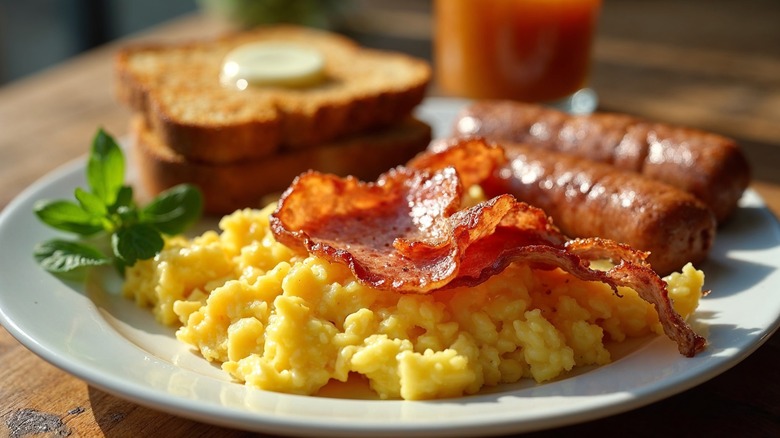
Whether you choose butter, olive oil, or fat from the meat you're frying in the same pan, you'll want to bring as much fatty flavor as possible to your eggs. Rick Martinez says that giving your eggs some time can help to impart oily flavors. "Olive oil fried eggs are just amazing," he enthuses. He says that when you give the eggs plenty of time to cook, you end up with roasted olive flavor (or flavor from other types of fats) on the outside in the crispy edges, which works well paired with the still-runny yolk on the inside. An important note — if you prefer to use butter, you'll need to be more careful, as butter burns much faster than olive oil.
Martinez also suggests blending multiple types of oil to create a unique flavor. Nut oils, in particular, can add a surprising twist to the taste of eggs. "These are super expensive, and so they're more like finishing oils," he says. Martinez recommends cooking eggs in a neutral oil and then adding a bit of pecan, pumpkin, or toasted sesame oil to add a bit of unexpected flavor to the end of the cooking process.