

Where Does Aldi Get Its Vegetables?
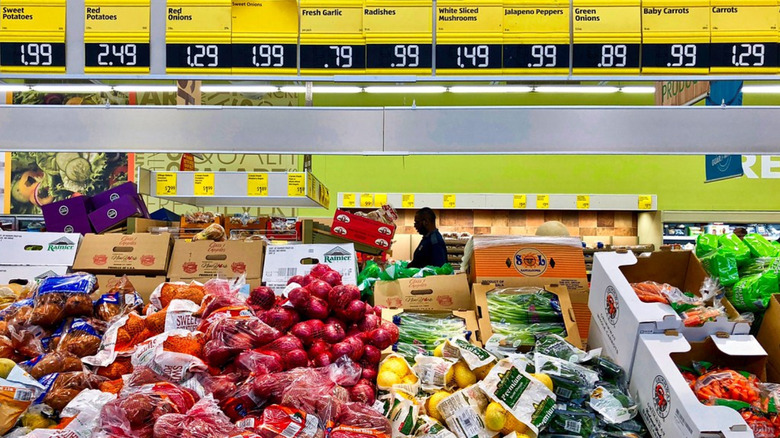
Aldi grocery stores are known for providing patrons with affordable products. One of the ways it's done this is by creating white label brands through third-party suppliers that provide product dupes that taste just like the real thing. Although it isn't the only grocery store to do this, supplier partnerships are certainly how Aldi offers its customers bakery items without an in-store bakery, provides a store-brand offering for one of the best instant coffees to make smooth and refreshing iced coffee, and offers inexpensive fresh fruits and vegetables year-round. Especially as consumers are becoming more aware of where their produce comes from, this raises the question of where Aldi sources its fruits and vegetables.
Unfortunately, when it comes to pinpointing exactly where Aldi's produce comes from, there's no specific source given. However, what can be confirmed is that the German-based grocery chain teams up with farmers throughout the United States and international suppliers for its inventory. This includes local farms to enable each location to provide fresh, seasonal items throughout the year. Additionally, each of its suppliers is held to strict standards for soil quality, irrigation, and harvesting methods. Once its produce is distributed to consumers, Aldi utilizes impressive in-store ripening techniques such as regulating the location's temperature and humidity and monitoring to ensure its produce is at peak ripeness for each shopper. Aldi also require regular audits from its suppliers to ensure the chain's commitment to high sustainability and safety efforts.
Aldi's produce is of good quality, but you may want to use it right away
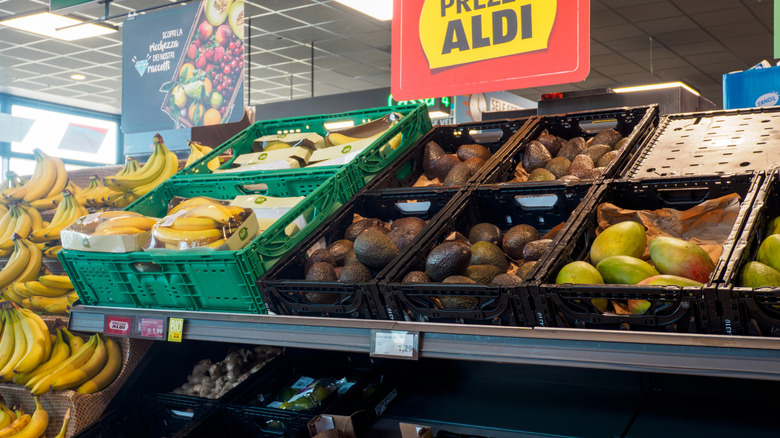
Aldi isn't alone in its efforts to provide consumers with quality, competitive store brand alternatives. Other grocery stores like Trader Joe's and Publix pair up with suppliers to provide similar services. While Trader Joe's isn't transparent about who its suppliers are, the quirky grocery store does source its produce from various farms throughout the nation and globally. Trader Joe's also maintains that its partners are held to a high standard and of good quality without revealing its produce suppliers. On the other hand, Publix proudly showcases many of its partners, communicating who some of its suppliers are, which helps ensure its consumers know where their produce, as well as Publix's fresh and frozen meat, comes from.
Admittedly, while Aldi ensures that its produce is of decent quality, it may not last long. According to Redditors, Aldi's produce can be hit or miss and can go bad quickly. Some theorize that the reason behind this is that Aldi wants a fast farm-to-shelf-to-consumer turnaround, meaning that the produce is underripe while transporting and at its optimal ripeness in the store, but this also means that it's closer to going bad soon after it lands in the customer's kitchen. Others on Reddit suspect that since Aldi keeps its produce near the front of the store — where the sunlight hits it, and the doors opening and closing cause a fluctuation in temperature — this may be to blame. Thankfully, Aldi has taken measures in its more recent stores to address consumers' produce concerns, placing its fruits and vegetables more towards the store's center and devoting a refrigerator to its produce section.