

The Only Ratio You'll Ever Need For Perfect Pickles Every Time
We may receive a commission on purchases made from links.
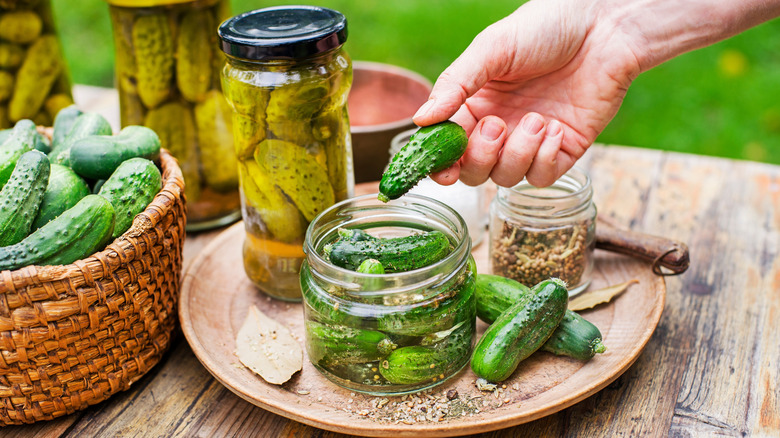
While there are some good store-bought pickles around, making this simple, briney condiment at home is a lot easier than you may imagine. So much so that if you're planning a meal and realize you don't have pickles to go with it, you can literally make them alongside the meal and have them ready by the time you're finished cooking. The ratios involved in making pickling liquid are exceedingly simple for a basic pickle. While you can always trust your own judgement on how you want the sweet, sour, salty, and (optionally) spicy flavor balance to be, it's good to have a go-to ratio that can work as a baseline for making great pickles every time.
Our search for this golden ratio of pickling flavors led us to an exclusive with Melissa King, who gave us her go-to balance of sweet and sour that she uses for flavorful pickles every time. A chef, cookbook author, and "Top Chef All-Stars" champ, King's new book, "Cook Like a King: Recipes from My California Chinese Kitchen," features over a hundred recipes inspired by her Chinese heritage, life in California, and experience in Michelin-starred kitchens. When asked about the best brine ratio for pickles, she reveals a simple recipe, saying, "I like my pickles a little on the sweeter side, so I like 1.5 cups of sugar to 2 cups of rice vinegar." Her sweet caveat aside, King explains that some modifications are fine depending on personal preferences and what type of pickle one wants to make.
Tweak the elements of your pickle and adjust the sweet-to-sour ratio accordingly
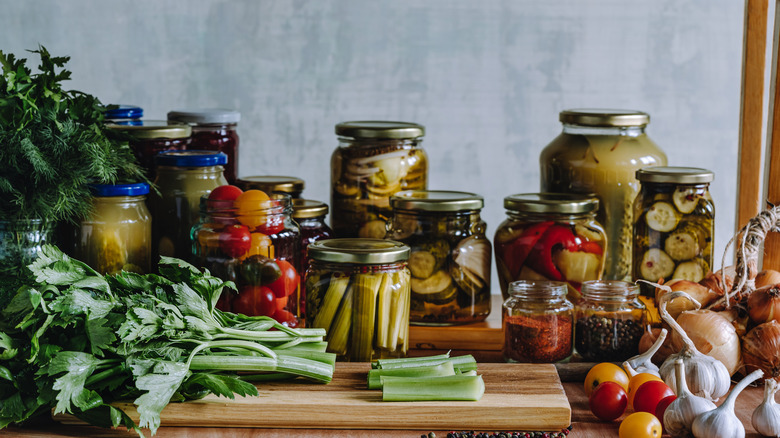
According to Melissa King, "you can play around with different vinegars, but keep to the same acidity content." Thus, if you want a pickle on the sweeter side, stick to her ratio of 1.5 cups of sugar to 2 cups of rice vinegar. To tweak the flavor, consider changing the latter to other types of acidic components, such as apple cider or even simple white vinegar. The ingredients of the pickle also play a significant role in how you can go about tweaking the sweet-sour balance. When pickling spicy vegetables, such as, say, jalapeños or other hot peppers, a sweeter brine can help balance flavors. Even cabbage, with its mildly spicy flavor, benefits from a slightly sweeter pickling brine.
Conversely, when pickling milder vegetables, such as cucumbers or carrots, consider tweaking the ratio and reducing the amount of sugar compared to the amount of vinegar. Some recipes even reduce the amount of sugar to just a quarter of the volume of vinegar. However, this is more suitable when the pickled ingredients themselves are sweet. Therefore, if you're experimenting with pickling fruits, consider reducing the sugar or upping the sour and spice components. The salt content is always up to personal preference, and you can even consider rubbing the vegetables with salt if you like super-crunchy homemade pickles. Finally, while the pickles are ready to eat after resting for just a few hours, the science behind the process of pickling is complex, and the flavor of your creation matures over time. Therefore, pick your pickling ingredients depending on how much time you have to let them rest and ferment.