

Why You Should Absolutely Never Freeze Sushi For Later

Sushi is quintessentially delicious because of its fresh ingredients, which is how fish — raw or otherwise — should typically be eaten. While fish that's purchased frozen and stored correctly can retain a good amount of its flavor and consistency once cooked, this is not the case when it is folded into sushi and stored in the freezer. "As with all other proteins, freezing and thawing any fish processed for sushi will significantly compromise the quality," said Hideto Sugimoto, SVP of supply chain and menu development at Kura Revolving Sushi Bar, which boasts 81 locations in the United States, in an exclusive conversation with Chowhound.
Sure, storing food in the freezer can help significantly increase its shelf life. However, there's not much point to it if the food loses much of what makes it tasty. Unfortunately, this is the case with freezing sushi for later, and even the best maki sushi rolls will turn mushy when subjected to sub-zero temperatures. "It's worth noting that many proteins used for reasonable and convenient sushi are already single or twice frozen items," Sugimoto said. "To freeze the item again would bring down the quality. It loses the flavor and feels more watery." Because certain sushi ingredients fare better than others in the freezer, if you really have to store this iconic Japanese dish for later, look closely at its components and how they have been processed to gauge how much they might degrade when frozen.
The only way to keep sushi in the freezer is to buy it frozen
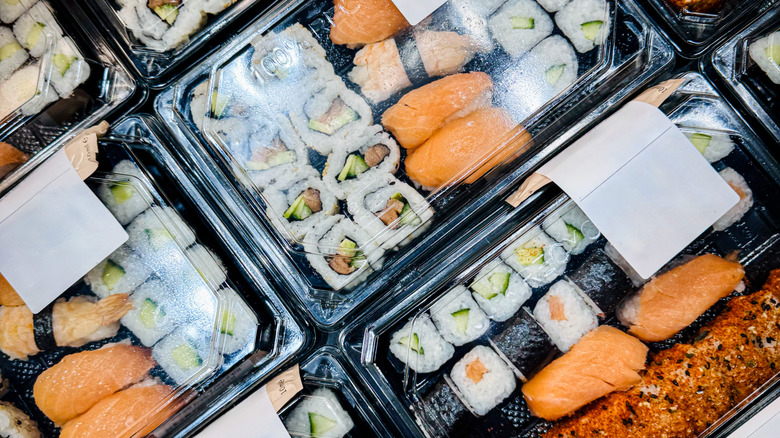
In general, even refrigerating sushi for a few hours can reduce its taste. However, if it absolutely must be stored for later, then the best type of sushi to keep in the freezer is some that already comes frozen. "There are manufacturers working on frozen sushi to be sold frozen. Purchasing and dethawing them would be much better quality," recommended Hideto Sugimoto.
Another option is to store each element of your sushi separately. Since some foods fare better than others at low temperatures, consider your sushi filling accordingly. Supposing you find some high quality sushi ingredients and would like to store them long-term, it's a good idea to prep these ingredients before storing them in airtight freezer bags. Sushi rice, Sugimoto said, freezes and thaws better than most other sushi ingredients. Therefore, you can store a mix of boiled sushi rice and vinegar and have it ready to go when needed. Similarly, it's possible to find sushi-grade fish that's been flash frozen to retain freshness quickly after being caught. So, with all that being said, it's best to simply step out and order sushi at a restaurant when you've got a hankering.