

This Retro Kitchen Gadget Let You Make Fresh Peanut Butter At Home But Now It's Mostly Been Forgotten
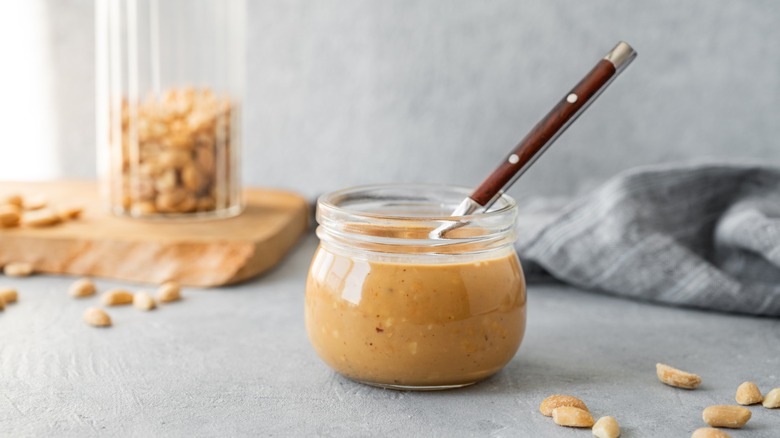
For many of us, peanut butter is a way of life. It's a versatile ingredient that positively impacts all sorts of recipes, from thickening stews to being an unexpectedly good topping for burgers. There are countless ways to put a creative spin on a PB&J, and its natural sweetness makes it perfect for desserts — including some ridiculously easy-to-make peanut butter pies. It's a staple in so many kitchens that a ton of folks just make their own peanut butter at home so that they've got a steady supply of the stuff.
If you happened to grow up in the 1970s, you might have come across a long-forgotten retro kitchen tool that epitomized just how much we enjoy peanut butter. Some households had dedicated machines that did nothing but churn out freshly made peanut butter. All you had to do was dump your nuts into the tank, turn the peanut butter machine on, and watch it pulverize everything into that golden brown paste we all know and love.
These days, we turn to our blenders to make irresistibly smooth and creamy peanut butter at home. It's just fascinating to know that there was a time when, instead of blitzing their way into nutty goodness, people used to rely on such a singularly focused machine to make one of the world's tastiest spreads.
A short history of peanut butter machines
Long before peanut butter even became a concept, the ancient Aztecs and Incas were already making something similar. They'd grind peanuts into a thick paste using a mortar and pestle, which would technically be the very first "peanut butter machine" known to man. What we enjoy now in our sandwiches and desserts actually became popular as a health product centuries later — particularly for patients who had problems chewing.
Dr. John H. Kellogg of the Battle Creek Sanitarium patented his process for making dry nutmeal in 1897, which also created what he labeled "nut-butter" as a byproduct. The patent involved boiling peanuts and passing them through two rollers that mashed them into a dry compound and a loose paste. However, it's been said that one of his employees, Joseph Lambert, actually invented the machine Kellogg's sanitarium used to make the peanut butter for his patients. Lambert began selling his hand-cranked peanut mill in 1896 after leaving Kellogg's employ.
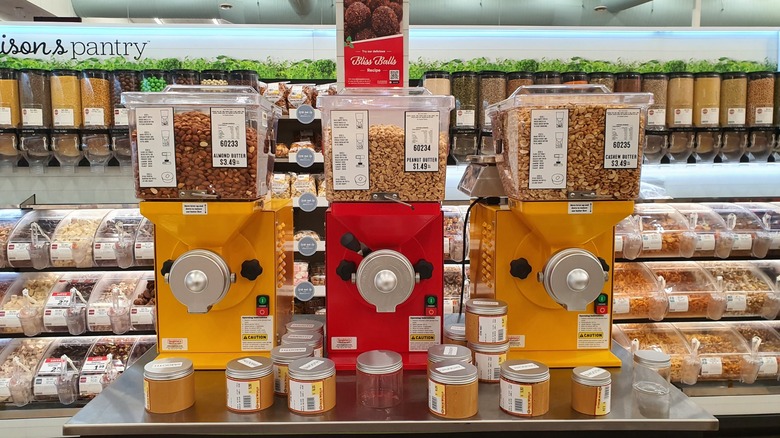
In 1903, the second-earliest known American patent for a peanut butter-making machine was granted to St. Louis physician Ambrose W. Straub; like Lambert's, Straub's machine was hand-powered. It's less clear when electric peanut butter machines were invented, but patents from the 1920s suggest that they were around during that time. What we do know is that Lewis Salton debuted his home electric peanut butter machine — a miniaturized version of the large-scale machines used by commercial brands — in 1975. While they aren't as commonplace as they used to be, peanut butter machines still exist today in a commercial capacity; some supermarkets even let you make fresh nut butter using their machines in-store.
Why almost no one uses them anymore
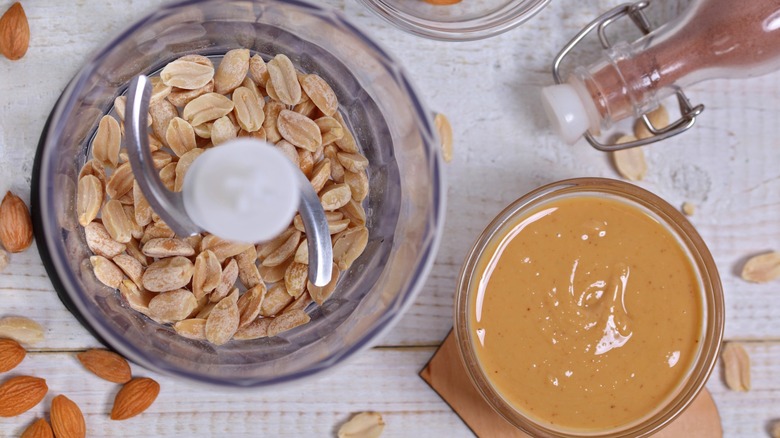
So why did the home peanut butter machine fall in popularity? The likely reason is that the available alternatives were just more powerful and efficient. Electric blenders started popping up in the 1920s and became a household staple by the 1950s. By the time Lewis Salton's specialized peanut butter machine appeared on store shelves, homemakers already had an appliance that could make peanut butter — along with soups, dressings, smoothies, and more.
Commercial peanut butters were also widely available long before peanut butter machines were being mass-produced for public use. The oldest peanut butter brand in America, Krema Products Company, has been producing the spread since 1908, and the number of brands just continued to climb since then. People pay for convenience, so for a lot of folks, buying a jar at the supermarket tends to be the better value proposition over making it yourself.
You can actually still buy home nut butter makers today, but based on reviews, they're louder than you'd like and don't do anything beyond what your blender already does. Despite this, owning one could still come in handy if someone in your household has nut allergies and you don't want to take any risks with a shared blender. At the very least, having a mostly obsolete retro kitchen gadget on display works as a fun little conversation starter.