

Here's How To Know If Your Cantaloupe Has Gone Bad
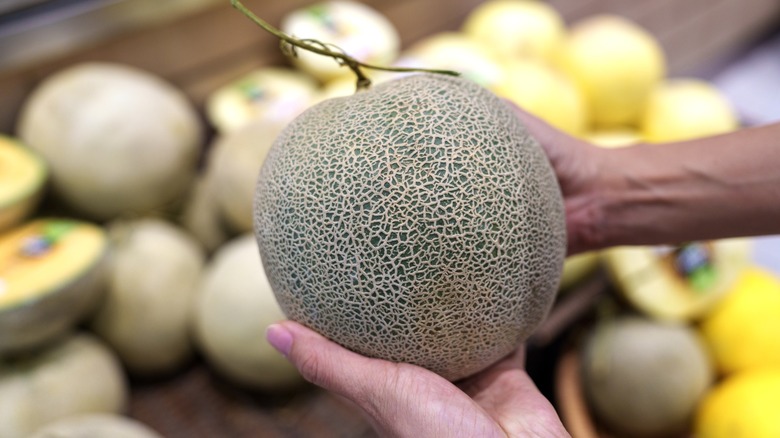
Cantaloupe is not only one of the more hydrating foods that you can buy, but it's also incredibly juicy and flavorful, provided you know how to buy the tastiest cantaloupes at the store. But the good times can't last forever, and eventually that cantaloupe will go bad. Worse yet, there might even be some cantaloupes at the store that have passed their prime. So how do you see through that tough exterior skin to know if your cantaloupe has its best days behind it? Thankfully, we've got someone who can read the telltale signs.
Erika Nolan of The Holistic Homestead (also found on Facebook and YouTube) is a Homestead Consultant and creator. As someone well-versed in seeing produce progress all the way from the seed to the table, Nolan knows when a fruit enters (or in this case, exits) its peak ripeness. When asked for the most reliable signs to see if a cantaloupe has gone bad, Nolan told Chowhound that "soft spots are a sure sign that the cantaloupe is overripe." She says, "The spots may be slightly darker in color, but can also be the same color, just sunken and slightly softer." Your nose can also help, as Nolan suggests to "smell the spot where the vine was attached." This smell should be light, not super strong, according to her. You could knock the melon and feel it too; if it sounds hollow and firm, you've got a good cantaloupe in your hands. So whether it's with your eyes, nose, or touch, there should be no trouble avoiding overripe cantaloupe.
Store your cantaloupe well to help it last longer
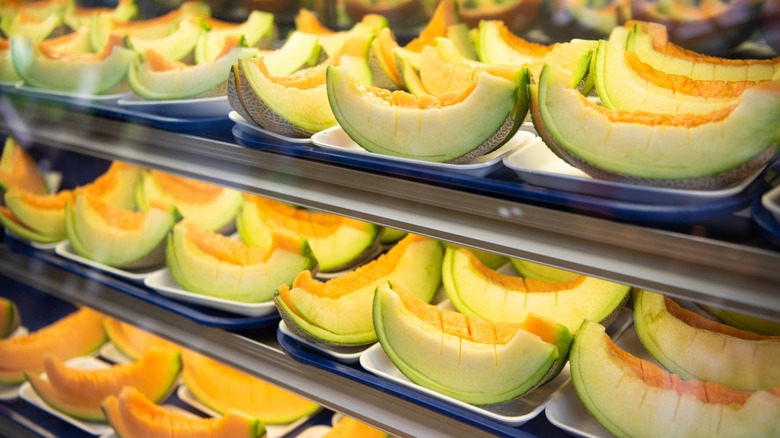
So, you've checked for those soft spots and made sure your cantaloupe didn't smell too strong, but that melon will still go bad if you don't eat it in due time. Usually, you don't have a ton of time to cut and eat your cantaloupe once you've bought it (about five days to a week). However, Erika Nolan says, "The fridge will slow down the ripening process so if in doubt and needing to hold off before cutting it open, keep it in the fridge." Doing so will give you two or so weeks to eat that cantaloupe. If you've already cut and prepped your melon, though, then keep the pieces in a tightly-sealed container away from any direct airflow in your fridge. This should keep it for a few days.
You could of course find some creative ways to eat that melon to keep things fresh, such as seasoning cantaloupe with some flavorful savory spices, if you're intent on finishing the entire fruit in not a lot of time. Nolan also recommends a tasty frozen option. "My family enjoys frozen scoops of cantaloupe or cantaloupe sorbet!" she suggests. "Mix in a blender with condensed milk, whipping cream, arrowroot powder, and a splash of maple syrup and pop it in the freezer for sorbet!" If you've got some cantaloupe that's on the edge of overripeness, this could be a handy way to not let that melon go to waste, allowing you to enjoy the fruit from the first slice all the way until the end.