

Ever Notice That Grocery Store Limes Never Have Seeds? Here's Why
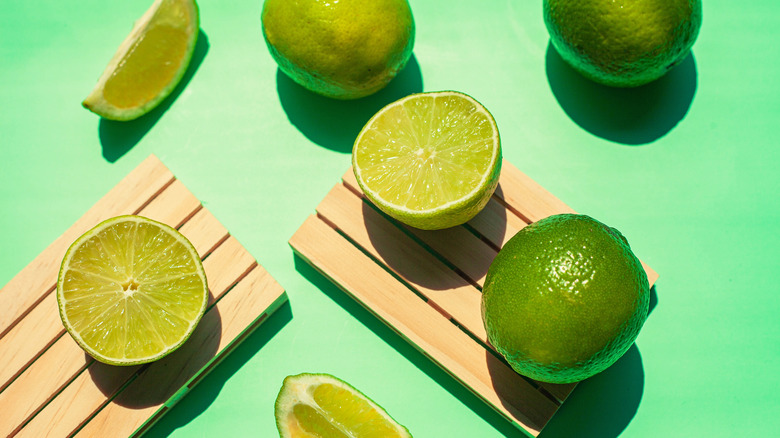
Adding a squeeze of lime as a finishing touch can enhance the outcome of almost any recipe. Its acidic zing brings a delightful balance and freshness to the dish as it cuts through the other rich components. Whether you're whipping up a perfect, refreshing margarita or adding a final squeeze of lime to liven up your tacos, choosing the best limes at the store is an effortless way to level up your meals with a zesty kick. When slicing through a lime from the grocery store or when your ordered dish at a restaurant is garnished with a wedge, you may have noticed that, unlike their other citrusy cousins like lemons, limes typically don't have any seeds. In fact, the lack of seeds is one of several traits that distinguish limes from key limes.
This is because typically, fruits are a result of pollination, which results in the fertilization of the flower's egg cell; and as the ovaries of the flower transform into a fruit, seeds are also formed. However, some fruits like Persian limes, which are more common in North America, reproduce by a phenomenon called parthenocarpy. This means that no fertilization is required for the plant's ovaries to develop into a fruit, which means no seeds. In such plants, hormones like gibberellic acid trigger the maturation of the ovaries into a fruit. While parthenocarpy can be artificially induced through specific breeding techniques, reasons like chromosomal imbalances or defective reproductive cells may also contribute to a naturally seed-free harvest that some breeders can capitalize on by cross-breeding with other plants to develop seedless crops.
Are seedless fruits genetically modified?
Genetic modification is a process by which the DNA is altered through genetic engineering. While some may prefer to steer clear of genetically modified crops, they aren't the force of evil that some people might think they are. It's a scientific technique to introduce favorable traits into various plants, like disease and pest resistance, improved flavors, reduced rates of oxidation and browning post-cutting, and so much more. On that note, is producing seedless offspring a desirable trait that has been introduced through genetic modification? The answer to that is, for the most part, no.
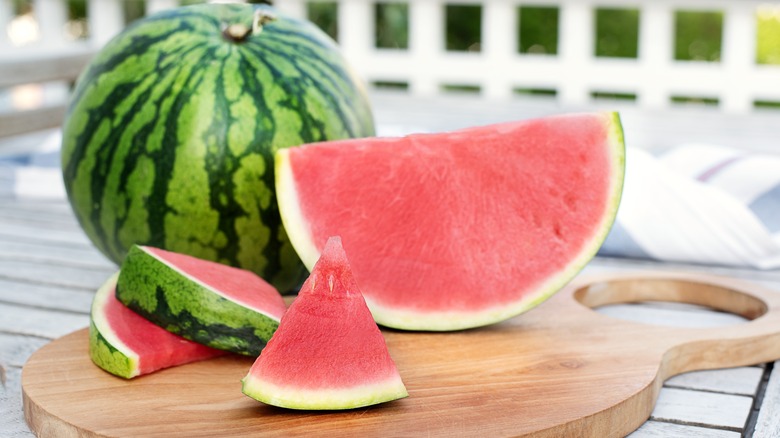
Seedless fruits are particularly desirable and hold significant commercial value. As a result, we can savor the likes of seedless watermelons, mainstream varieties of bananas, pineapples, grapes, and more. If the idea of genetically modified fruits is still unsettling, the good news is that most of the seedless fruits on the market don't entail any genetic engineering. That said, it doesn't mean that seedless fruits are entirely "natural," as they do require some form of external intervention.
There are some naturally occurring parthenocarpic (or seedless) fruits, but the ones you find in grocery stores or local farmers markets are most likely a product of specific breeding methods. For example, Persian limes are made by a method called grafting; this is a common and effective method to propagate asexual, seedless crops. Seedless plant varieties are not a novel creation, and have been in botanical practice for centuries.