

3 Essential Tips For Storing Seafood According To NOAA
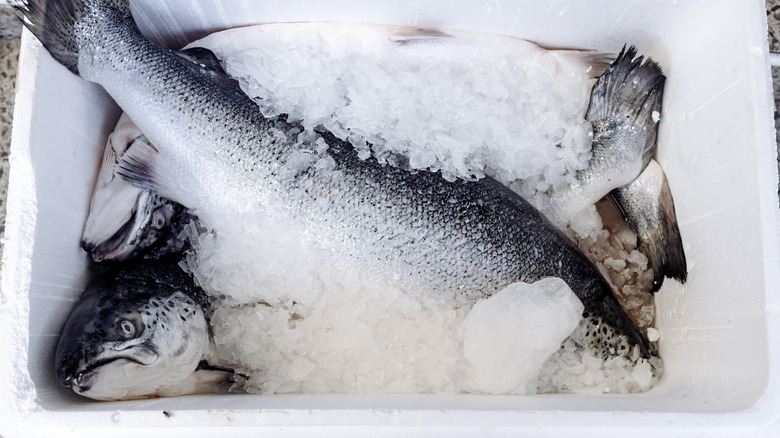
There are so many rules out there surrounding how you should and shouldn't store seafood, it's hard to separate what's true advice from what's fishy. So we went straight to the source: the National Oceanic and Atmospheric Administration Fisheries. This government agency is responsible for the "stewardship of the nation's ocean resources and their habitat." So if you're unsure what to trust, listen to them when it comes to seafood storage advice. Because seafood is one of the most perishable food items, according to NOAA, they advise to keep it cold, keep it moving, and keep it clean.
You probably know that you shouldn't leave seafood sitting out, but NOAA recommends that you keep it cold from the second you buy it at the store. Bring a cooler bag to place your seafood in after you check out so it stays the freshest. Just be careful about the cooler storage mistake that makes it way less effective. And if you've caught your own fish, it should immediately be put on ice. NOAA also recommends using an ice slush with two parts ice to one part water. When you've gotten your seafood home, you should immediately put it in the coldest part of your fridge, with the ideal temperature being around 32 degrees Fahrenheit. For fresh fish that's not packaged, you should take a few extra steps. Put whole dressed fish on ice in the fridge, and seal filets or steaks in containers or plastic bags, then cover them with ice in a pan.
Eat up that fish fast
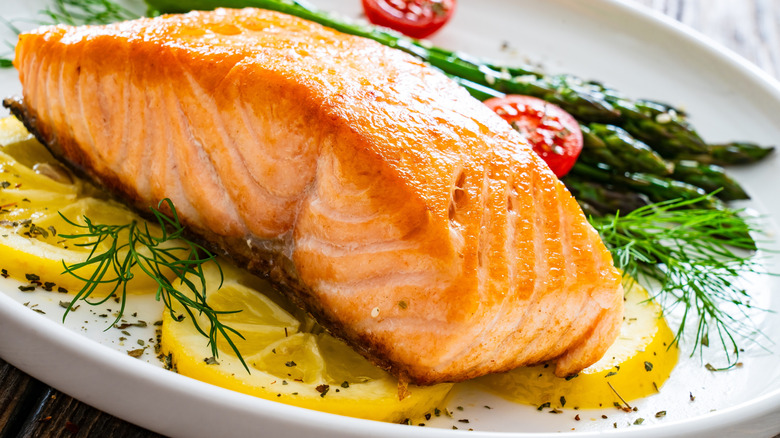
Old seafood is iffy, so you'll generally want to eat up fresh fish within two days. That goes for whether you bought it or caught it. According to FoodSafety.gov, you may have a slightly longer shelf life for shellfish, with fresh crab and lobster still being edible within four days. Clams, mussels, oysters, and scallops may still be safe up to 10 days refrigerated. But if any of your seafood looks and feels slimy or mushy, looks dried up, or of course, has a sour stench — a tell-tale sign the seafood you're buying isn't up to standard — toss it. You'll get the freshest options in general if you choose the right season to buy your favorite shellfish.
When preparing seafood, keeping everything clean, including your hands, cooking area, and utensils, is of the utmost importance. This can help avoid bacteria that can cause food poisoning. After handling it, wash everything the seafood touched — cutting boards, utensils, dishes, etc. — with soap and hot water, and use a kitchen sanitizer or solution of one tablespoon bleach per gallon of water on countertops. Wash your hands with hot soap and water after touching any raw seafood, and be sure to serve your cooked seafood on clean plates, not on a plate that held the raw product.