

Why You Should Never Pass Up This Thrift Store Dishware Find
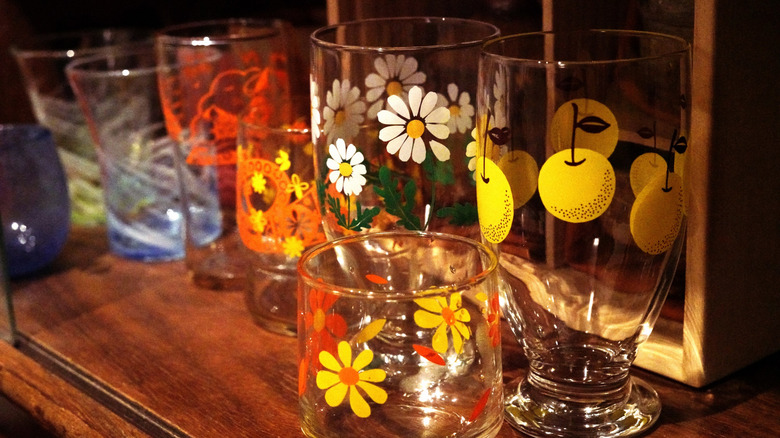
A thrift store score is a win like no other. For those who know older is better, there's no such thing as too much antique Pyrex, some good vintage kitchen accessories, or glowy Depression-era glass. However, there are some retro picks that you're better off skipping, or at least keeping far away from your food, due to questionable coatings (like Uranium glass) or materials that just don't hold up. Other scores, though, truly hold their own over the years — and if you're lucky enough to stumble upon one at an antique store, thrift shop, or yard sale, snatch them up! One such example is Libbey, an 1800s glassware maker that you'll likely bump into on thrift store shelves (and might have seen in your mom's kitchen in the '70s).
The company has been making high-quality drinking glassware since way back in 1818, when it first launched in Cambridge, Massachusetts, under the manufacturer name "the New England Glass Company." It was known then, as it is today, for its high-quality raw materials and innovative manufacturing processes. The Libbey glasses you'll see at thrift stores are mostly made from soda lime glass which is completely safe, free from sketchy ingredients like lead, and made to last a lifetime, if not several. Over the decades, the company launched many different glass designs, so keep an eye out for gorgeous mid century patterns and many holiday prints and patterns and grab 'em when you see 'em.
The company has stood for quality for hundreds of years

You'd be hard-pressed to find a company that can trace its roots to nearly the beginning of the country itself — 1818 in Libbey's case — much less one that's still going strong today, as the glassware company is. While the company first launched in Massachusetts under the "New England Glass Company" moniker, by 1888 it was rebranded as The Libbey Glass Company (the name of son of the company's first corporate owner), and had picked up and moved to Toledo, Ohio, where it remains today. Around the time of this move and into the early 1900s, the company became known for innovation and brilliant intricate cut glass. By the World War II era and into the mid-20th century, the brand turned to focusing on producing automated glasses made for daily use in the home.
Today, you can identify most any era of Libbey glassware by the signature cursive or block print "L" stamped on the bottom of the glass. No matter what design or decade you choose, you'll know you're buying a high quality item ready to be used in your home for another lifetime at least. If you don't want to leave things up to luck, you can also find a treasure trove of Libbey glassware — juice glasses, highballs, rocks glasses, stemmed wine glasses — online on sites like eBay; this is especially helpful if you're on a dogged hunt for a particular pattern or number of glasses to complete your set.