

Those Grocery Store Apples You Just Bought Might Be Over A Year Old (Yes, Really)
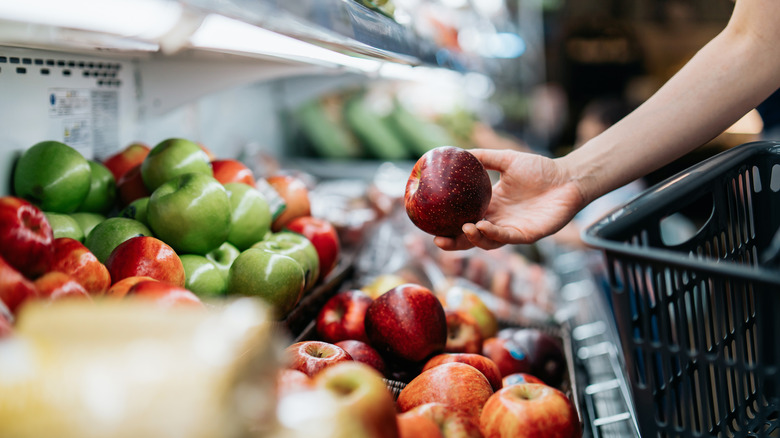
When you pick up fruit from the fresh produce section of the supermarket, you'd think you're getting, well, "fresh" produce — but when it comes to apples, this isn't always the case. Apples in U.S. supermarkets are largely a fall harvest, picked in late summer through mid fall (depending on variety and region). But outside of those windows, you'll typically still see American apples on the shelves, and those apples may have been in storage for months or even close to a year, thanks to advanced storage techniques.
After harvest, apples are cooled quickly — ideally within 24 hours — to near-freezing and high relative humidity to slow down their ripening and prevent water loss. Apples are often stored in controlled atmosphere (sometimes called CA) settings, where oxygen is reduced and carbon dioxide increased, which slows ethylene production. Ethylene is the hormone that makes fruit ripen, so by keeping it down, the apples stay firm and tart for months, forestalling much of their aging and decay (beyond apples, keeping produce cool is generally a good idea to prevent fast ripening). That lack of oxygen also kills off insects and prevents mold from growing, another obvious plus if you're trying to keep apples good for months at a time.
Some varieties (including Red Delicious, Rome Beauty, and Golden Delicious) store well for long periods, up to 10 to 12 months, without severe quality loss. So yes: Those apples in winter might have been picked in fall, shipped into a cold store, and gently preserved until they reach your produce aisle.
When apples are cheapest and best
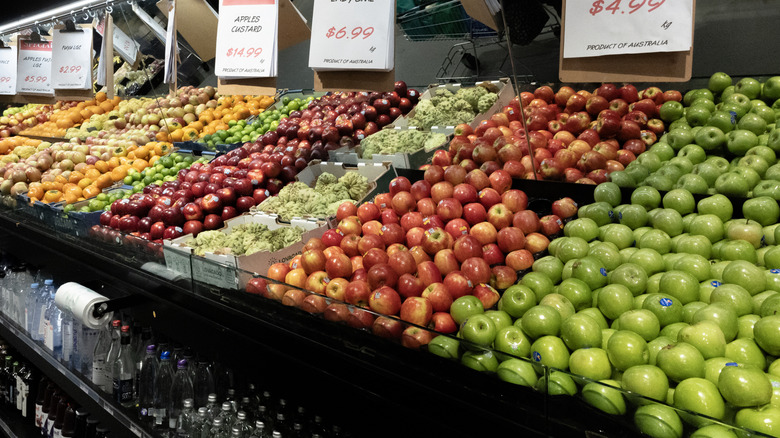
If you want apples that are freshest, best-flavored, and most affordable, you should buy them during apple harvest season, which generally falls from early August through late October, with some variation depending on the apple type and the location. After harvest, the first few months are when fresh-picked apples tend to cost less, but be aware that prices may creep up through winter. Once those apples have been in storage for many months — late winter to early spring or even up to summer — they can start to degrade, even if the sophisticated approach to storage keeps them much fresher than you'd expect for a nine-month-old piece of fruit. CA storage doesn't totally stop nature, it just slows it down a lot.
Of course, if you're in need of apples outside of the prime season, you may just have to suck it up and buy fruit that's been in long term storage. If you're in that situation, it's worth knowing that not all apple varieties age equally well in CA storage. Honeycrisp apples are known for being finicky and getting soft after four to six months, while Fuji and Gala apples tend to hold up for six to nine months. The best choices include the relatively newly-created Cosmic Crisp apple, which can go 12 months in CA storage without degrading too much; Fuji, Granny Smith, Gala, and Red Delicious are also considered relatively tough and therefore better options for CA storage.