

The Scent To Watch Out For When Selecting Quality Sushi
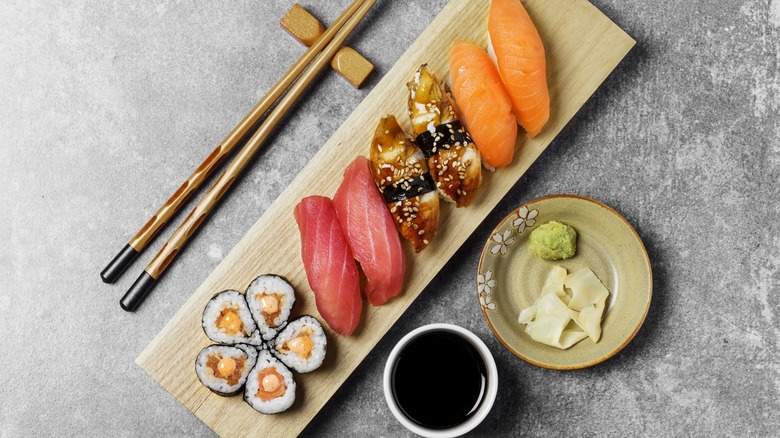
When it comes to sushi, "fishy" could be an accurate description of the contents, but it shouldn't describe how they smell. In fact, Namiko Hirasawa Chen exclusively tells Chowhound that "fresh sushi should have almost no smell — just a clean, delicate hint of the ocean." Chen is the creator of Just One Cookbook, where she has shares recipes for things like sushi rice and simple temaki sushi (among others). She's also the creator of JOC Goods, a curated selection of Japanese tableware and kitchenware. Safe to say, Chen knows a thing or two about sushi and how to identify its quality from scent.
She went on to tell us that strong fishy or sour, pungent, and ammonia-like smells are a good indicator that your sushi isn't fresh. "However," Chen clarifies, "not every strong smell is a red flag — some fish, seaweed, or fermented ingredients naturally have distinct aromas. The real warning sign is when the odor feels sour or unpleasant in a way that doesn't match the ingredient." And while it may feel awkward, if you've ordered sushi at a restaurant, it's best to ask the chef directly if you have a concern about the quality of your sushi, she says.
Another caveat is that sushi is often served alongside other ingredients that do have a stronger odor. "The aroma of sushi is also shaped by the ingredients that accompany it," Chen explains. "High-quality nori brings a rich, toasty fragrance, seasoned rice vinegar adds a tangy-sweet note to the sushi rice, and wasabi contributes a sharp, pungent kick." These smells should all be pleasant and natural, however. It is the sour, unpleasant smells that indicate spoilage.
How to use all your senses to identify good sushi
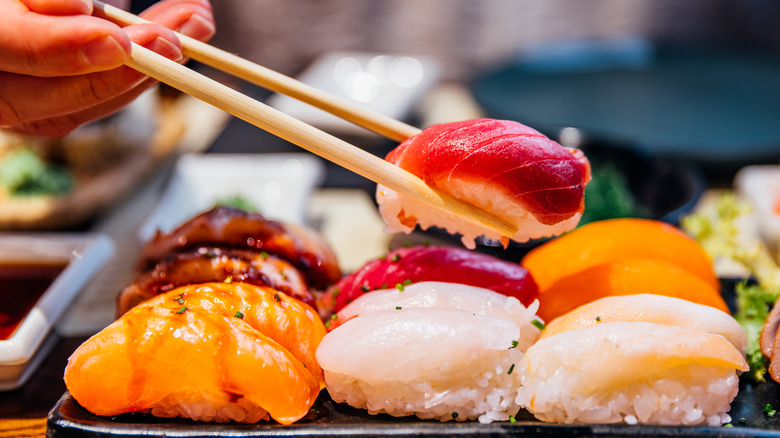
Namiko Hirasawa Chen recommends using multiple senses to assess your sushi. "Start with your eyes," she says, "fresh sushi should look vibrant and slightly translucent, never dull or watery." For the sense of touch, a slimy or mushy texture hints that something may be off. "And when you bite into it," Chen says, "it should be tender yet structured, breaking apart cleanly." Finally, similar to its aroma, "fresh sushi has a balanced, clean flavor, often with a subtle sweetness, while spoiled sushi tastes off or unpleasant," she says.
When it comes to maximizing your sushi experience — and minimizing the chances you'll be stuck with an unappetizing roll — Chen recommends choosing your sources wisely. To avoid a common mistake that can ruin your homemade sushi, you may need to do a little research to determine which local markets carry the freshest and best fish for your sushi. "In the San Francisco Bay Area, for example, we often go to Suruki Market, which has been around for over 30 years," she says. "On weekends, there's always a line at their sashimi counter — a strong sign of quality and trust."
The same principle applies when eating out. "Choose restaurants that truly specialize in sushi and have a dedicated sushi counter with a skilled chef," says Chen. Pay attention to how they store their fish (wrapped, so odors don't mingle), and the look of the fish. "At the end of the day, trust your senses. Sight, smell, touch, and taste are your most reliable guides to finding good sushi," she concludes.