

The Best Foods To Eat If You Want To Avoid Bloating On An Airplane
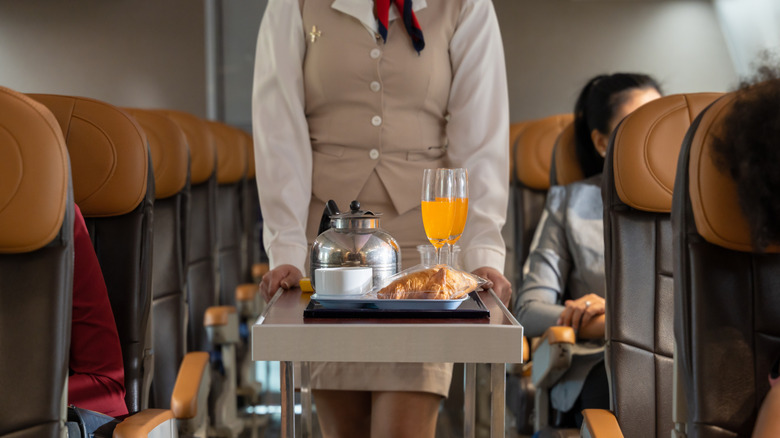
Traveling is great for both the mind and the soul. It not only pulls us out of our comfort zones, it lets us explore new cultures, try new foods, and gives us a chance to break out of our typical daily routines. But, if you're flying, your stomach might not be as thrilled as your mind. The altitude and cabin conditions can affect digestion, and that means some foods are harder to digest than others when you're 30,000 feet above ground.
According to Kathleen Benson, CSSD, CPT, and RDN at plant-based wellness platform VNutrition, fruits, such as kiwi, are a great choice if you aim to prevent bloating mid-flight. Kiwis contain natural digestive enzymes, such as actinidain, that support protein breakdown. Bananas can also support a more comfortable flight. They're not only rich in potassium and fiber, but can also help balance out the excess sodium from salty in-flight snacks. "These are simple, packable choices that can help minimize bloating and discomfort while traveling," Benson exclusively told Chowhound.
Staying well-hydrated is also essential for keeping your digestion smooth and comfortable while flying since the humidity in airplane cabins is low, much lower than the ideal 40% to 60% humidity we want on the ground. This can ultimately lead to dehydration. "Water is the most important since it helps prevent constipation and keeps things moving," Benson pointed out. "Ginger, whether as tea, chews, or ginger water, can help calm gas and nausea."
The science behind why flying makes you bloated
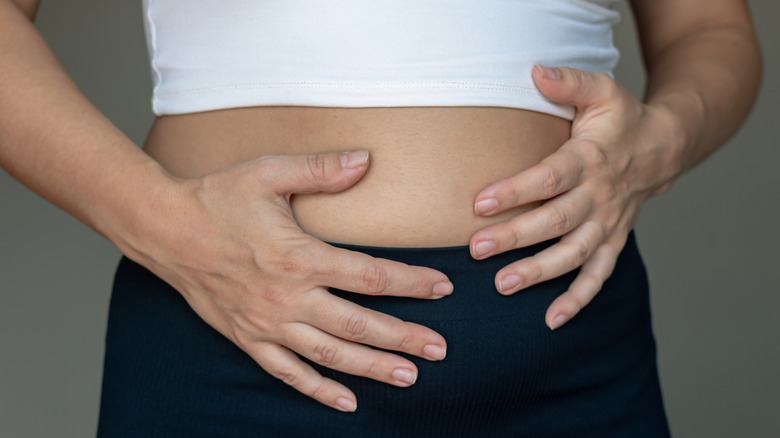
Catching a plane can be quite the experience. Every skilled traveller who loves changing locations from time to time is likely aware of the tips you should know to save money on food when traveling on a plane. But airport food is expensive compared to everyday options; considering there's a good chance your stomach won't tolerate it once you hop on the plane, it's hardly even worth it. Still, the real reason people often feel bloated when they fly has less to do with the food and more to do with cabin pressure. "Cabin pressure changes can cause gases in the digestive tract to expand, and being less active or out of your usual bathroom routine can make bloating worse," Kathleen Benson told Chowhound. Since many foods just hit different at such high altitudes, picking the right meal is a crucial survival strategy (at least until you land).
Destini Moody, RD, CSSD, LD, and registered dietition with Top Nutrition Coaching who specializes in sports performance, body composition changes, and injury recovery, exclusively told Chowhound that there's a scientific explanation behind the bloating many travelers experience mid-flight. According to Moody, people naturally carry gas in the digestive system, whether from digestion itself or from gut bacteria fermenting certain types of carbs. "When exposed to lower air pressure at higher altitudes, this causes gas to expand in any setting, which leads to a bloating effect in the gut."
The worst snacks to eat before and after takeoff
If you're trying to figure out whether you should eat before or during your flight, Destini Moody recommends filling up beforehand. "You should definitely aim to eat before takeoff, preferably before even boarding the plane," she stressed. Experts recommend eating a light meal about two to three hours before short flights and a more nutrient-dense meal three to four hours ahead of medium and long-haul trips. This gives your body enough time to process the food. At the same time, you successfully skip those greasy, high-fat, high-calorie airline meals that lack necessary nutrients for your system.
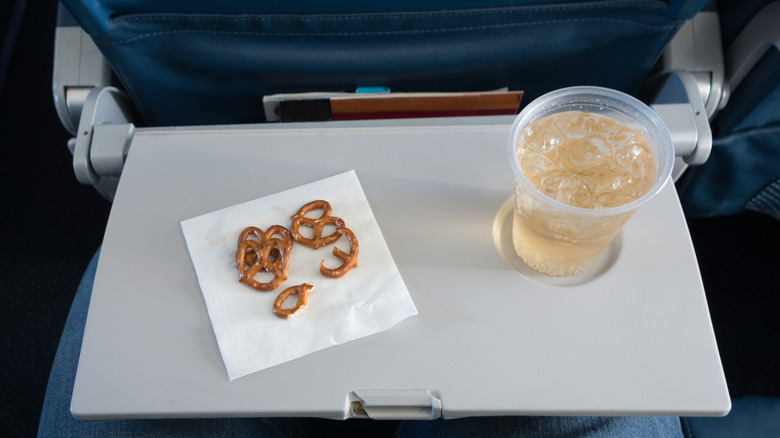
Meanwhile, if you're still tempted to have a little snack during your flight, both experts suggest steering clear of carbonated drinks and high-sodium snacks because they can lead to water retention, making in-flight bloating worse. "You also want to avoid high-fiber foods, like beans or carbonated beverages, which can introduce more gas into the gut," Moody emphasized. "Carbonated sodas, salty snacks (pretzels, peanuts, trail mix), and high-sugar treats (cookies, candy) can worsen bloating or fluid retention in some," Kathleen Benson added.
Regardless of whether you've set your mind to try the best coffee brands served by every major U.S. airline, keep in mind that both coffee and tea can worsen dehydration. "Coffee and tea may also irritate digestion for some people, especially if they're sensitive to caffeine," Benson continued, but noted that tolerance varies. While some travelers handle these beverages just fine, others may feel better avoiding them.
How to beat bloating after you land
If you did your best to follow the in-flight eating rules but still landed with a stubborn case of jet belly (believe it or not, it's actually a real term), there's no need to worry. There are a few simple ways to ease the discomfort once you've hit the ground. Kathleen Benson once again emphasized the importance of staying well-hydrated to help your digestive system bounce back: "Hydrate well, move around (walking or stretching helps stimulate digestion), eat a light meal with fiber and fresh produce, and consider [a] gentle abdominal massage to get circulation and digestion back on track."
Destini Moody agreed that drinking plenty of fluids, in addition to getting some physical activity following your flight, are some of the most effective methods for getting rid of bloat. "Remaining sedentary post-flight can cause the bloating to stick around," she disclosed. Typically, one to two hours of light activity, whether walking or even stretching, can reduce the risk of severe bloating. Avoiding alcohol, getting plenty of rest, and breaking your meals into smaller portions can also help.
When asked whether supplements can help, Moody recommended taking probiotics, charcoal, and digestive enzymes. Using probiotics for a few weeks after your flight can actually relieve bloating and promote better gut health. You could also try consuming yogurt or other high-probiotic foods. "But it's important to remember supplements may not always be effective as the bloating that occurs is mostly due to the actions of physics," Moody concluded.