

Why You Really Shouldn't Drink Alcohol During Extreme Heat
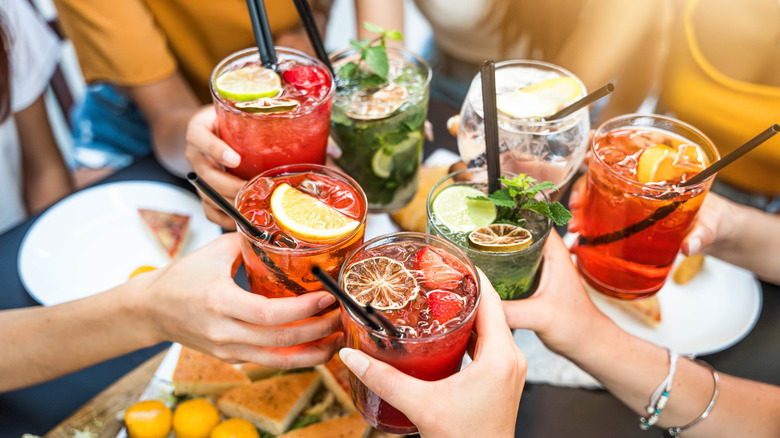
Whether you're sipping a watermelon paloma by the pool, enjoying a cool glass of sauvignon blanc (with a pop of jalapeños for some spice) on a hot summer night, or drinking an ice cold beer at the ball park, summer and alcoholic beverages just seem to go together. However, though cocktails and beer might seem like the perfect way to cool down on a hot day, these refreshing drinks might be responsible for some not-so-savory side effects. To better understand the risks behind drinking in high temps, we reached out to Dr. John Parente, an emergency medicine physician and creator of The Emergency Minute podcast, who gave Chowhound an exclusive lowdown on why you might want to avoid drinking during the dog days of summer.
Essentially, the biggest risk when it comes to drinking in hot weather comes down to dehydration. As Dr. Parente notes, "drinking alcohol does cause dehydration and depletes your electrolytes, like sodium, potassium, and magnesium. Being in extreme heat does the same." Essentially, drinking in extreme heat can double-down on your dehydration. Not just this, but alcohol can actually prevent your body from properly reacting to heat. As Dr. Parente states, "alcohol increases vasodilation (dilation of veins), which increases sweating and speeds up dehydration." He continued, noting that alcohol "also interferes with the hypothalamus, the part of the brain that regulates temperature. So, the body's ability to control temperature and adapt may be diminished." Essentially, alcohol can both dehydrate your body and cause you to overheat. This is a combination that could lead to potentially dangerous health outcomes, so think twice before drinking in hot weather.
More risks of summertime sipping
The risks of drinking in high temperatures aren't just physical. Drinking can also impair your mental faculties, making it more difficult to sense important signals of overheating and dehydration. As Dr. John Parente says, individuals under the influence "may not be aware that their temperature is rising, that they are becoming dehydrated, etc. Alcohol also blunts our perception of thirst, which can decrease our ability to recover when we are losing hydration."
In addition to this, dehydration can actually cause you to experience the effects of alcohol more intensely. While one or two drinks may not make you feel much of an effect under usual circumstances, this same amount may have a more intense effect if you aren't properly hydrated. Essentially, dehydration can make you feel more intoxicated, and this feeling of intoxication may blunt feelings of thirst, dehydration, or overheating. All of this combines to create a situation that can have painful, if not outright dangerous, consequences.
Keep your sipping safe
This doesn't mean you have to forgo drinking in the heat altogether. Dr. John Parente has a few tips to keep you from dehydrating during those long, hot summer days. First and foremost, Dr. Parente suggests keeping out of the heat as much as possible, noting that going into air conditioned environments "even for just short breaks, would be helpful in helping your body cool off." If you're sitting out on your deck, this can be as simple as popping back inside the house for 10 or 15 minutes every hour. If you're exploring new areas, consider requesting a seat inside rather than outside.
Dr. Parente also says to take a break and sip on water between alcoholic drinks. This gives your body a chance to rehydrate and also keeps you from getting too intoxicated too quickly. Along with this, he notes that "adding something like Gatorade with electrolyte replacement may be helpful." Adding an electrolyte supplement to your water can be a great way to aid in hydration. If you're feeling particularly efficient, you can always add Liquid IV to your cocktail for a quick flavor and electrolyte boost. Along with these tips, Dr. Parente also suggests sticking to lower-proof drinks since higher-proof alcohols can "accelerate these negative processes faster than lower-proof drinks like beer or spritzers." Most importantly, he recommends "[pacing] yourself and allow the body to do its thing and help keep you out of trouble."