

7 Signs That A Chain Restaurant Is Struggling To Stay Open

As evidenced by chains like Red Robin, Boston Market, and TGI Friday's, it's a sad but clear reality that the restaurant industry is financially struggling. Steadily increasing costs for restaurant essentials, as well as the public generally eating out less in response to such price hikes, have unfortunately led to a less-than-favorable fate for many establishments. And sadly, it's usually not hard to tell when your favorite joint is on the rocks.
Most restaurants will undergo a few changes that hint at their floundering financial status, whether it's for better or for worse. Some may be a result of the chain attempting to revive its consumer base, while others may indicate that the establishment has given up hope and is already preparing to shutter. Whichever case it may be, there are usually a few tell-tale signs that show a chain restaurant is struggling to keep its doors open for the public at all.
1. Locations are empty during peak hours

Everyone knows the frustrating feeling of walking into a packed restaurant, be it for dinner, on the weekend, or during a holiday (good luck if it's all three), and being told it'll be one to two hours before you can be seated. It can be a dreadful thing to hear, pushing the limits of just how long diners are willing to wait for a table. But equally as sort of off-putting is walking into a restaurant during what should be peak hours and instead being greeted by completely empty seats.
If you go through the entirety of your meal during peak hours without seeing another soul, it's probably safe to say the restaurant you're eating at isn't doing too hot. This could be due to a number of factors, one of them being that the eatery doesn't have enough visibility. Perhaps its marketing has failed it, and not enough people know about the place's existence. Or the opposite could be true, where plenty of people know about the restaurant, but it's for all the wrong reasons, like bad food or poor service. It also just might not hold a candle to other dining options that people would rather head to first.
2. The restaurant has unusual hours
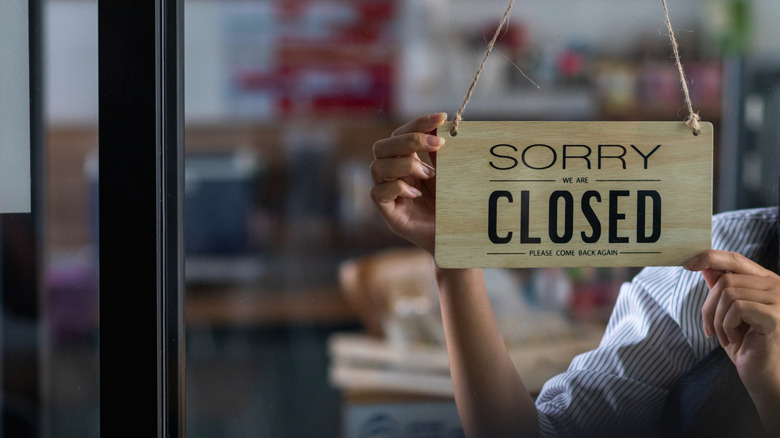
You've likely already noticed at one point or another that many restaurants are closed on Mondays. They have extra-long hours on the weekends, only to close completely come the start of the workweek. The reason for that is more often than not, people have used Friday, Saturday, and Sunday to live a little more lavishly, leaving Monday as the day to recoup, focus on work, and get that recovery paycheck building. So with fewer people coming in, it makes sense for restaurants to close their doors on a day that's so financially slow.
Following that same logic, restaurants may begin cutting down some of their operational hours if not enough people come in at those times. It could also be from not enough staff being available or even a shortage in necessary supplies, meaning there's simply not enough help or resources around to stay open for the hours they were once advertised to be.
On the other hand, some establishments might take the opposite approach and decide to stay open for longer than usual. This is the road less traveled, but it can, in some cases, create time for more customers to visit. It opens up an opportunity for a new wave of people to begin frequenting the joint if it begins running at a time that they're finally available to go.
3. The chain offers frequent discounts and promotions

Everyone loves a good discount, and oftentimes, they prove effective in getting consumers excited about coming in and placing a money-saving order. But when a restaurant throws constant promotions in your face one right after the other, it almost feels like a desperate cry begging people to visit — and a lot of the time, it is.
For example, consider Red Lobster's many over-the-top promotions. While its Ultimate Endless Shrimp deal may have caused Red Lobster's bankruptcy, it was actually part of the chain's several bold attempts at luring more consumers in during a time when it was already starting to fall off financially. And this sort of tactic isn't exclusive to Red Lobster; it's a method plenty of businesses turn to with hopes of bringing in customers, especially at less popular times, or to bring attention to a new, unknown, or limited-time item.
4. There are changes in the menu

Save for The Cheesecake Factory, which is doing just dandy even as the chain restaurant with the biggest menu, an excessively long lineup is usually a red flag in eateries that should send you running. After all, how can one place possibly perfect both the best pizza and the best sushi all in one kitchen? Still, a restaurant that isn't seeing much success with its current offerings might try to compensate by adding a plethora of new menu items to keep up with ever-evolving food trends and maintain people's interest.
More commonly, however, you're likely to find a struggling establishment trimming down its menu, especially of items that are less profitable and don't get as much love from the public. Streamlining offerings and doing away with unpopular choices helps to minimize the effort, prep work, and number of ingredients needed to cook a particularly complicated dish. Instead, more energy can go into providing customers with meals that are sure to reel in increased revenue. The staff will be able to dedicate more time to ensuring they nail the smaller number of offerings, and are able to deliver them to diners with efficiency and the necessary knowledge to answer any questions.
5. The staff is smaller or less enthusiastic than usual

Not only is a smaller menu an indicator that a chain restaurant is on thin ice — a smaller staff can be, too. Staffing shortages are a very prominent issue in today's restaurant industry, with the closure of eateries during the pandemic leading to countless people losing work and deciding not to return, even once places started opening back up.
Naturally, this has caused plenty of issues in the restaurant scene. But sometimes, letting people go is the quickest way for an establishment to cut expenses, as labor costs usually fall between 25 to 30% of sales. So if you've noticed there's far less staff than there used to be at a restaurant, it may be for this very reason.
Consequently, a smaller staff increases the likelihood of employee burnout. It's not uncommon for remaining employees to have to take on multiple responsibilities at once to make up for there being fewer people on the team. And with an overworked crew that's repeatedly being spread thin, it's no surprise that you might encounter staff members who aren't able to be as productive or aren't eager to hang around.
6. There's a decline in overall quality

There's a certain kind of pain that comes with ordering your go-to dish at the restaurant you always frequent, only to notice one day that it tastes nothing like it usually does. You might even notice this confusing phenomenon happening across the joint's entire menu. Chances are, the company decided to switch over to cooking with lower-quality ingredients as a way to reduce expenses. Then the cycle of the restaurant's struggles continues — what customer wants to spend their hard-earned money at an establishment with subpar meals?
And while food is obviously the most important part of a restaurant, there are many other ways a decline in quality can manifest at a struggling location. For example, an eatery might go from using linen napkins to paper napkins or metal cutlery to plastic utensils. The building might even begin to look unkempt or barebones in terms of design and decorations.
7. Other locations are closing
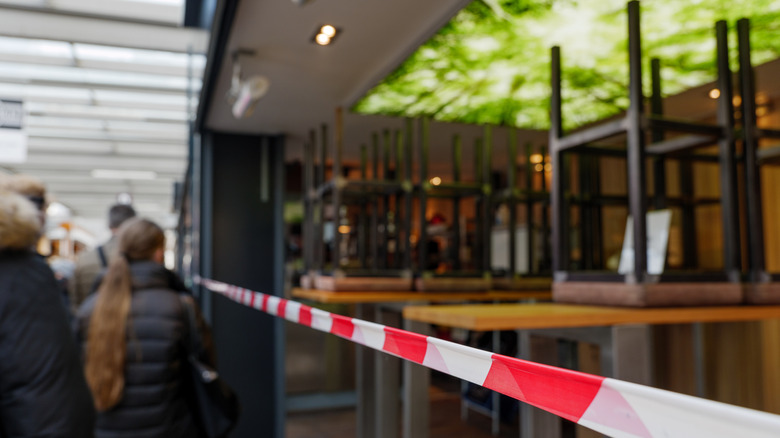
The biggest indicator that your local restaurant might be closing is if you hear news of its other locations doing the same. And while the closure of a few branches doesn't necessarily mean every single location of a chain restaurant is doomed to the same fate, it still points to the increased possibility of it happening to yours.
Branches that underperform are typically the ones chosen to shutter. This is determined by several factors, including, of course, sales. Locations that don't meet the bar in how much profit they bring in are usually the quickest to get the boot. The same goes for those with higher rent costs or buildings that are too costly to be renovated.
If you're wondering exactly where your particular location stands, you can hunt around for any publicly available information. Online, you can search for a chain restaurant location's sales, earnings, and overall performance, and compare them to other establishments in the industry to see if they're likely to keep their doors open.